
A mini 'planetary parade' is visible tonight. Can you spot them all?
Space.com
by Anthony Wood February 20, 2026
AI-Generated Deep Dive Summary
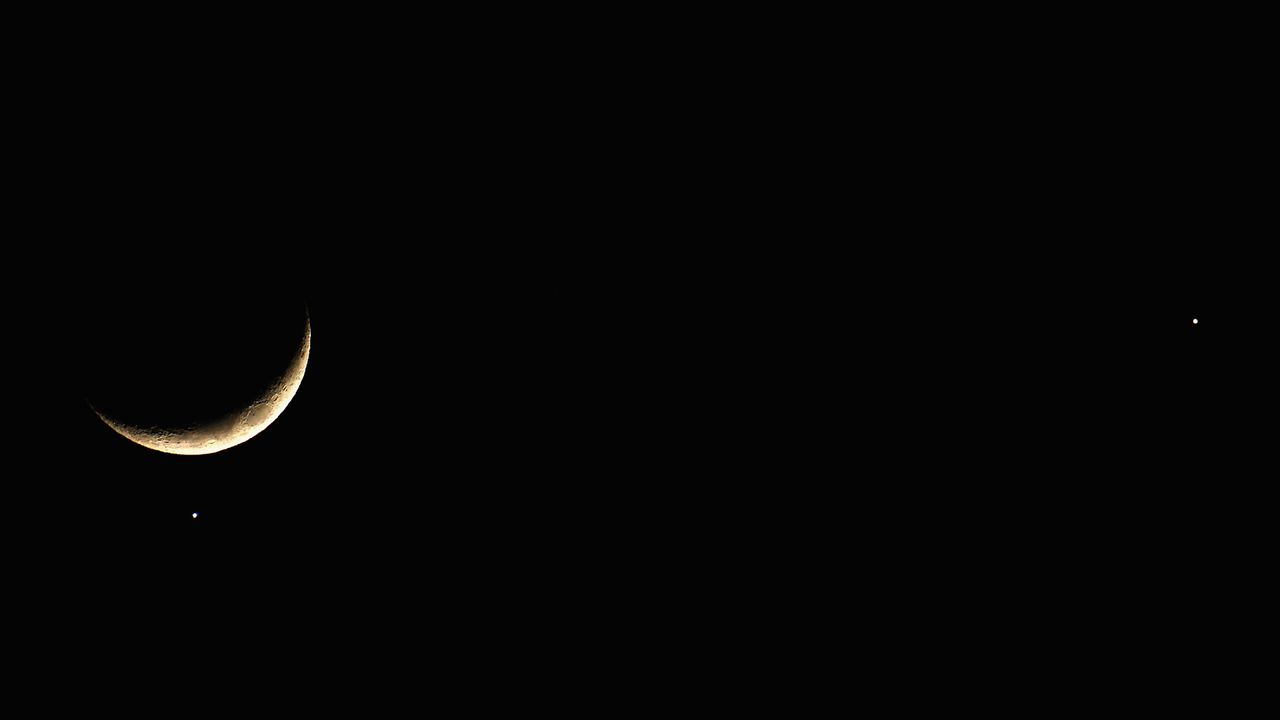
Tonight, stargazers are in for a treat as a rare planetary alignment takes place under a waxing crescent moon. Visible from the western horizon after sunset on February 20th, three planets—Venus, Mercury, and Saturn—will form a striking line beneath the slender crescent of the moon. This celestial event promises to be a visual feast for those willing to venture outside and look up.
The 18% illuminated waxing moon will sit high in the sky, casting its light over the planets below. Saturn will be positioned directly below the moon, while Mercury and Venus will appear closer together near the horizon. This alignment is particularly special because it includes Mercury, which is currently at its greatest eastern elongation, making it easier to spot in the evening sky. Additionally, Neptune will be nearby but too dim to see without a telescope, while Uranus will be located five degrees below the Pleiades star cluster.
For those with telescopes or binoculars, this event offers an excellent opportunity to explore more of the night sky’s wonders. The crescent moon itself will make for a fascinating target, showcasing its surface features like Mare Crisium and Mare Fecunditatis. Jupiter, meanwhile, will dominate the eastern sky, glowing bright with its four largest moons visible through a telescope. This celestial display is a reminder of the beauty and complexity of our solar system.
This planetary parade is not just for astronomy enthusiasts—it’s an invitation for anyone to connect with the night sky. For those interested in astrophotography, this event could yield stunning images. The alignment of planets under the moon’s glow creates a unique and memorable sight, making it well worth stepping outside to catch a glimpse.
Verticals
spacescience
Originally published on Space.com on 2/20/2026