
A mystery object is dimming a distant star. Could it be a massive exoplanet, or a 'failed star'?
Space.com
by Robert Lea February 13, 2026
AI-Generated Deep Dive Summary
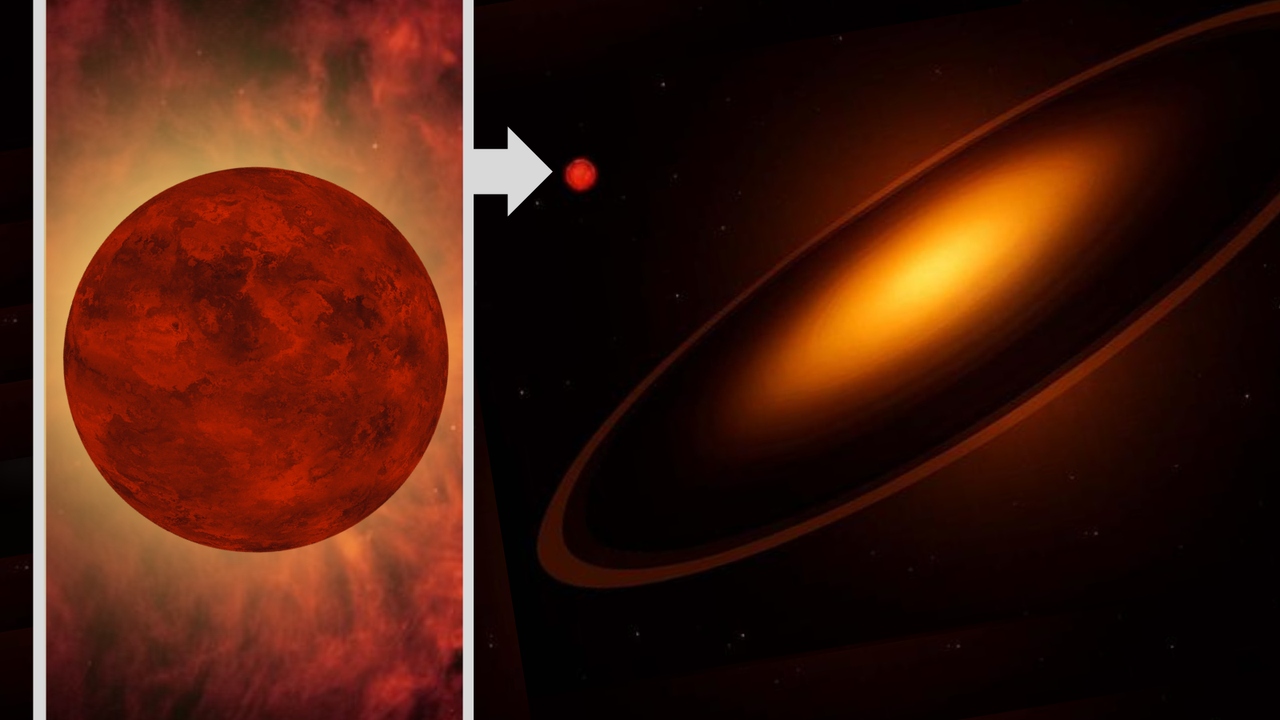
A mysterious object is causing an unprecedented long-term dimming of a distant star, ASASSN-24fw, located 3,200 light-years away in the Monoceros constellation. The dimming event lasted an extraordinary 200 days and reduced the star's brightness by 97%, making it one of the most extreme and longest-duration events ever observed. Scientists are now investigating whether this phenomenon is caused by a brown dwarf or a massive super-Jupiter exoplanet.
The leading theory points to a brown dwarf, a celestial body more massive than a planet but less massive than a star, surrounded by an extensive and dense ring system. This hypothesis aligns with the gradual dimming observed initially, likely due to the outer parts of the rings being thinner before denser regions blocked the star's light. The team, led by Sarang Shah from the Inter-University Centre for Astronomy and Astrophysics (IUCAA) in India, suggests that the brown dwarf orbits the star at a distance comparable to Mercury's orbit in our solar system.
While the mass of the dimming object remains uncertain, it is estimated to be more than three times the mass of Jupiter. This leaves room for the possibility that it could instead be a super-Jupiter exoplanet. The distinction between brown dwarfs and massive planets lies in their formation processes: brown dwarfs form like stars from collapsing gas clouds but fail to sustain hydrogen fusion, whereas planets form within existing systems.
The discovery also reveals that ASASSN-24fw is surrounded by fragments of gas and dust, likely remnants of past planetary collisions. This finding is significant because it suggests the star's environment was once more dynamic, despite its estimated age of 1 billion years. The presence of such a complex system provides astronomers with a rare opportunity to study
Verticals
spacescience
Originally published on Space.com on 2/13/2026