
A stellar treat for Valentine's Day: Heart-shaped outburst stuns astronomers
Space.com
by Samantha Mathewson February 14, 2026
AI-Generated Deep Dive Summary
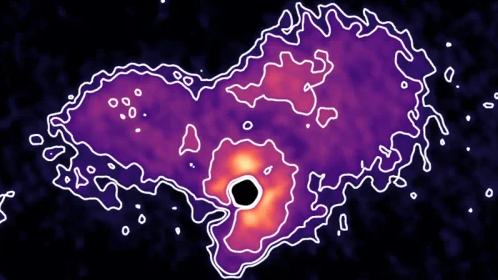
Astronomers have made a surprising discovery that captures the attention of space enthusiasts and Valentine's Day romantics alike: a heart-shaped cloud of gas and dust ejected by a dying red giant star, known as Mira A, located 300 light-years from Earth. This celestial phenomenon forms a glowing heart in space, creating a striking visual reminiscent of a cosmic Valentine’s Day gift. The discovery was made using data from the European Southern Observatory's Very Large Telescope (VLT) and the Atacama Large Millimeter/submillimeter Array (ALMA), which revealed the intricate details of this unique formation.
The heart-shaped plume consists of gas filling its interior, while dust outlines its edges, creating a stunning contrast against the dark background of space. The star’s light sweeps across the cloud, illuminating it unevenly and giving the impression of a cosmic lighthouse. This unexpected structure surprised astronomers, as they initially expected a more symmetrical ejection from Mira A, a well-known variable star known for its periodic brightness changes.
The expelled material amounts to roughly seven Earth masses, far exceeding what scientists typically anticipate in such stellar events. This massive and sudden burst of matter challenges existing models of how stars
Verticals
spacescience
Originally published on Space.com on 2/14/2026