
After 144 years, world’s tallest church finally finishes exterior
Popular Science
by Andrew PaulFebruary 24, 2026
AI-Generated Deep Dive Summary
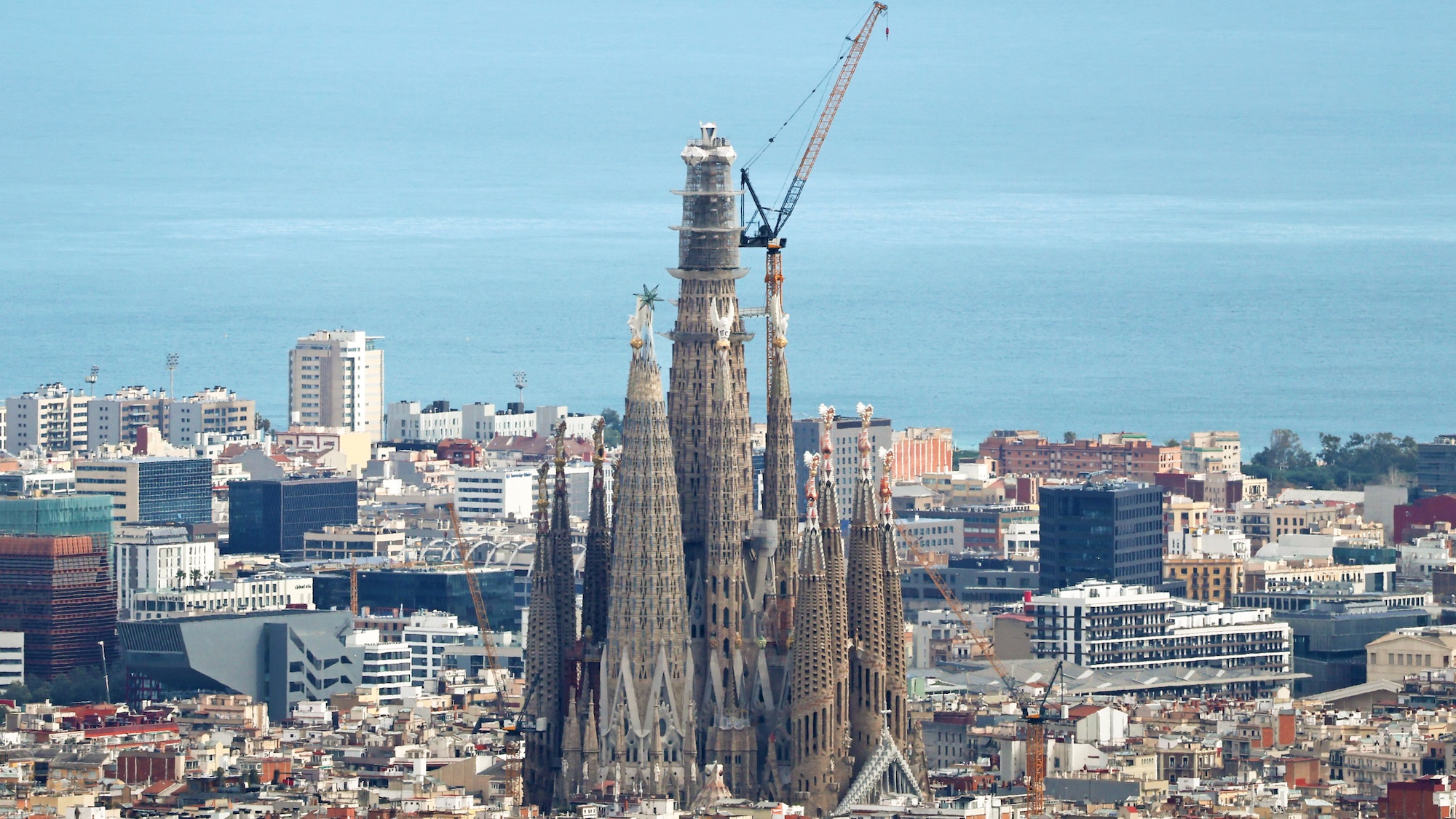
After 144 years of construction, the Sagrada Família in Barcelona has reached a historic milestone with the completion of its iconic exterior. The installation of a nearly 15-foot-tall cross on February 20th elevated the basilica to 566 feet, surpassing Germany’s Ulm Minster by approximately 30 feet. This achievement marks the culmination of decades of intricate work, blending Gothic and modern architectural styles under the visionary leadership of Antoni Gaudí. Though only 25% of the structure was completed when Gaudí passed away in 1926, his enduring legacy continues to shape this UNESCO World Heritage Site.
The cross, a centrepiece of the project, combines materials from Catalonia with advanced engineering. Constructed in sections in Germany and assembled on-site, it features glass, ceramic tiles, and stone elements designed to symbolize Gaudí’s goal of creating a luminous cross visible day and night. The basilica’s design incorporates 18 spires representing key figures in Christianity, along with innovative acoustic features like wind-driven bells that enhance the worship experience.
Despite its acclaim, the Sagrada Família has faced criticism, notably from author George Orwell, who deemed it “one of the most hideous buildings in the world.” However, its cultural and engineering significance cannot be overlooked. Overcoming challenges such as wartime destruction during the Spanish Civil War, the project has relied on meticulous restoration efforts and modern technologies like computer modeling to stay on track.
With the exterior now complete, construction shifts focus to the interior, which includes decorative elements like Andrea Mastrovito’s Agnus Dei sculpture. Slated for completion by 2034, the Sagrada Família will stand as a testament to architectural innovation and resilience. Gaudí’s ability to blend artistic vision with engineering prowess continues to inspire, offering insights into both the challenges and rewards of monumental projects. This landmark achievement not only honors Gaudí’s legacy but also underscores the enduring impact of visionary design in science and technology.
The Sagrada Família’s journey reflects the interplay between human creativity and technical ingenuity, making it a compelling case study for readers interested in the intersection of art, engineering, and history.
Verticals
sciencetech
Originally published on Popular Science on 2/24/2026