
All you need to know about USS Gerald R Ford, world’s largest nuclear supercarrier heading to Middle East
Times of India
by TOI WORLD DESKFebruary 15, 2026
AI-Generated Deep Dive Summary
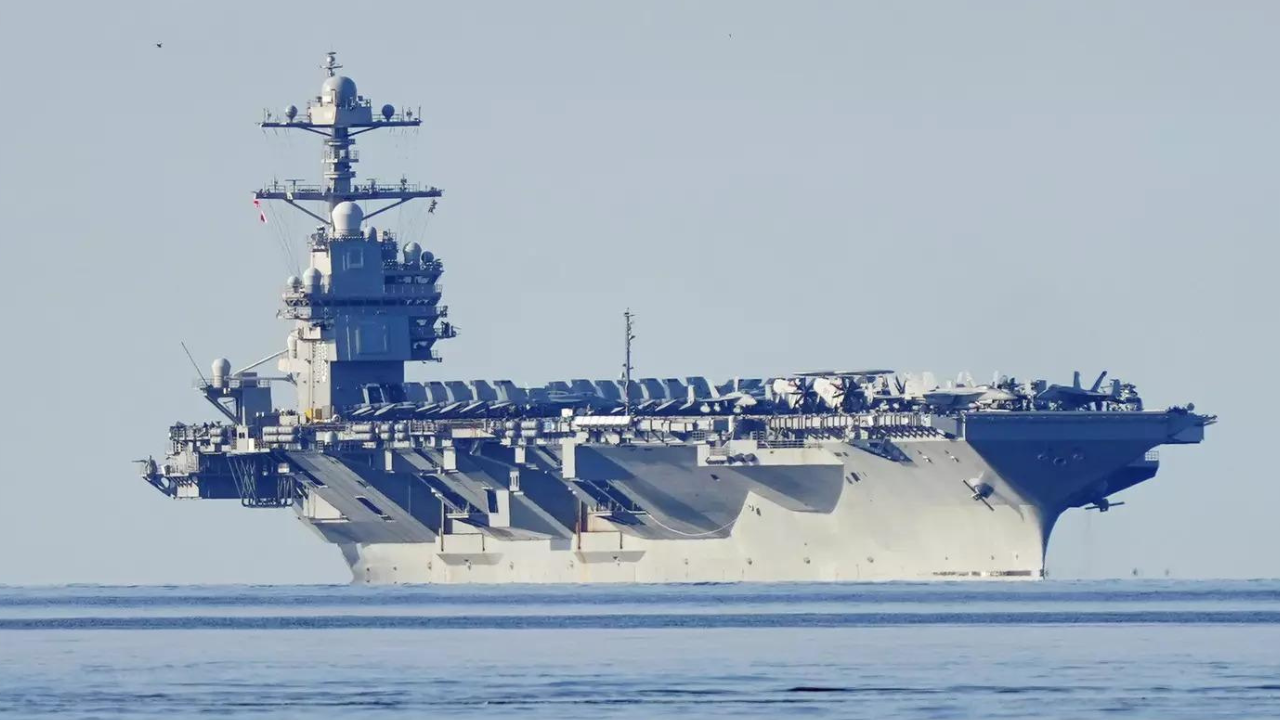
The United States has dispatched its most advanced naval asset, the USS Gerald R Ford, to the Middle East as tensions with Iran over its nuclear program escalate. This move is seen as a significant show of force, with the carrier joining the USS Abraham Lincoln strike group in the region—a rare deployment that underscores heightened geopolitical tensions. The arrival of two U.S. aircraft carriers in or near the Middle East signals a marked escalation in military signaling toward Iran, particularly amid President Donald Trump’s efforts to pressure Tehran into reaching an agreement on its nuclear activities.
The USS Gerald R Ford, the lead ship of a new class of supercarriers, represents the pinnacle of American naval technology. Measuring nearly 1,106 feet in length and displacing over 100,000 long tons, it is powered by two A1B nuclear reactors, giving it virtually unlimited range and speeds exceeding 30 knots. Among its key innovations is the Electromagnetic Aircraft Launch System (EMALS), which enhances aircraft launch efficiency and operational tempo. The carrier can accommodate more than 75 aircraft, including advanced F-35C Lightning II stealth fighters and F/A-18E/F Super Hornets, making it a critical component of U.S. power projection.
The deployment of the USS Gerald R Ford is notable for its speed and deviation from planned maintenance schedules. Originally operating in European waters before being redirected to the Caribbean, the carrier was instead ordered to proceed toward West Asia, bypassing its homeport in Norfolk, Virginia. This move highlights the urgency Washington attaches to addressing the evolving situation with Iran. President Trump emphasized that the deployment is a precautionary measure, ensuring military readiness should diplomatic efforts fail.
While U.S. officials frame the buildup as a stabilizing deterrent aimed at preventing escalation, regional reactions remain mixed. Gulf states have expressed concerns that an increased American military presence could inadvertently heighten tensions and risk miscalculations. The arrival of the
Verticals
worldasia
Originally published on Times of India on 2/15/2026