
Antarctica's 'gravity hole' reveals the evolution of Earth's deep interior
Space.com
by Samantha Mathewson February 25, 2026
AI-Generated Deep Dive Summary
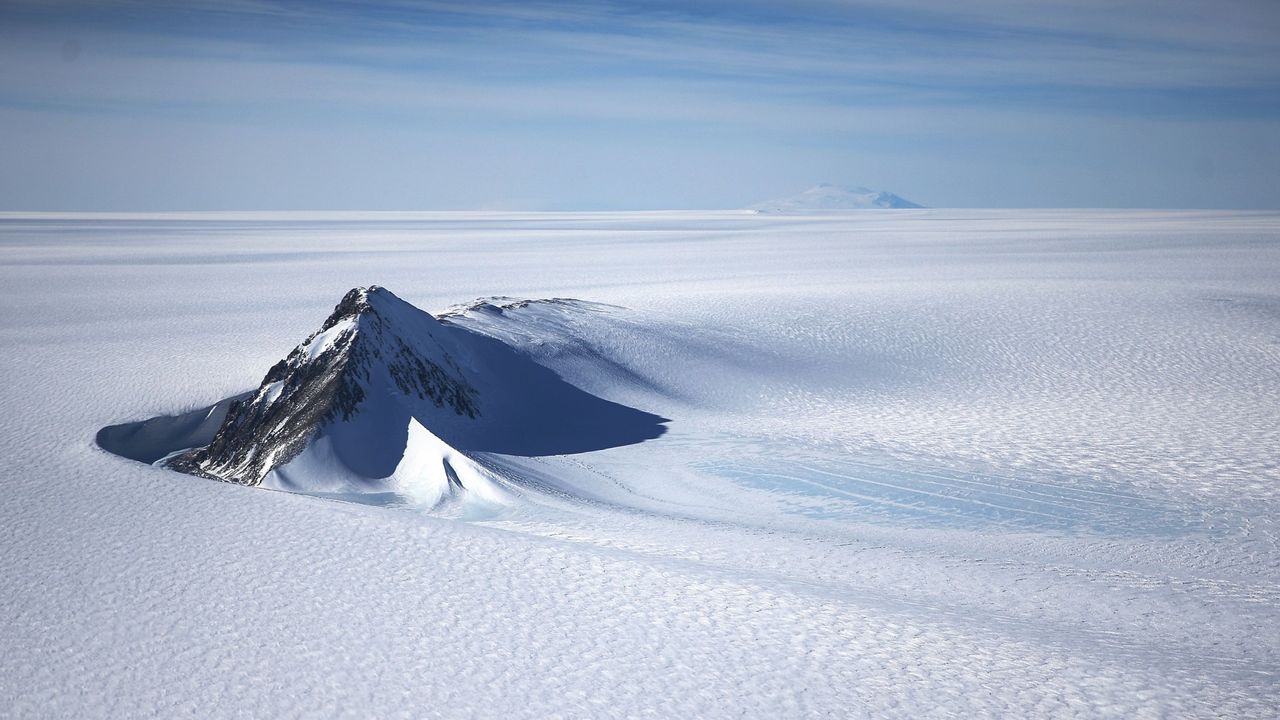
A newly discovered "gravity hole" beneath Antarctica has provided scientists with a unique window into the dynamic processes deep within Earth's interior, revealing how slow-moving geological changes over tens of millions of years have shaped our planet. This anomaly, known as the Antarctic Geoid Low, is not a physical void but rather a subtle dip in Earth's gravity field that reflects the distribution of mass thousands of miles below the surface. Researchers from the University of Florida have reconstructed its evolution over the past 70 million years, showing it is not a fleeting phenomenon but a persistent feature tied to deep-seated rock currents.
The study highlights how Earth's mantle—composed of slow-moving, hot and cold rock masses—affects the planet's gravity field. These massive, albeit gradual, motions influence where dense or buoyant material accumulates, creating variations in gravitational pull across the globe. The Antarctic Geoid Low represents one such long-lived feature, with its strength and shape evolving over millions of years as a result of major shifts in deep-Earth circulation patterns.
The anomaly is particularly significant for understanding Antarctica's transition into an ice-covered continent around 34 million years ago. This period coincided with an intensification of the gravity low, suggesting a potential link between deep Earth processes and surface changes. While the gravitational effect on humans would be imperceptible—a person would weigh only marginally less there—the scientific implications are profound. It offers insights into how Earth's internal engine reshapes its surface over geological timescales.
For space enthusiasts, this discovery underscores the interconnectedness of planetary interiors and surface features, which is critical for studying other worlds. The ability to detect such subtle gravitational anomalies also ties into broader efforts in geodynamics and planetary science, where understanding a planet's interior can reveal clues about its history and evolution.
In essence, the Antarctic Gravity Hole is more than just an oddity—it’s a window into Earth's hidden past and
Verticals
spacescience
Originally published on Space.com on 2/25/2026