
Australia unveils billions for nuclear submarines under Aukus security pact
South China Morning Post
by Agence France-PresseFebruary 15, 2026
AI-Generated Deep Dive Summary
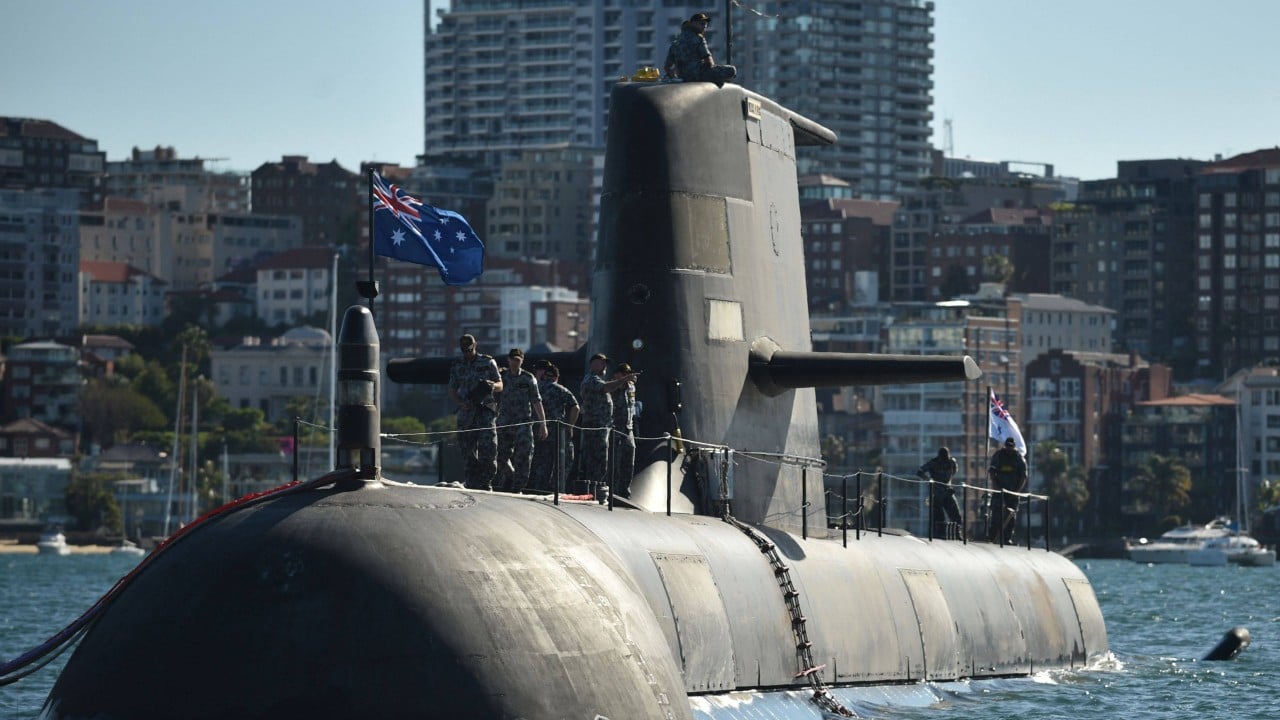
Australia has allocated AU$3.9 billion as an initial investment toward constructing a new facility to build nuclear submarines under the Aukus security pact with Britain and the United States. This initiative marks a significant step in enhancing Australia's defense capabilities, particularly targeting long-range strike operations in the Pacific region, with China being a key focus.
The deal, which includes the acquisition of advanced U.S.-built submarines starting in 2032, is part of a broader strategy to modernize and expand Australia's naval fleet. Over the next three decades, the project could cost up to US$235 billion, including the development of technology to enable domestic production of these vessels. A new submarine manufacturing site near Adelaide will be central to this effort, with an estimated AU$30 billion expected for its long-term operation.
Defence Minister Richard Marles emphasized that the facility in Osborne will play a pivotal role in ensuring Australia's ability to build nuclear-powered submarines for decades. This move underscores Canberra's commitment to strengthening its military capabilities and aligning more closely with U.S. and British security interests. The initiative reflects Australia's growing strategic focus on regional stability, particularly amid tensions with China.
This investment highlights the evolving geopolitical landscape in the Indo-Pacific, where nations are increasingly prioritizing advanced defense systems. For readers interested in global security dynamics, this marks a significant shift in Australia's military strategy and its role within the Aukus partnership. The submarines will not only bolster Australia's defensive capabilities but also reinforce its alliances with key partners in the region.
Verticals
worldasia
Originally published on South China Morning Post on 2/15/2026