
Can Board of Peace Replace the U.N.? | RealClearPolitics
RealClearPolitics
by Bevan, Cannon & Wegmann, RCP on SiriusXMFebruary 20, 2026
AI-Generated Deep Dive Summary
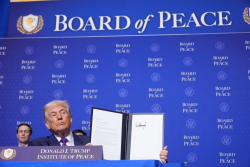
A potential new entity called the "Board of Peace" has sparked discussions about whether it could replace or complement the United Nations (UN) in addressing global conflicts. This concept, explored by Lindsay Chervinsky, Executive Director of the Washington Presidential Library, raises questions about the effectiveness and relevance of existing international organizations like the UN. The idea suggests a shift toward more localized or specialized peace-building efforts, possibly streamlining decision-making processes that have often been criticized as slow and cumbersome under the UN's framework.
The UN has long been a cornerstone of global diplomacy, facilitating multilateral agreements and peacekeeping missions since its inception in 1945. However, critics argue that its structure can lead to gridlock, particularly when dealing with issues involving major powers with competing interests. The proposed Board of Peace aims to address these shortcomings by focusing on collaboration among smaller groups of nations or specialized entities, potentially allowing for faster and more targeted responses to conflicts.
Chervinsky's discussion highlights the potential benefits of such a shift, including the possibility of innovation in conflict resolution strategies and greater efficiency in addressing specific regional issues. However, challenges remain. The Board of Peace would need to navigate complex international dynamics, ensuring representation and buy-in from diverse stakeholders while maintaining legitimacy and effectiveness on the global stage.
This idea matters because it reflects broader debates about the future of international cooperation and governance. As global challenges become increasingly interconnected, finding new ways to foster peace and stability is crucial. Whether through reforming existing institutions like the UN or exploring alternatives such as the Board of Peace, the stakes are high for maintaining effective international mechanisms that can address conflicts and promote diplomacy in an evolving world order.
Verticals
politicsnews
Originally published on RealClearPolitics on 2/20/2026