
Chinese scientists put quantum chaos in ‘slow motion’
South China Morning Post
by Zhang TongFebruary 19, 2026
AI-Generated Deep Dive Summary
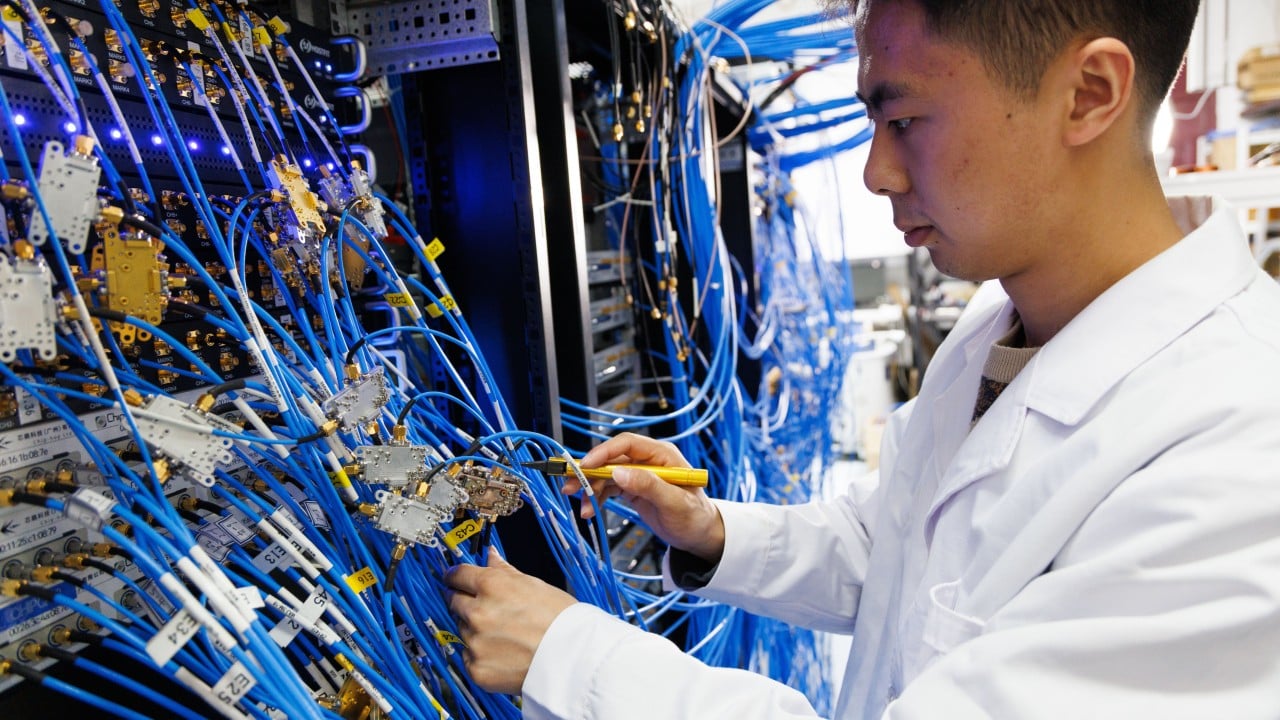
Chinese scientists have achieved a significant breakthrough by directly observing and manipulating prethermalization—a transitional state in quantum systems—using their 78-qubit "Chuang-tzu 2.0" superconducting processor. This milestone allows them to control the speed of quantum decoherence, offering a crucial tool for managing complex quantum environments. Decoherence, the process where quantum systems lose their information or energy to the surroundings, is a major challenge in developing practical quantum technologies.
Prethermalization refers to the state where a quantum system, after being disturbed, begins to return to equilibrium but hasn't yet fully thermalized. By studying this intermediate phase, researchers can better understand and manage how quantum systems evolve over time. This capability could be vital for applications like error correction in quantum computing and improving the stability of quantum states.
The ability to "tune" decoherence speed opens new avenues for controlling quantum systems. It could lead to more efficient designs for quantum computers and other quantum technologies, which require stable and controllable environments. This achievement not only advances our understanding of quantum mechanics but also positions China at the forefront of quantum computing research, highlighting its global significance in the ongoing international race to develop quantum technologies.
Verticals
worldasia
Originally published on South China Morning Post on 2/19/2026