
Could these weird stars just be overgrown planets?
Space.com
by Kiona N. Smith March 2, 2026
AI-Generated Deep Dive Summary
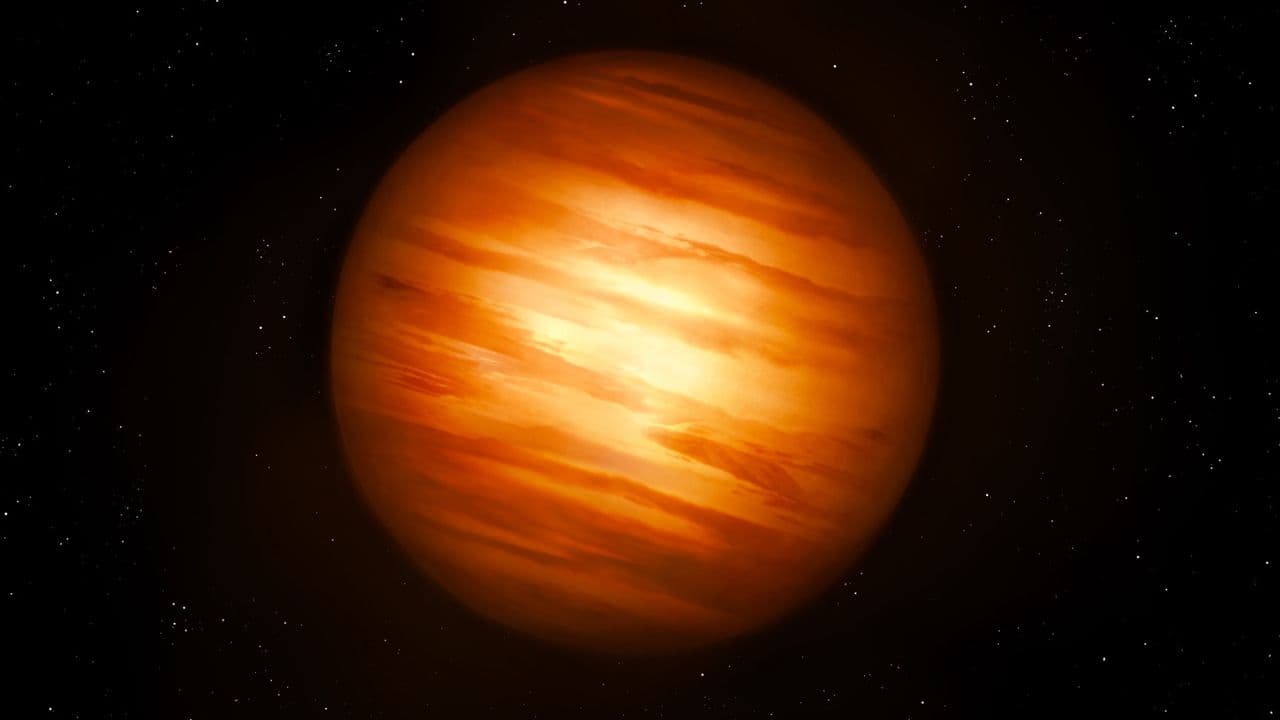
A recent study challenges our understanding of how celestial objects form by questioning whether some brown dwarfs might actually be overgrown planets rather than failed stars. The research examined 70 objects, ranging from Jupiter-mass planets to near-star brown dwarfs, seeking a clear dividing line between star-like and planet-like formations. However, the findings revealed no straightforward distinction, highlighting the messy and complex nature of cosmic formation processes.
Stars form from massive gas clouds collapsing under gravity, creating cores that fuse hydrogen into helium. Planets, on the other hand, grow from dust grains clumping together in a disk around young stars, building up rocky cores surrounded by gas. Brown dwarfs, with masses between 13 to 80 times Jupiter's mass, fall into a gray area—they aren't massive enough to sustain hydrogen fusion but are too large to be considered ordinary planets. Sub-brown dwarfs further complicate this spectrum, as they are even less massive than brown dwarfs but still enormous by planetary standards.
The study analyzed the chemical makeup of host stars and the orbital eccentricity of these objects to identify patterns. Less massive objects tend to have circular orbits, while more massive ones show greater variation in their orbital shapes. This lack of a clear relationship suggests that no definitive line exists between failed stars and overgrown planets. The researchers acknowledge that current methods may not be sufficient to uncover this boundary, leaving the question open for further exploration.
Understanding these distinctions matters because it impacts our classification of celestial objects and how we study their formation processes. The absence of clear boundaries challenges traditional categories and underscores the complexity of cosmic evolution. For readers interested in space, this research highlights the dynamic and unpredictable nature of the universe, where even fundamental questions about what defines a star or a planet remain unresolved.
Verticals
spacescience
Originally published on Space.com on 3/2/2026