
Digging a little deeper into Intel's Xe3 architecture shows exactly why Panther Lake's iGPU is good: It's basically an Arc A770 graphics card jammed into a mobile chip
PC Gamer
by Nick Evanson February 14, 2026
AI-Generated Deep Dive Summary
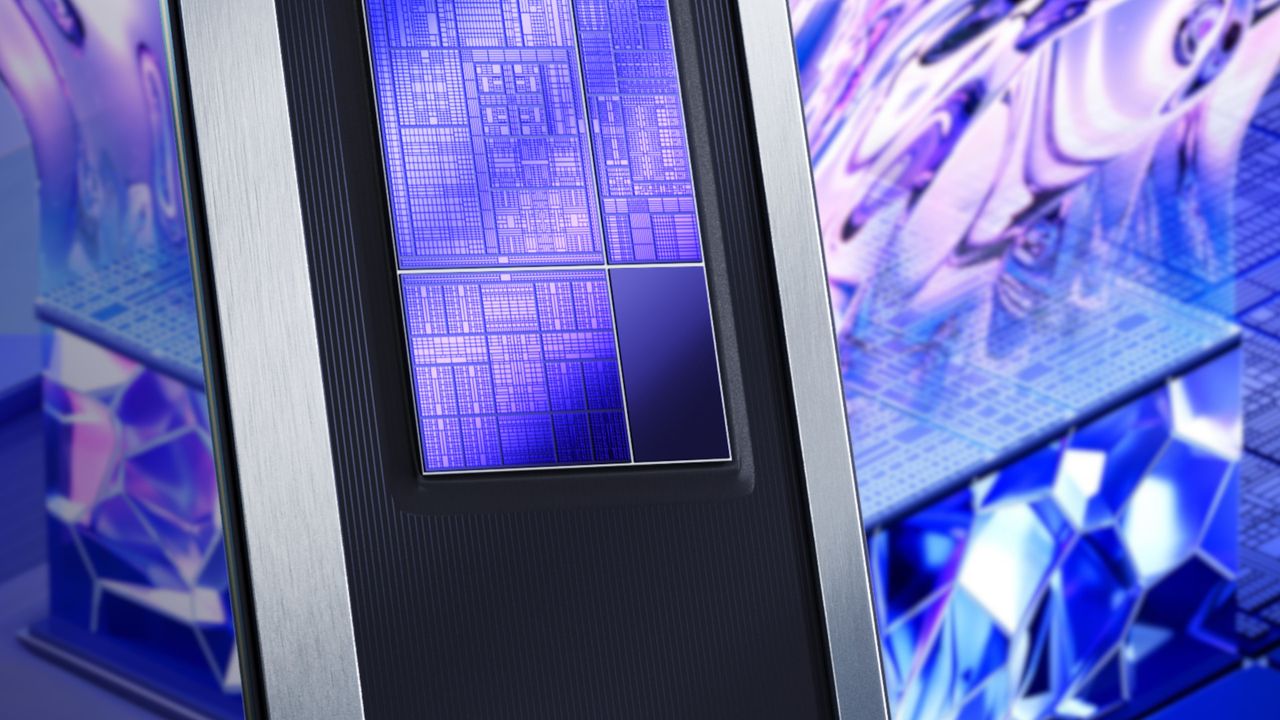
Intel’s Xe3 architecture, found in the Panther Lake iGPU, is proving to be a standout performer, particularly when compared to its predecessors and competitors. The B390 variant of this GPU packs 1536 shaders, a 16 MB L2 cache, and a boost clock of 2.5 GHz, making it more powerful than many integrated graphics solutions on the market. While it may not match the sheer compute power of dedicated GPUs like AMD’s Radeon 890M or Nvidia’s GeForce RTX 5050, its performance in critical areas such as peak instruction throughput and cache efficiency is impressive.
The article delves into specific benchmarks, including shader performance and memory bandwidth tests. The B390 demonstrates strong capabilities in fused multiply-add (FMA) operations, which are crucial for graphics rendering. While it doesn’t quite reach the theoretical maximums of its competitors, its ability to consistently hit around 7-8 TFLOPS at FP32 and double that figure for FP16 puts it in a favorable light. This performance is particularly noteworthy given that it’s an integrated GPU designed for mobile systems, not high-end gaming rigs.
One of the most intriguing aspects of Intel’s Xe3 architecture is its similarity to the Arc A770, a standalone graphics card known for its efficiency and power. By essentially cramming the performance of the Arc A770 into a mobile chip, Intel has created a GPU that delivers impressive results in both gaming and general-purpose tasks. This approach highlights Intel’s focus on optimizing its architectures for real-world performance, rather than just chasing raw numbers on paper.
For gamers, this means that laptops equipped with Panther Lake processors could offer a more compelling experience than ever before. While integrated graphics have historically lagged behind dedicated GPUs, the B390’s performance suggests that mobile gaming is on the verge of a significant upgrade. The combination of strong shader performance, efficient caching, and competitive peak throughput makes it a formidable option for those seeking portability without sacrificing visual quality.
In summary, Intel’s Xe3 architecture represents a significant leap forward in integrated graphics, offering gamers a powerful yet compact solution. Its ability to hold its own against higher-end
Verticals
gamingpc
Originally published on PC Gamer on 2/14/2026