
Explained: How the SCOTUS tariff ruling may be secretly a gift for POTUS
Times of India
by KANCHAN YADAVFebruary 22, 2026
AI-Generated Deep Dive Summary
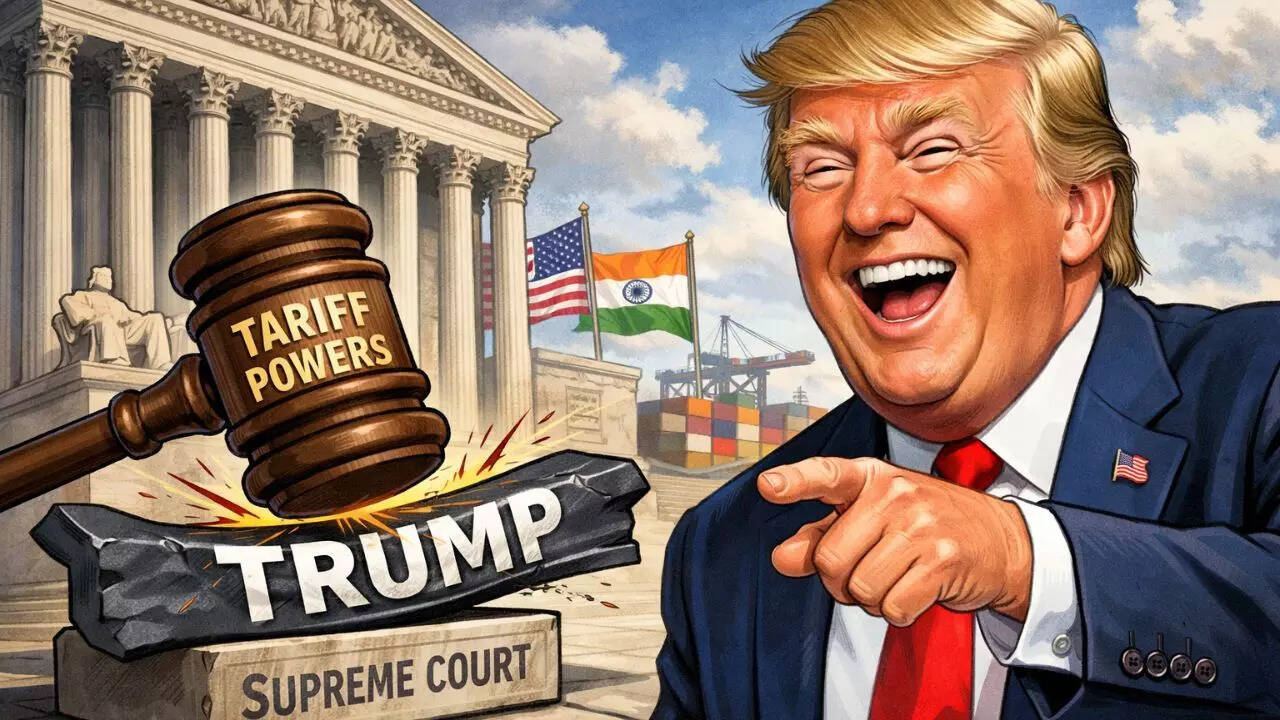
The U.S. Supreme Court’s landmark ruling invalidating President Donald Trump’s use of emergency powers to impose tariffs dealt a significant blow to his trade strategy. In response, Trump defied the court’s decision by raising global tariffs from 10% to 15%, claiming he still had authority under Section 122 of the Trade Act of 1974. The ruling, which found that the International Emergency Economic Powers Act (IEEPA) does not grant the president unilateral tariff authority, underscored Congress’s supremacy over economic policies and constrained Trump’s ability to use tariffs as a tool.
The court’s 6–3 decision invalidated nearly two-thirds of the $200 billion in tariff revenue collected annually under IEEPA. This ruling was significant because it clarified that presidential emergency powers are not unlimited and that Congress must explicitly grant such authority for extraordinary actions like tariffs. Trump, however, interpreted dissenting opinions differently, particularly Justice Brett Kavanaugh’s assertion that the decision might not substantially constrain a president’s ability to impose tariffs in the future. Trump used this reasoning to justify his decision to hike tariffs further.
The ruling has broader implications for presidential authority and international trade relations. While it limits Trump’s use of tariffs as an economic tool, it also sets a legal precedent for future administrations. The case highlights the ongoing tension between executive power and legislative checks in matters of national security and economic policy. For global markets and international relations, this ruling could influence how other countries interact with U.S. trade policies and shape the future of U.S. economic diplomacy.
Readers interested in world affairs will find this development crucial as it impacts global trade dynamics and reflects the delicate balance of
Verticals
worldasia
Originally published on Times of India on 2/22/2026