
Falcon 9 rocket sets new reuse record on SpaceX's 2nd Starlink launch of the day
Space.com
by Robert Z. Pearlman February 22, 2026
AI-Generated Deep Dive Summary
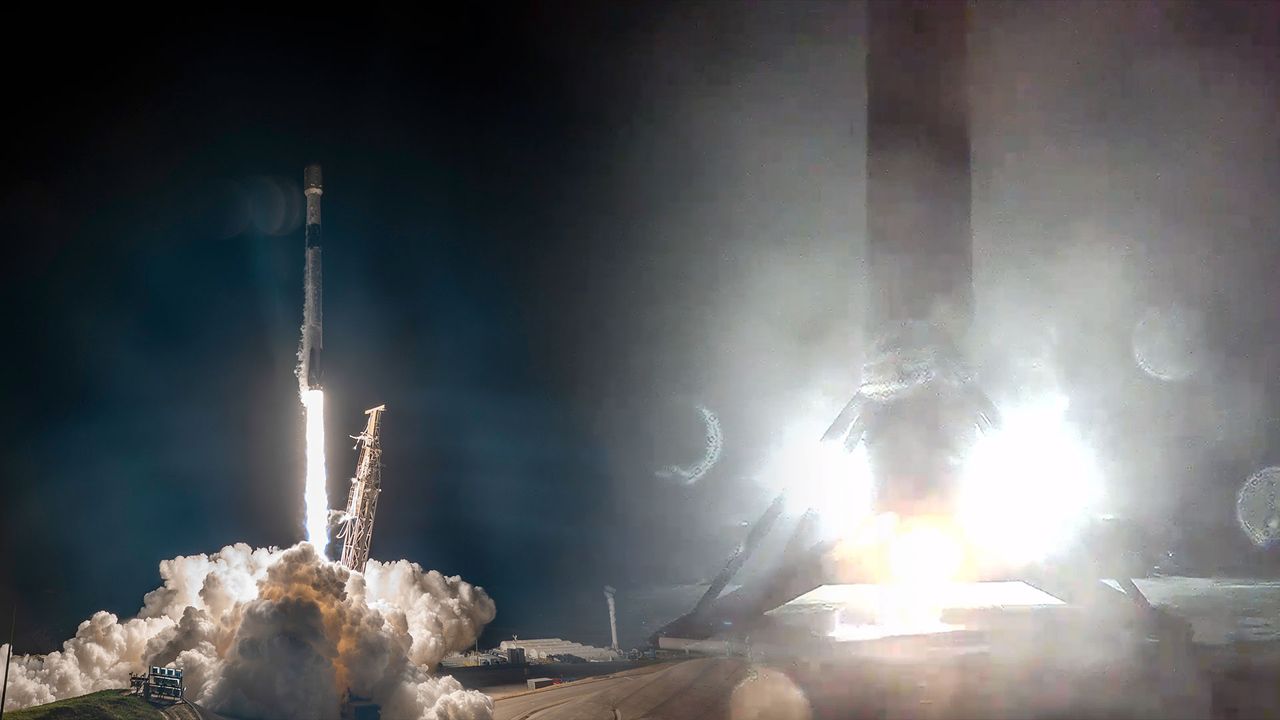
In a historic double launch, SpaceX achieved a new milestone in rocket reusability on February 21, 2026, when its second Falcon 9 booster completed an unprecedented 33rd flight. The company launched two separate missions from California and Florida, each carrying Starlink satellites, marking a significant leap forward in the quest to make space travel more sustainable and cost-effective.
The first mission blasted off at 4:04 a.m. EST from Vandenberg Space Force Base in California. A Falcon 9 booster, designated B1063, successfully deployed 25 Starlink satellites into orbit before landing on the droneship "Of Course I Still Love You" in the Pacific Ocean. This was B1063's 31st flight, an impressive feat showcasing the durability and reusability of SpaceX's rocket technology.
The second launch took place later that day from Florida's Kennedy Space Center. Another Falcon 9 booster, identified as B1070, achieved the remarkable 33rd reuse milestone while deploying its payload of Starlink satellites. This booster landed on "A Shortfall of Gravitas" in the Atlantic Ocean, solidifying SpaceX's reputation for pushing the boundaries of rocket reusability.
These dual missions not only added a combined 53 new satellites to the growing Starlink constellation but also brought the total number of active satellites to over 9,700. This expansion underscores SpaceX's ambitious goal of providing global internet coverage and highlights the company's commitment to accelerating space exploration through innovation and efficiency.
The back-to-back launches, marking the 21st and 22nd Falcon 9 flights of the year, demonstrate the rapid pace of progress in modern rocketry. By reusing boosters multiple times, SpaceX is significantly reducing launch costs while promoting sustainable space operations. This achievement is not just a win for the company but a major step toward making human colonization of Mars and other ambitious projects more feasible.
For readers interested in space exploration, this milestone highlights the potential for reusable rockets to transform the industry. It also underscores the importance of companies like SpaceX in driving innovation and making space travel more accessible than ever before.
Verticals
spacescience
Originally published on Space.com on 2/22/2026