
Federal Court dismisses historic ‘greenwashing’ case against Santos
Sydney Morning Herald
by Nick ToscanoFebruary 23, 2026
AI-Generated Deep Dive Summary
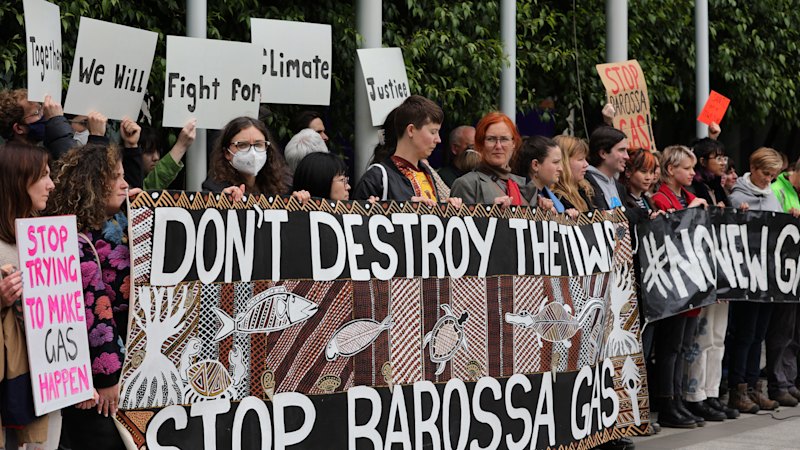
A federal court has dismissed a landmark greenwashing lawsuit against Santos, one of Australia’s largest fossil fuel producers, ruling that the company was justified in describing natural gas as “clean energy.” The case, brought by the Australasian Centre for Corporate Responsibility (ACCR), alleged that Santos misled investors by claiming it had a credible pathway to net zero emissions and overstated its efforts to transition to cleaner energy sources. However, Justice Brigitte Markovic dismissed all claims, finding that Santos’ descriptions were not misleading and that natural gas could be considered cleaner than other fossil fuels like coal in relative terms.
The lawsuit centered on Santos’ portrayal of itself as a clean energy company despite its reliance on natural gas production, which contributes to greenhouse gas emissions. The ACCR argued that Santos’ claims about achieving net zero by 2040 and producing “zero-emissions” hydrogen using carbon capture and storage (CCS) technology were misleading. However, the court ruled that these statements were not deceptive, as they provided a reasonable context for investors to understand Santos’ goals.
Markovic emphasized that Santos’ description of natural gas as “clean” was intended to highlight its lower emissions compared to coal when used for electricity generation. She also noted that while the company’s 2040 net-zero target and plans for blue hydrogen were aspirational, they did not mislead investors. The court found that Santos’ statements about its carbon capture technology were accurate insofar as most emissions would be captured or offset through carbon credits.
This decision marks the second defeat for the Environment Defenders Office (EDO), which represented the ACCR, in high-stakes litigation against Santos within two years. The ruling sets a legal precedent, affirming that companies can market themselves as clean energy providers even if their core business remains tied to fossil fuels. It also underscores the challenges activists face in holding corporations accountable for alleged greenwashing.
The outcome of this case is significant globally, as
Verticals
worldaustralia
Originally published on Sydney Morning Herald on 2/23/2026