
Final hearing on challenge to CAA in SC from May 5
Times of India
by DHANANJAY.MAHAPATRAFebruary 20, 2026
AI-Generated Deep Dive Summary
The Supreme Court of India has scheduled a four-day final hearing from May 5 to address over 243 petitions challenging the Citizenship (Amendment) Act (CAA), which provides a pathway for citizenship to non-Muslims from Pakistan, Bangladesh, and Afghanistan. The bench, led by Chief Justice Surya Kant, will hear arguments from petitioners, including Muslim organizations and political parties, as well as the Centre's response. The hearing marks more than six years since the CAA was enacted, sparking violent riots in Delhi.
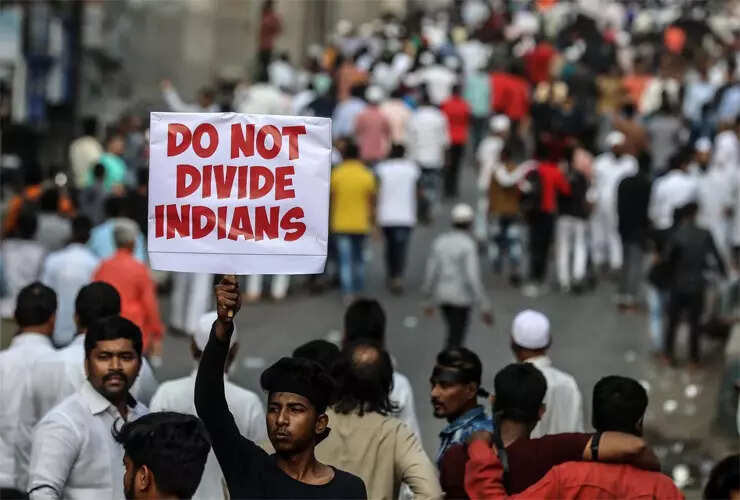
The CAA has been a contentious issue, with critics arguing that it discriminates against Muslims and undermines India's secular principles. Petitioners claim that the law disproportionately benefits non-Muslim communities while excluding Muslims, despite their long history of persecution in neighboring Islamic countries. The Supreme Court previously heard the case on March 19, 2024, after a prolonged legal battle that began in December 2019.
Protests against the CAA were intense, with Muslim women leading blockades in Shaheen Bagh and other parts of Delhi from late 2019 to early 2020. These protests escalated into riots in northeast Delhi in February 2020, resulting in 53 deaths. The legal challenge has also been linked to regional disputes, particularly in Assam and Tripura, where separate agreements with Bangladesh set timelines for migrant entry.
The Centre defends the CAA as a "benign" legislation aimed at addressing historical persecution of minority communities in Pakistan, Bangladesh, and Afghanistan. However, it maintains that the law does not claim to address all forms of global persecution or provide citizenship to every persecuted group. The bench has agreed with Solicitor General Tushar Mehta's suggestion to separate the CAA challenge into regional contexts, particularly for Assam and Tripura, where local agreements govern migrant entry.
This case is significant as it highlights critical issues of religious discrimination, citizenship rights, and India's secular identity.
Verticals
worldasia
Originally published on Times of India on 2/20/2026