
Henry Waxman and the Art of Political Adaptation
RealClearPolitics
by Maya Kornberg, RealClearPoliticsFebruary 24, 2026
AI-Generated Deep Dive Summary
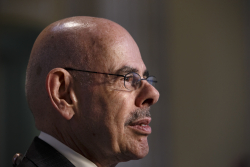
Henry Waxman’s long political career offers valuable insights into the art of adaptation and the evolving role of money in politics. Known for his work on landmark legislation like the Clean Air Act and healthcare reform, Waxman rose through the ranks during a transformative era in Congress, following the Watergate scandal and amid significant changes to campaign finance laws. His tenure highlights two key lessons: success in Congress requires navigating shifting political landscapes, and major legal decisions—such as *Buckley v. Valeo* (1976) and *Citizens United v. FEC* (2010)—fundamentally alter the dynamics of power and influence.
Waxman’s ability to adapt was evident in his early career. In 1979, he campaigned aggressively for a leadership position on the Energy and Commerce Committee despite facing seasoned competitors. By leveraging support from reform-minded groups and younger colleagues, Waxman outmaneuvered established figures and won the chairmanship. This move marked a turning point in his career and demonstrated how political ambition combined with strategic fundraising could shift power dynamics within Congress.
A pioneer in campaign finance strategies, Waxman was the first to establish a leadership PAC, allowing him to raise and distribute larger sums of money to influence colleagues and advance his agenda. By using these funds to support like-minded Democrats, he built a network of allies that helped shape legislation and secure victories on key issues. His approach not only reflected the changing realities of political fundraising but also underscored how financial resources could be weaponized to achieve political goals.
Waxman’s story is a testament to how Congress has evolved under the influence of money and media. His innovative use of leadership PACs set a precedent for future politicians, illustrating how campaign finance changes have transformed the nature of representation in Washington. For
Verticals
politicsnews
Originally published on RealClearPolitics on 2/24/2026