
How fast is the universe actually expanding? Ripples in spacetime could finally solve 'Hubble tension'
Space.com
by Robert Lea March 2, 2026
AI-Generated Deep Dive Summary
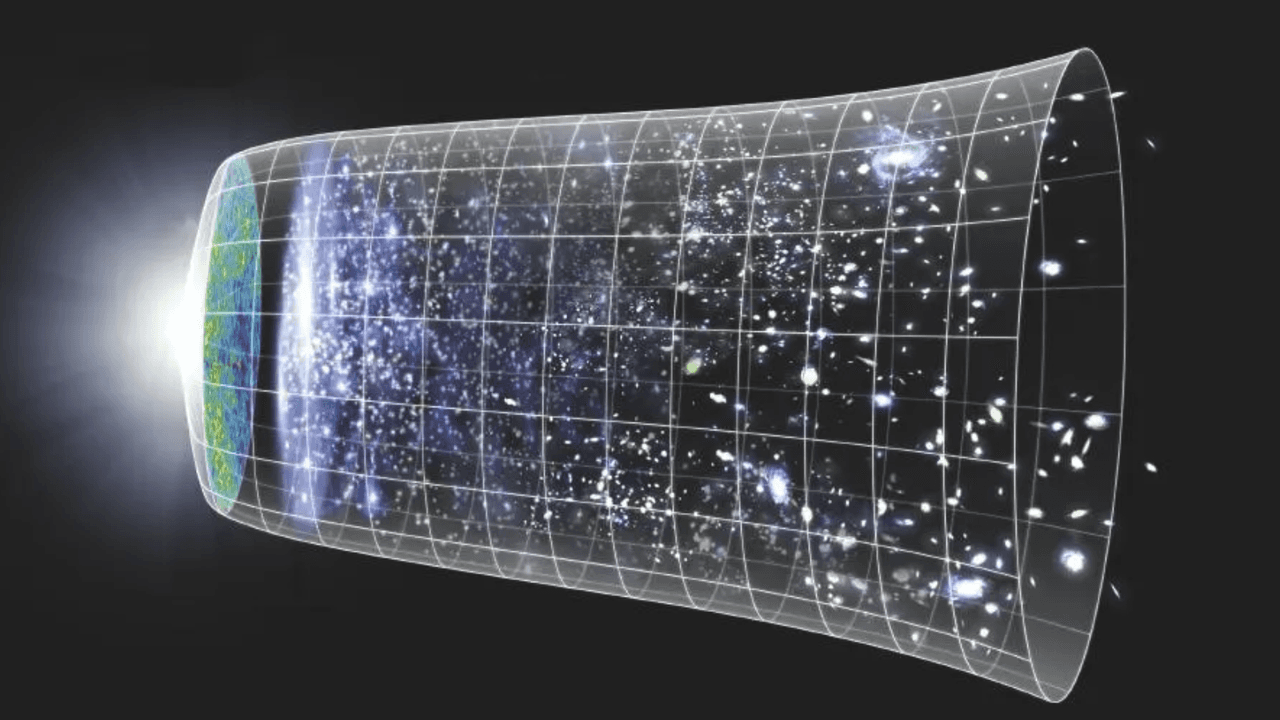
A groundbreaking study suggests that gravitational waves—tiny ripples in spacetime caused by massive cosmic events—could help resolve one of the biggest mysteries in modern physics: the Hubble tension. This refers to a long-standing discrepancy between measurements of the universe's expansion rate, known as the Hubble constant. While type 1a supernovas and the standard model of cosmology yield conflicting results, scientists are now exploring how gravitational waves can provide an independent way to measure this elusive value.
The idea is rooted in Einstein's theory of general relativity, which predicts that accelerating masses in spacetime generate gravitational waves. These waves travel at the speed of light and carry information about their sources, such as merging black holes or neutron stars. By analyzing these signals, researchers can infer details about the universe's expansion without relying on traditional methods tied to the Hubble tension.
The University of Illinois Urbana-Champaign and the University of Chicago team proposes using the background "humm" of gravitational waves from distant mergers to calculate the Hubble constant. This approach is distinct because it doesn't rely on comparing nearby objects, like supernovas, with models based on the early universe. Instead, it leverages the intrinsic properties of spacetime itself, offering a fresh perspective.
Gravitational wave astronomy has already made historic breakthroughs, such as LIGO's detections of waves from colliding black holes in 2015. However, previous attempts to use them for cosmological measurements faced accuracy issues. The new method aims to overcome these challenges by focusing on the cumulative effect of countless mergers across vast cosmic distances.
This innovative approach not only addresses the Hubble tension but also opens up entirely new avenues for exploring the universe's age and composition. As gravitational wave detectors like LIGO, Virgo, and KAGRA become more sensitive, they could provide even more precise data, making this method a game-changer in cosmology. The ability to independently measure the Hubble constant using such an unconventional tool highlights how cutting-edge science can tackle some of the most enduring questions about our universe.
Verticals
spacescience
Originally published on Space.com on 3/2/2026