
How Obey the Insect God is reviving a forgotten '90s game artform
Creative Bloq
by Ian Dean February 19, 2026
AI-Generated Deep Dive Summary
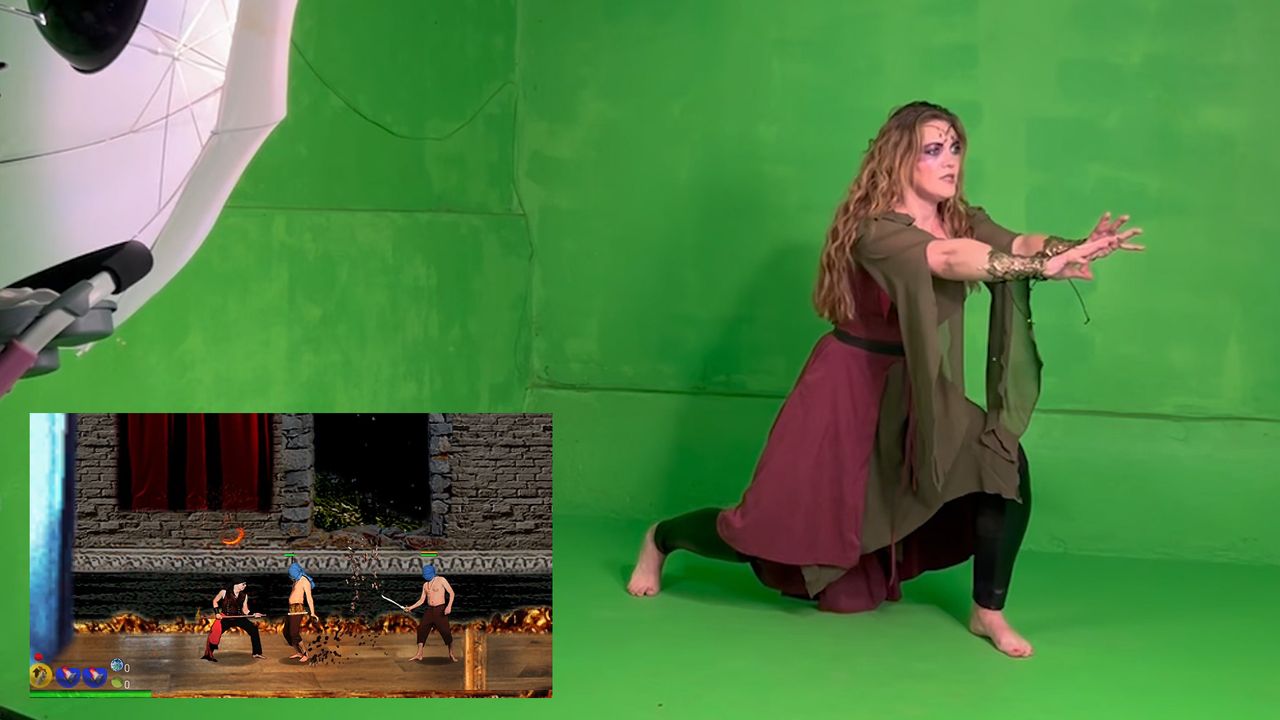
Obey the Insect God, a debut game by first-time developer Charles Davis, is reviving the forgotten art of digitized sprites—a technique popularized in '90s games like Mortal Kombat. By combining his background as an underground filmmaker with modern tools like the Godot engine and Adobe After Effects, Davis has created a unique narrative-driven action game inspired by The Kalevala, featuring handcrafted, high-quality sprites made from live-action footage of himself, his wife, and friends. This innovative approach bridges the gap between retro gaming aesthetics and contemporary design, offering a fresh perspective on a decades-old medium.
Davis’s journey began during the pandemic when he discovered Godot, a free open-source game engine that allowed him to experiment with programming despite having no prior experience in computer graphics or modeling. Leveraging his filmmaking skills, he set up a green screen in his garage and used After Effects to extract individual frames from recorded footage, creating smooth, high-resolution sprites at 1080p and 24 frames per second. This method mimicked the process used in classic games but with modern advancements in quality and resolution.
The technical challenges were significant. Davis initially faced memory issues due to large file sizes and lengthy animations, forcing him to implement optimization strategies like using a compression tool to reduce sprite size while maintaining visual clarity. He also adopted animation loops to keep sequences under two seconds, ensuring the game ran efficiently without overwhelming hardware limitations. These solutions demonstrate how traditional techniques can be adapted for modern platforms.
Obey the Insect God highlights the potential of blending analog filmmaking with digital gaming, offering a nostalgic yet fresh approach that appeals to both retro enthusiasts and design innovators. By reviving digitized sprites, Davis not only pays homage to '90s game art but also pushes the boundaries of what can be achieved with hybrid creative processes.
For designers and developers, this project underscores the importance of innovation within constraint—whether technical or creative. It shows how combining
Verticals
designart
Originally published on Creative Bloq on 2/19/2026