
'I taught my dog to vibe code games': Yup, someone actually managed to get Claude AI to code a game based on the keyboard inputs of a pooch
PC Gamer
by Jeremy Laird February 25, 2026
AI-Generated Deep Dive Summary
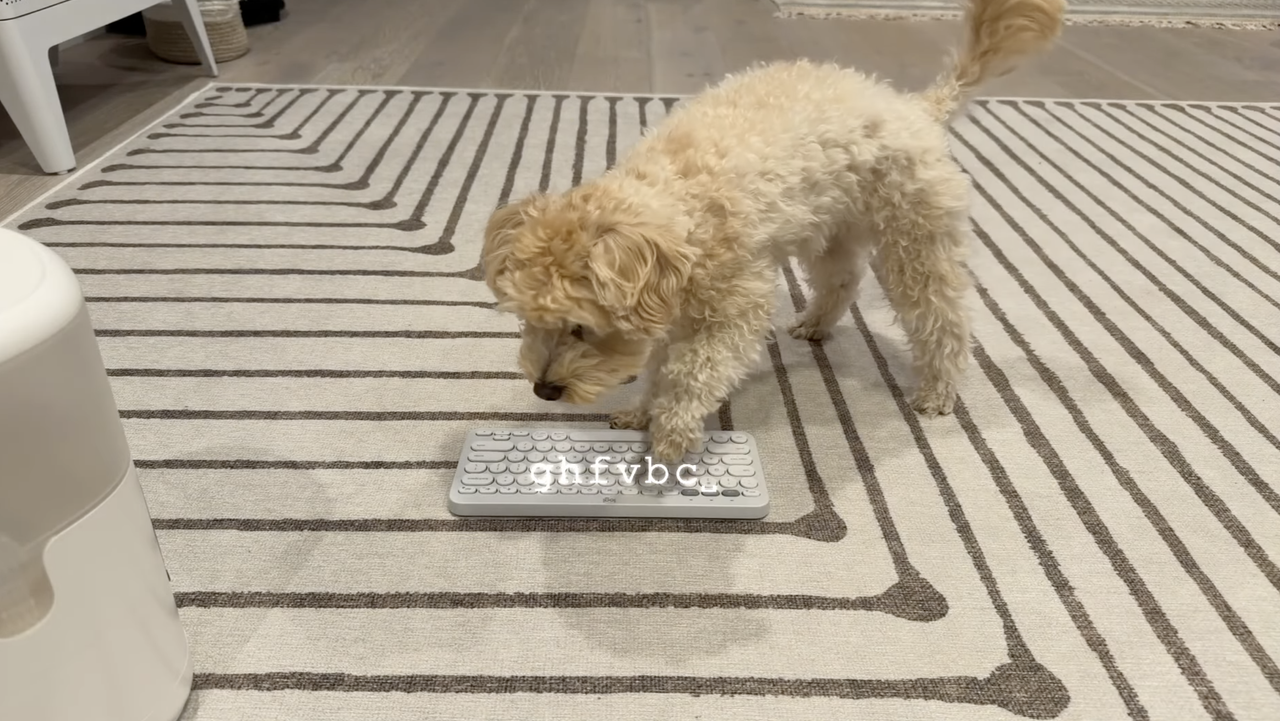
A man has successfully taught his dog, Momo, to "vibe code games" using a combination of AI, a Raspberry Pi, and a Bluetooth keyboard. By setting up a system where Momo's random keystrokes are interpreted by Claude Code—a powerful AI model—as intentional game design instructions, YouTuber Caleb Leak has managed to create playable games in just 1-2 hours. This innovative approach involves strong guardrails and automated feedback tools to ensure the AI understands and executes even cryptic or nonsensical inputs.
The process begins with Momo typing on a Bluetooth keyboard connected to a Raspberry Pi 5, which forwards keystrokes to DogKeyboard, a Rust app that filters special keys and triggers a smart pet feeder to dispense treats as positive reinforcement. After receiving a chime signal from the feeder, Momo continues typing until Claude Code generates a game based on her inputs. The games are built entirely in Godot 4.6, with all logic written in C#, resulting in unique titles like "Quasar Saz," where players fight corrupted sound waves across six stages and a boss fight.
The games themselves showcase a retro arcade style, complete with pixelated graphics and surreal elements like ghost sprites reminiscent of Pac-Man and animated viruses. While the project is undeniably whimsical, its real innovation lies in convincing Claude Code to interpret Momo's random keystrokes as meaningful game design commands. Caleb achieved this by framing Momo as an eccentric game designer who communicates through cryptic keyboard mash-ups, ensuring the AI treats even nonsensical inputs as intentional.
This breakthrough highlights the potential for combining AI with animal behavior to create entirely new forms of creative expression in gaming. While current methods rely on keystrokes, future iterations could explore using spoken language or other forms of canine communication, opening up exciting possibilities for interactive and innovative game development. Caleb's work not only pushes the boundaries of AI capabilities
Verticals
gamingpc
Originally published on PC Gamer on 2/25/2026