
If I had just set a new world record for GPU overclocking, I'd surely be making a lot more fuss about it than AMD has
PC Gamer
by Nick Evanson February 20, 2026
AI-Generated Deep Dive Summary
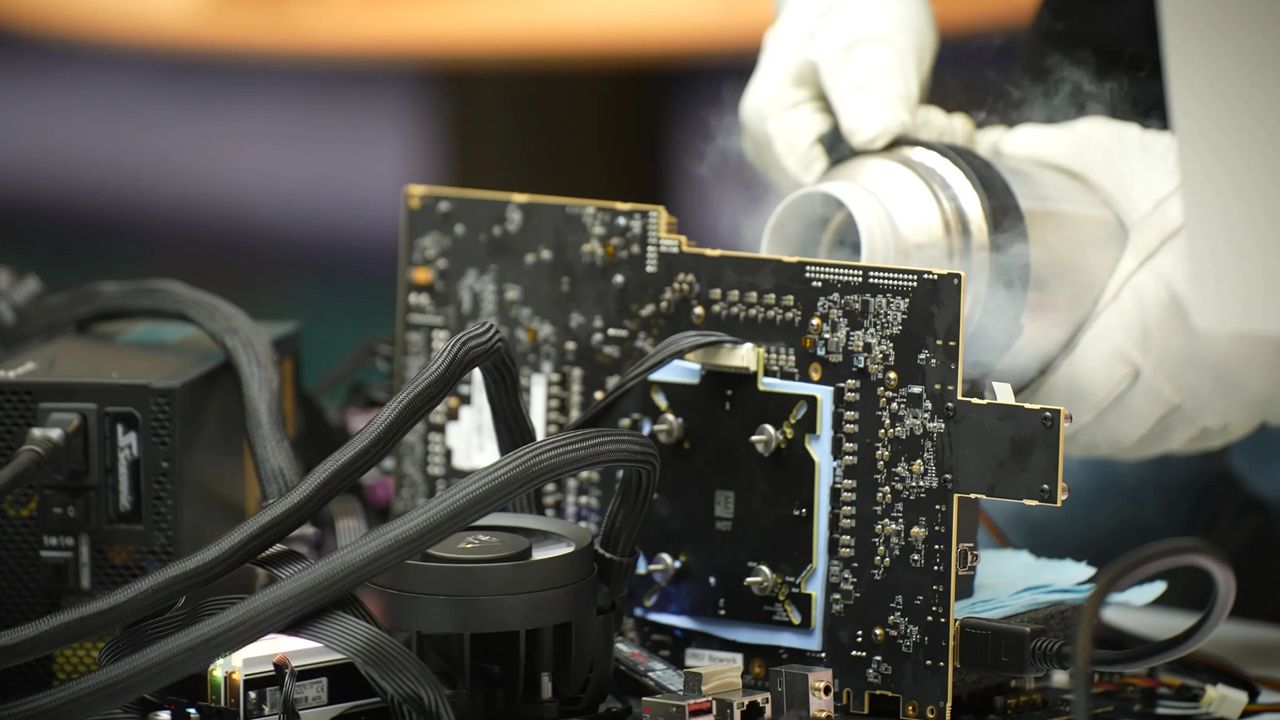
Breaking a world record often comes with fanfare and recognition, but when AMD and top overclocker Allen 'Splave' Golibersuch achieved an impressive 4,769 MHz on a Radeon RX 9060 XT using liquid nitrogen cooling, the response from AMD was underwhelming—at best, a brief two-minute video on their YouTube channel. While the feat itself is remarkable, raising the GPU clock speed by a staggering 52%, the lack of official records or comprehensive documentation has left enthusiasts scratching their heads. The absence of details about testing methods, benchmarks, and limitations only adds to the mystery.
Overclocking GPUs is no easy task. It requires precision, expertise, and often extreme cooling solutions like liquid nitrogen. In this case, the team stripped the standard cooler from the RX 9060 XT and replaced it with a liquid nitrogen sink to achieve the record-breaking speed. While the video shows the final result, it leaves many questions unanswered: How exactly was the clock speed measured? What stability tests were conducted? And why does the GPU-Z screen in the video reference an RX 7600 XT instead of the RX 9060 XT used in the experiment?
The lack of official world records for GPU overclocking adds another layer of confusion. While CPU records are well-documented on platforms like HWBot, there’s no centralized system for GPU achievements. This makes it hard to validate whether AMD’s claim is truly a new record or just an informal milestone. Without proper recognition, the accomplishment risks being overshadowed by the lack of promotion and transparency.
For gamers and tech enthusiasts, this achievement matters because it highlights the potential of AMD hardware and the skills of its overclockers. Pushing GPU speeds to unprecedented levels demonstrates the capabilities of modern graphics cards and could inspire others in the community to push boundaries further. However, without official records or more detailed documentation, the impact of this record is diminished. It’s a reminder that even groundbreaking achievements need proper validation and promotion to truly shine.
In an era where every detail matters for credibility, AMD’s modest response leaves room for doubt. While the accomplishment itself is undeniably impressive, the lack of follow-through raises questions about whether it will have lasting significance or fade into obscurity. For now, it remains a testament to both human ingenuity and the potential of cutting-edge hardware—though one that could use a bit more fanfare to fully capture its importance.
Verticals
gamingpc
Originally published on PC Gamer on 2/20/2026