
'If the opposition doesn't allow the House to function, we will go for the guillotine': Rijiju
Times of India
by TOI NEWS DESKFebruary 15, 2026
AI-Generated Deep Dive Summary
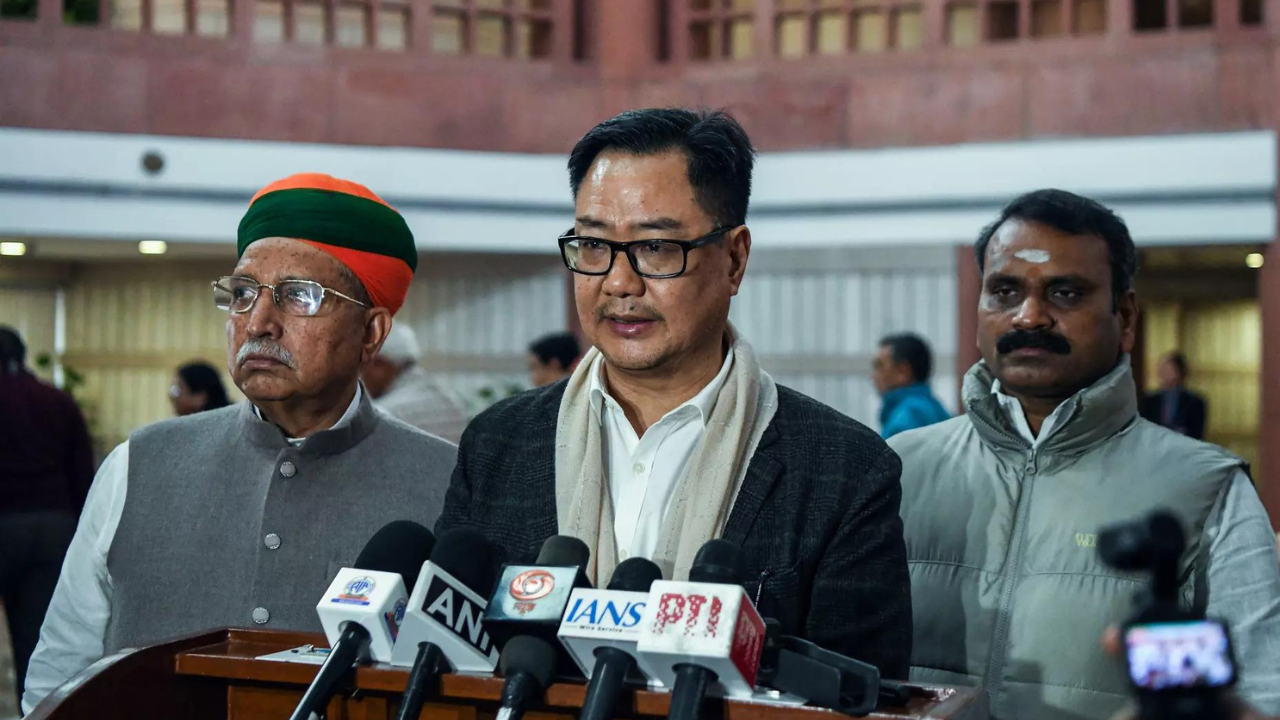
Union Minister Kiren Rijiju has issued a strong warning to the opposition ahead of the second part of India’s Budget Session, scheduled to begin on March 9. He emphasized that if the opposition continues to disrupt parliamentary proceedings, the government may invoke the guillotine rule, allowing key legislation to pass without opposition interference. This comes as the Lok Sabha is set to debate and vote on a no-confidence motion against Speaker Om Birla on March 9.
Rijiju highlighted the significance of the upcoming session, noting that several critical bills and important legislations will be introduced for debate. He cautioned the opposition that stalling the House would ultimately harm their interests, as it could lead to the government bypassing them through procedural measures. Rijiju also pointed out divisions within the opposition, particularly noting that Trinamool Congress did not sign onto the no-confidence motion against the Speaker.
The minister’s remarks come amid ongoing tensions in Parliament, which have already seen disruptions during the first part of the session. These included incidents like Rahul Gandhi’s disqualification from quoting former army chief M.M. Naravane’s memoir and Prime Minister Narendra Modi being unable to address the Lok Sabha due to opposition protests. In an unprecedented move, the Motion of Thanks was passed without Modi’s speech.
Rijiju hinted at potential consequences for opposition members who disrupt proceedings, referencing the Speaker’s decision to step aside from his role following allegations of partisan behavior. He also noted that smaller parties are not fully aligned with the opposition’s strategy, particularly as assembly elections approach.
The upcoming session is crucial for both the government and the opposition, with significant legislation expected to be introduced. The outcome of the no-confidence motion against the Speaker will set the tone for the session and could shape India’s political dynamics in the coming months. This development holds significance not just for domestic politics but also for understanding broader trends in governance and political stability in India.
Verticals
worldasia
Originally published on Times of India on 2/15/2026