
If the Winter Olympics went interplanetary, where else could you ski in the solar system?
Space.com
by Daisy Dobrijevic February 13, 2026
AI-Generated Deep Dive Summary
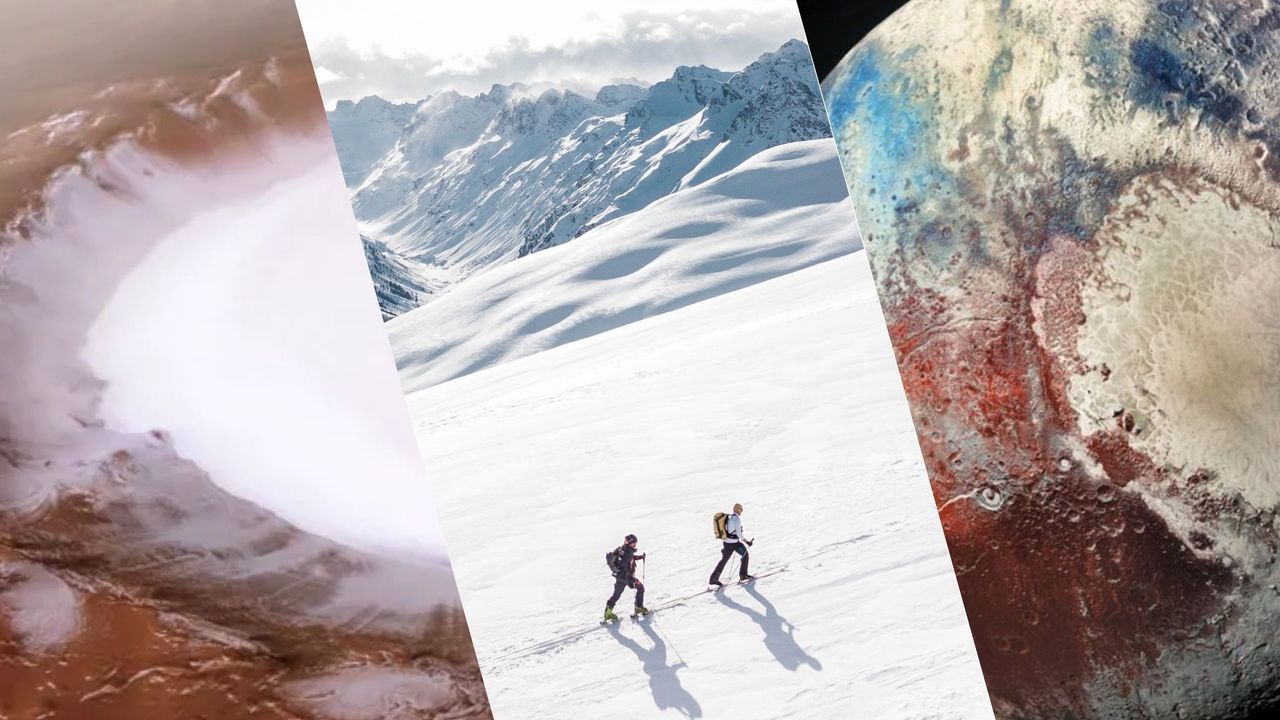
The article explores the potential of skiing on various destinations within our solar system, comparing them to Earth's ideal conditions. Earth is uniquely suited for skiing due to its seasonal snowfall, the physics of water ice allowing smooth sliding, and moderate gravity. These factors combine to create perfect skiing conditions that are rare elsewhere in the cosmos.
The Moon, while nearby, offers no atmosphere or snowfall, leaving its surface covered in jagged regolith. Although astronauts like Harrison Schmitt managed to ski on its dusty terrain during the Apollo missions, the experience was more about gliding than carving turns, and the harsh environment makes it an unlikely spot for enjoyable skiing.
Mars presents another challenge with its winter snow composed of dry ice (frozen carbon dioxide). This sublimates under low atmospheric pressure, creating unstable surfaces that make skiing difficult. The brittle surface would likely fracture under ski edges, offering chaotic slides rather than controlled turns.
Europa, one of Jupiter's moons, is covered in water ice, which seems promising for skiing. However, its extreme temperatures (-260°F) and lack of atmosphere present significant obstacles. Even with the right materials, skiing there would require specialized gear and extreme conditions that are far from ideal.
Considering these challenges, Earth remains unparalleled for skiing, highlighting its uniqueness as a destination where all the necessary elements—snow, physics, and climate—align perfectly. This interplanetary exploration underscores how remarkable
Verticals
spacescience
Originally published on Space.com on 2/13/2026