
Is China flexing its intelligence muscle by tracking US military moves near Iran?
South China Morning Post
by Yuanyue Dang,Amber WangFebruary 25, 2026
AI-Generated Deep Dive Summary
A Chinese private company, MizarVision, has sparked significant attention among security experts by publishing unusually detailed updates on U.S. military deployments near Iran. These posts have become more frequent and granular in recent months, providing specific information about U.S. military assets across countries like Saudi Arabia, Jordan, Greece, and Qatar. This includes details such as the exact numbers and models of U.S. jets stationed at facilities, along with their air defense systems. Such precision has led experts to suggest that these updates reflect advanced intelligence capabilities tied to Beijing.
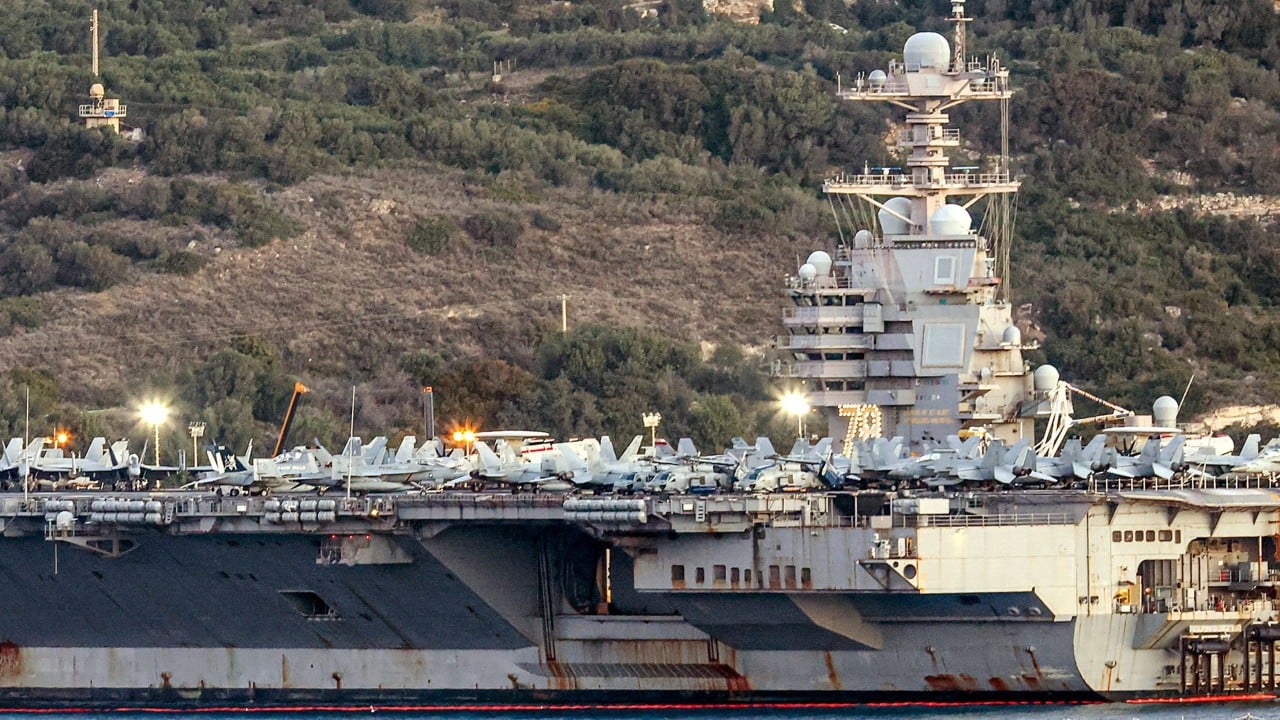
The timing of MizarVision’s latest update coincided with the arrival of the USS Gerald R. Ford, the world’s largest aircraft carrier, in Crete, Greece. This deployment is part of what appears to be the largest U.S. military buildup in the Middle East since the Iraq War in 2003. Amid escalating tensions between Iran and the United States, these updates have provided a detailed picture of America’s military movements, including its strategic positions across key regions.
The significance of MizarVision’s activities lies in their potential implications for global security dynamics. As tensions rise in the Middle East, the ability of Chinese entities to gather and disseminate such precise intelligence raises questions about Beijing’s role in regional affairs and its competition with traditional powers like the U.S. and Russia. This underscores a growing trend of non-state actors playing a pivotal role in shaping geopolitical landscapes, particularly in regions where major powers are increasingly active.
For readers interested in global security and international relations, this story highlights the evolving nature of intelligence-sharing and military strategy in the modern era. It also sheds light on how private companies can serve as tools for state-backed initiatives, blurring the lines between public and private sector activities in the realm of national security. The situation underscores the intricate balance of power and influence at play in the Middle East, where both traditional and emerging actors are vying for control.
Verticals
worldasia
Originally published on South China Morning Post on 2/25/2026