
Japanese paper-cutting art inspires flexible brain implants in China
South China Morning Post
by Victoria BelaFebruary 13, 2026
AI-Generated Deep Dive Summary
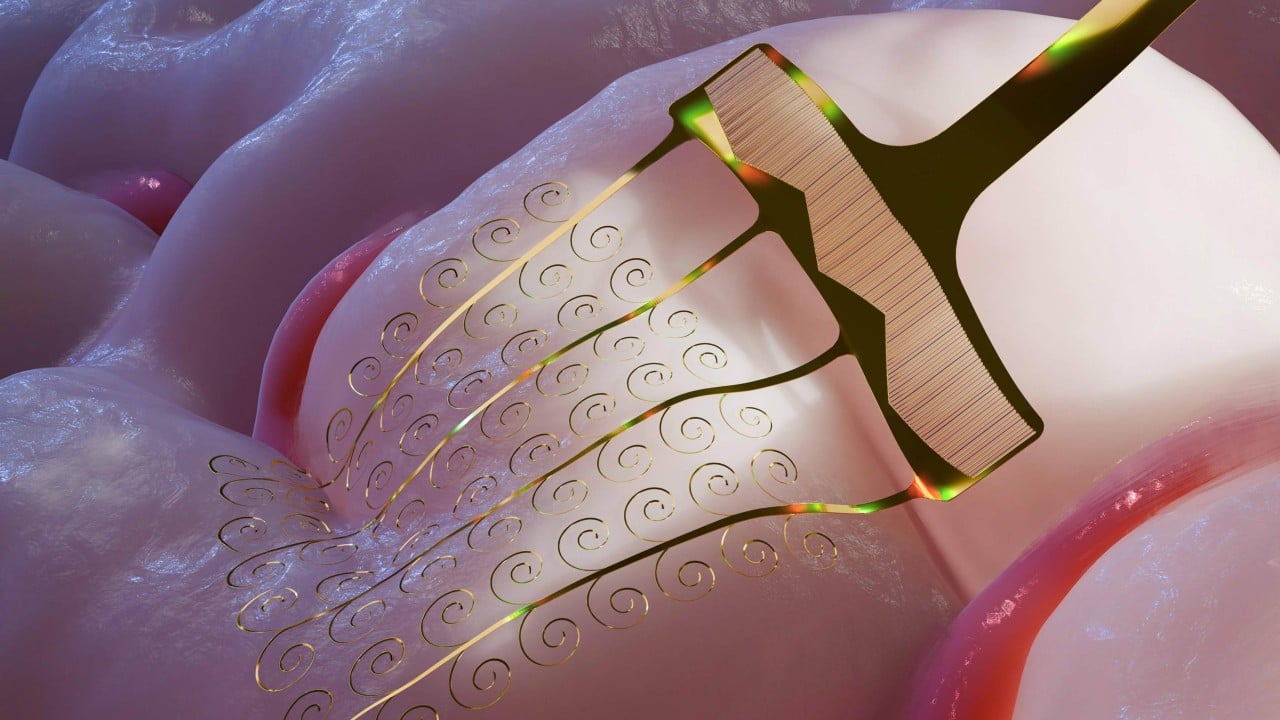
Chinese scientists have made a groundbreaking advancement in neural technology by developing flexible microelectrodes inspired by Japanese kirigami art. This innovative design allows the electrodes to move and adapt within the brain, potentially revolutionizing brain-computer interfaces (BCIs). The research, published in *Nature Electronics*, highlights how traditional artistic techniques are being repurposed for cutting-edge scientific applications.
The inspiration behind these adaptive microelectrodes comes from kirigami, a centuries-old Japanese paper-cutting technique known for its intricate 3D designs created through precise cutting and folding. By mimicking the structural complexity of kirigami, Chinese Academy of Sciences researchers designed neuronal activity recorders that can bend and shift with brain tissue without causing damage or restricting movement.
This development addresses key challenges in existing neural implants, which often face issues like limited flexibility and durability. The kirigami-inspired electrodes are not only more adaptable but also capable of recording high-quality neural signals over extended periods. This could lead to significant advancements in treating neurological disorders such as epilepsy, Parkinson’s disease, and traumatic brain injuries.
The implications of this research extend beyond medical applications, offering a unique fusion of art and science. By drawing inspiration from traditional craftsmanship, Chinese scientists have demonstrated how cultural heritage can drive technological innovation. The integration of kirigami principles into neuroscience could pave the way for more sophisticated and biocompatible neural devices in the future.
This breakthrough not only pushes the boundaries of neural engineering but also underscores the global potential for interdisciplinary approaches to solving complex scientific problems. As researchers continue to explore creative solutions, such as those inspired by art and culture, the future of brain-computer interfaces looks increasingly promising for patients worldwide.
Verticals
worldasia
Originally published on South China Morning Post on 2/13/2026