
Minns government took ‘sledgehammer’ to protests after Bondi, court told
Sydney Morning Herald
by Michaela WhitbournFebruary 26, 2026
AI-Generated Deep Dive Summary
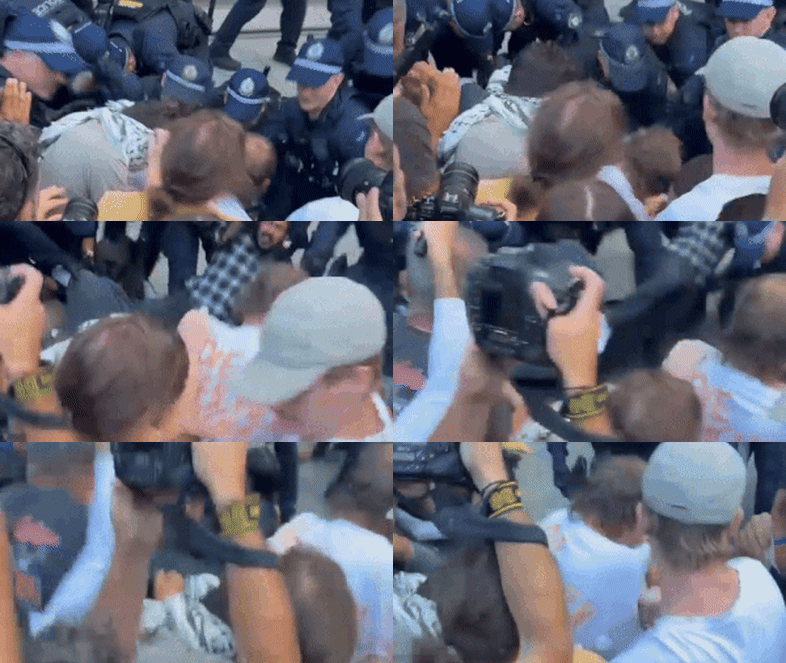
The New South Wales (NSW) Court of Appeal is reviewing controversial protest restrictions introduced by the Minns government following the Bondi terror attack. Activist groups, including the Palestine Action Group, argue that the laws are overly broad and violate constitutional freedoms. The regulations grant police powers to restrict protests in specific areas for up to 14 days after a suspected terrorist act, with potential extensions of up to 90 days. Critics claim these measures, rushed through parliament just 10 days after the Bondi massacre on December 24, operate like a "sledgehammer" approach, targeting all protests regardless of their relevance to terrorism.
During the hearing, David Hume, representing the protest groups, argued that the laws infringe on the implied freedom of political communication in the Australian Constitution. He contended that the restrictions are unnecessary and fail to differentiate between low-risk and high-risk assemblies. For example, under the new framework, even peaceful protests unrelated to terrorism—such as those against deaths in custody or planning laws—could be banned if deemed a threat to social cohesion or community safety.
The existing legal process allowed for case-by-case assessment of protest authorizations, ensuring judicial oversight. However, the new laws bypass this independent review, potentially silencing dissent and stifling public discourse. Critics also highlight that online speech dominates modern communication, making physical protests crucial for visibility. Activists argue that restricting such gatherings undermines their effectiveness and impact.
The court heard concerns that the legislation may allow authorities to suppress lawful assemblies based on vague fears of disharmony or social division. This raises questions about the balance between public safety and free expression, a dilemma faced by many nations post-terrorism incidents. The outcome of this case could set a precedent for how Australia manages protest rights in the aftermath of similar events.
Ultimately, the court's decision will determine whether these sweeping restrictions are deemed lawful or if they overreach constitutional protections. This issue not only impacts Australian civil liberties but also resonates globally as societies grapple with how to protect both public safety and democratic freedoms in the wake of terrorism.
Verticals
worldaustralia
Originally published on Sydney Morning Herald on 2/26/2026