
Namo Bharat at 160 kmph, Meerut Metro at 120 kmph: High-speed infra push for commuters
Times of India
by TOI CITY DESKFebruary 21, 2026
AI-Generated Deep Dive Summary
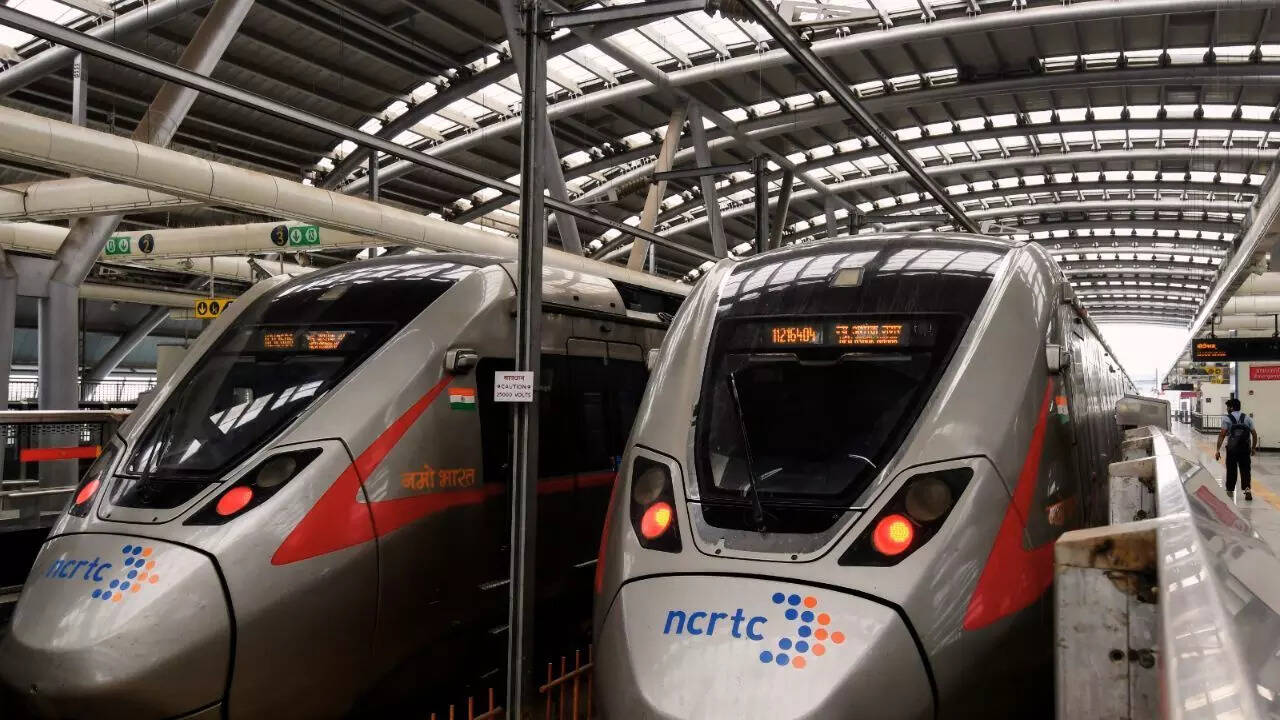
Prime Minister Narendra Modi is set to visit Meerut to inaugurate two significant transportation projects: the Namo Bharat train service and the Meerut Metro system. The event will mark a historic milestone in India's high-speed infrastructure development, with both projects aimed at revolutionizing intercity and intra-city travel.
The Namo Bharat, India’s first Regional Rapid Transit System (RRTS), is designed to operate at a top speed of 180 kmph, with an operational speed of 160 kmph. This system will connect key urban centers like Delhi, Sahibabad, Ghaziabad, Modinagar, and Meerut, providing faster and more efficient intercity travel. The inaugural stretch includes a 5-km section between Sarai Kale Khan and New Ashok Nagar in Delhi, as well as a 21-km corridor between Meerut South and Modipuram in Uttar Pradesh.
The Meerut Metro, operating at an impressive speed of 120 kmph, will be India’s fastest metro system. It is set to cover the entire 21-km stretch between Meerut South and Modipuram in just 30 minutes, including stoppages. This project also represents a pioneering integration with the Namo Bharat corridor, sharing infrastructure for seamless operations—a model that could serve as a benchmark for future urban transit planning.
The inauguration will also highlight Sarai Kale Khan’s transformation into a multi-modal transport hub, connecting various modes of transport such as the Delhi Metro, railways, and ISBT. This integrated approach is expected to reduce road congestion and significantly lower carbon emissions, making it a environmentally friendly transportation solution.
These projects underscore India’s commitment to modernizing its infrastructure and enhancing connectivity across regions. By combining high-speed rail with metro systems, India is setting new standards for efficient urban and intercity transit, which could serve as a template for other nations looking to improve their transportation networks.
Verticals
worldasia
Originally published on Times of India on 2/21/2026