
NASA hopes to avoid more hydrogen leaks during 2nd Artemis 2 rocket fueling test today: Watch live
Space.com
by Josh Dinner February 19, 2026
AI-Generated Deep Dive Summary
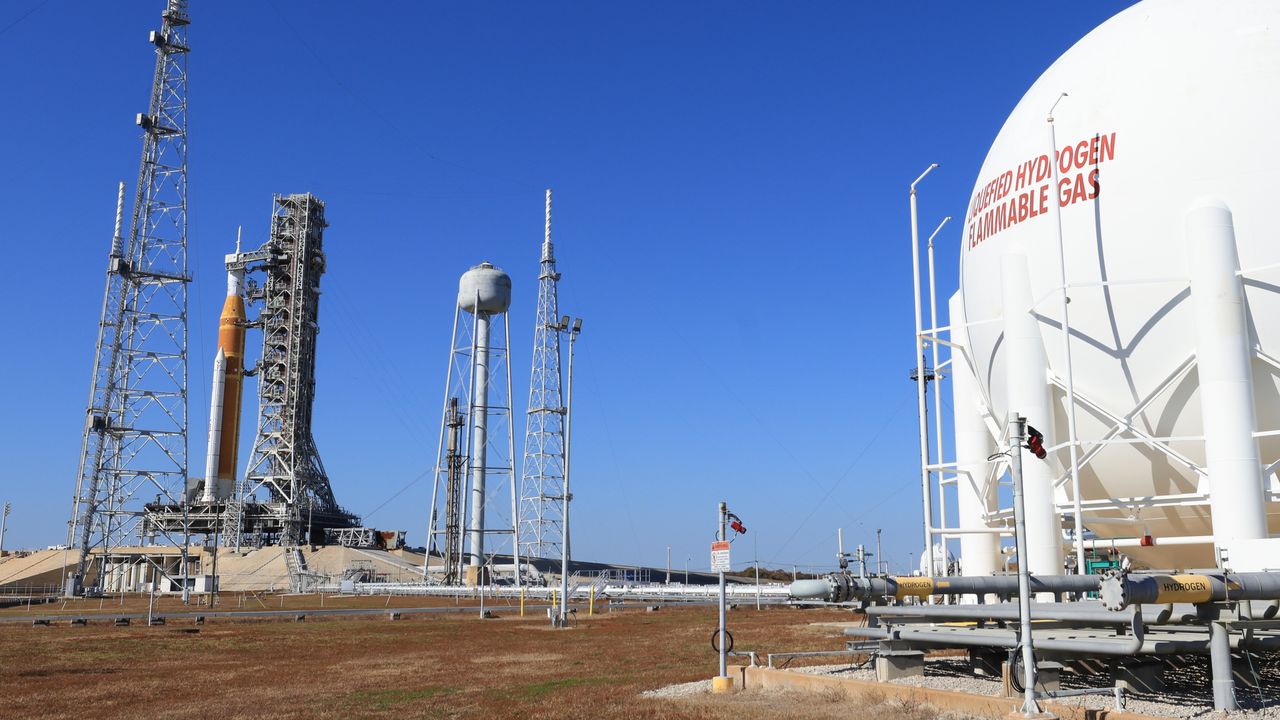
NASA is closely monitoring its second wet dress rehearsal (WDR) for the Artemis 2 mission at the Kennedy Space Center as it aims to avoid repeating hydrogen leak issues from previous tests. This critical prelaunch exercise is designed to simulate launch conditions for the Space Launch System (SLS) rocket and Orion spacecraft, ensuring readiness for a potential March 6th departure on a historic crewed lunar mission. Engineers are particularly focused on fixing recurring issues with the tail service mast, which caused leaks during the first WDR and earlier Artemis 1 attempts in 2022.
The WDR involves fueling the SLS rocket with liquid hydrogen and oxygen while testing countdown procedures, including holds, scrub scenarios, and emergency detanking operations. This two-day test is a pivotal step in validating the system's ability to handle cryogenic fuels safely and efficiently. NASA has implemented hardware modifications and improved protocols based on lessons from past failures, which caused multiple rollbacks during Artemis 1.
If successful, the WDR will set the stage for a potential launch window opening March 6th, marking the first crewed lunar mission since 1972. The mission aims to send astronauts Reid Wiseman, Victor Glover, Christina Koch, and Jeremy Hansen on a 10-day journey around the moon before safely returning them to Earth. This test also serves as a crucial milestone in NASA's broader goal of reviving human exploration beyond low Earth orbit.
The Artemis program's progress is not just about revisiting the moon; it represents a significant step toward establishing a sustainable human presence in deep space. A successful WDR would demonstrate that NASA has overcome past technical challenges, paving the way for future missions to explore the lunar surface and potentially even Mars. For space enthusiasts, this test is a key moment in determining whether the agency can meet its ambitious timeline for returning humans to the moon.
Readers interested in space exploration should
Verticals
spacescience
Originally published on Space.com on 2/19/2026