
NASA studies Antarctic seawater to support search for life beyond Earth
Times of India
by TOI SCIENCE DESKFebruary 19, 2026
AI-Generated Deep Dive Summary
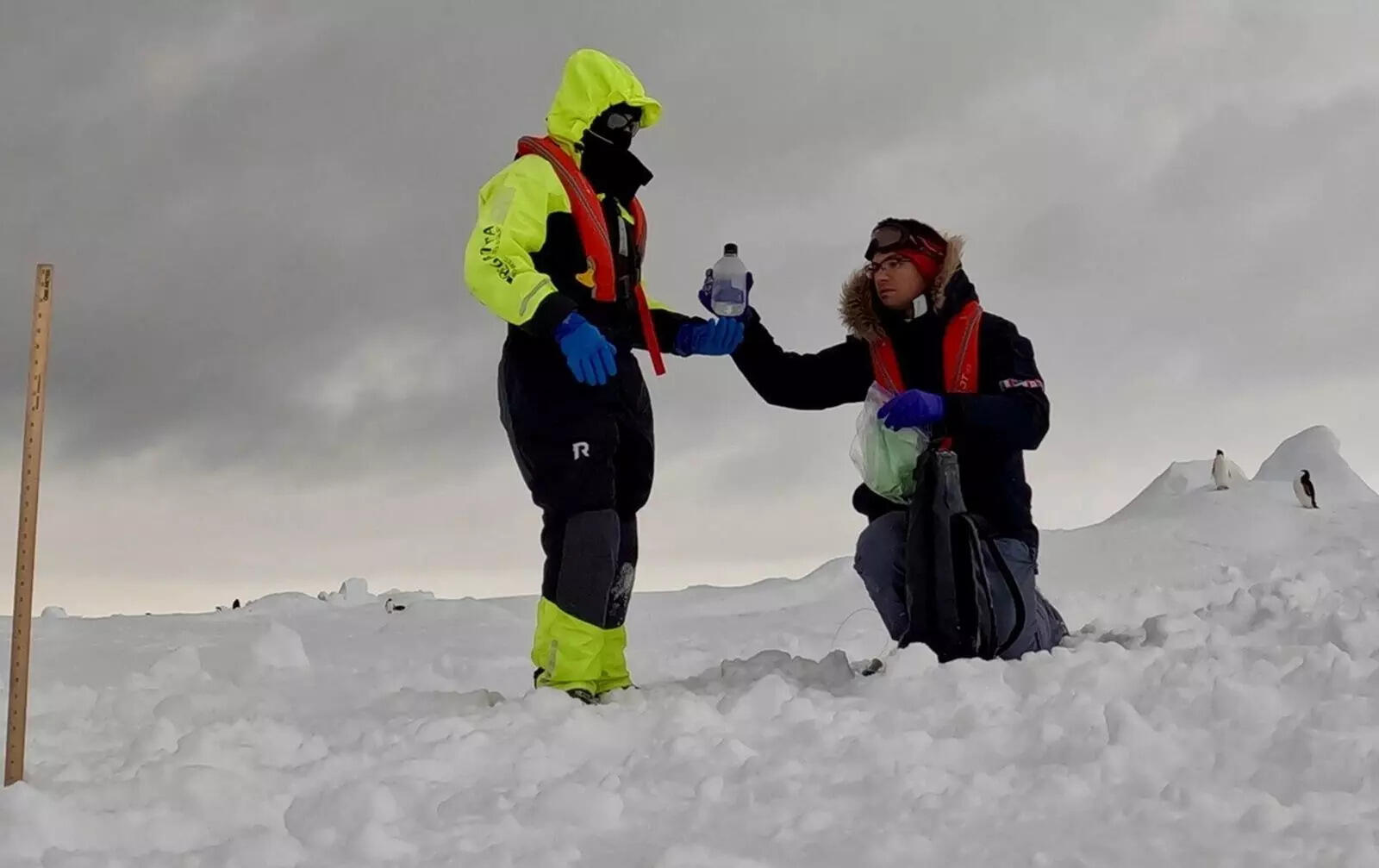
NASA scientists are exploring Antarctic seawater to gain insights into the potential for life beyond Earth, particularly in the harsh conditions of subsurface oceans on distant moons and planets. By studying isolated water samples from beneath Antarctica's permanent ice cover, researchers aim to understand how such environments might behave under space-like conditions. This work is part of a broader effort led by NASA and the University of Maryland, focusing on icy bodies like Europa, Enceladus, and Pluto, which may harbor liquid oceans beneath their frozen crusts.
The team collected seawater from depths over 1,000 meters in the Weddell Sea and other remote areas near the Antarctic Peninsula. These regions mimic the cold, dark conditions found in outer solar system ocean worlds. The samples were then transported to Maryland for testing in a specialized laboratory device called the Simulator of Ocean World Cryovolcanism. This machine replicates the extreme pressures and temperatures of space to observe how organic compounds and salts might change when exposed to such environments.
Cryovolcanism, where subsurface water erupts through ice cracks, is a key phenomenon being studied. This process allows materials from hidden oceans to escape into space, offering potential sampling opportunities for future missions. However, rapid freezing and exposure to vacuum can alter or destroy delicate organic molecules, making it crucial to study how these conditions affect chemical stability.
Back in Maryland, the samples are being analyzed using chromatography to track changes in salts, fatty acids, and amino acids. By comparing untreated samples with those processed through the simulator, scientists hope to identify which compounds might survive the journey from a deep ocean to outer space. This research doesn’t aim to confirm life exists elsewhere but focuses on understanding what signs of life might endure under such extreme conditions.
The study highlights Antarctica’s role as a unique natural laboratory for exploring alien ocean worlds. While it may not directly prove life beyond Earth, it provides valuable insights into how we might detect its traces in the future. This work underscores the importance of studying our planet’s extremes to unravel the mysteries of the universe and expand our knowledge of potentially habitable environments elsewhere in the solar system.
Verticals
worldasia
Originally published on Times of India on 2/19/2026