
NASA's Perseverance rover now has its own 'GPS' on Mars: 'We've given the rover a new…
Space.com
by Sharmila Kuthunur February 22, 2026
AI-Generated Deep Dive Summary
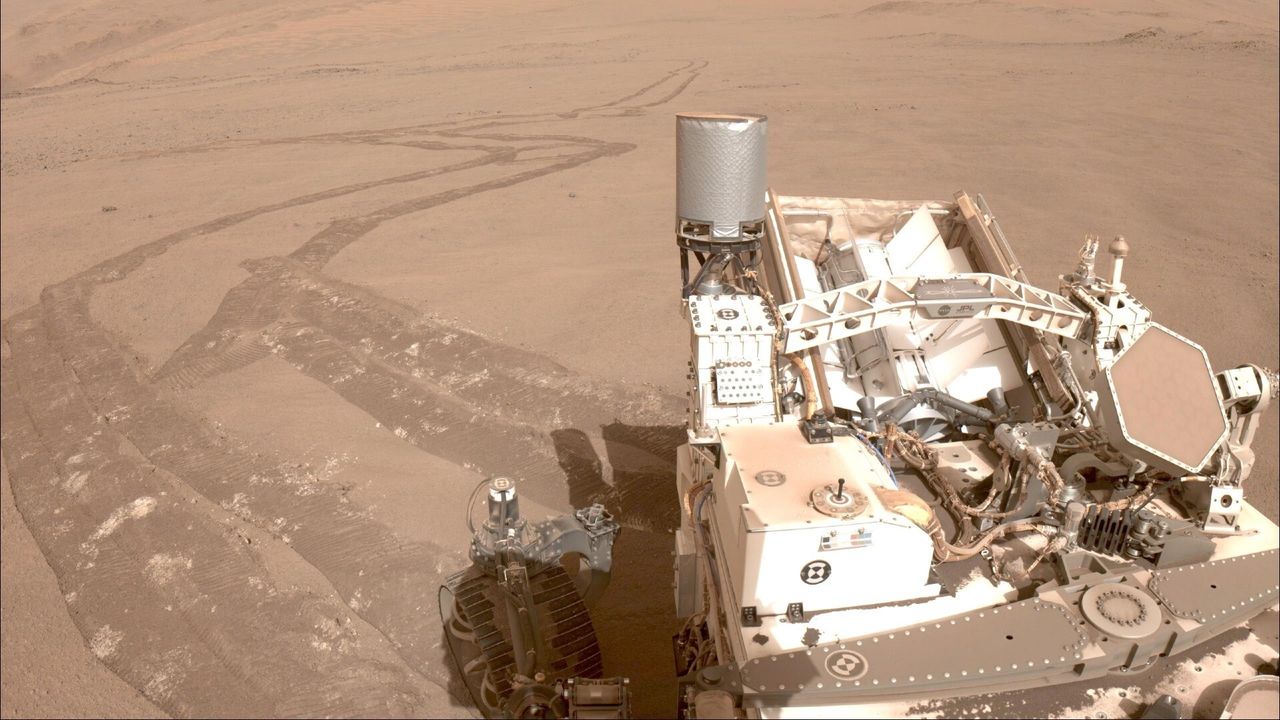
NASA's Perseverance rover has been equipped with a groundbreaking new feature called Mars Global Localization, enabling it to determine its exact location on Mars autonomously without relying on Earth-based instructions. This innovative system allows the rover to match its panoramic images with orbital maps, pinpointing its position within just two minutes with remarkable accuracy of about 10 inches. This advancement solves a long-standing challenge: previous navigation methods often led to inaccuracies over time, forcing the rover to pause and wait for human confirmation. With this new capability, Perseverance can explore more efficiently and cover greater distances, enhancing its scientific output.
Prior to this upgrade, the rover relied on images from orbiters and onboard sensors, which could accumulate errors over long journeys. For instance, small mistakes in tracking geological features or wheel slippage could lead to positioning errors of over 100 feet after extended travel. This dependency on Earth-based guidance was not only time-consuming but also limited the rover's autonomy and operational efficiency. The new system eliminates this constraint, allowing Perseverance to navigate confidently and continue its mission without interruptions.
The development of Mars Global Localization began in 2023, with rigorous testing against images from past rover stops, all of which proved successful. This achievement marks a significant milestone in robotics research, as autonomous navigation on Mars has been an elusive goal for decades. The technology's deployment represents the first time such a solution has been implemented in space, showcasing the potential for similar advancements in future missions.
This breakthrough complements another recent milestone: the rover's first fully AI-planned drive, where artificial intelligence analyzed orbital data and terrain to map out a safe route. Together, these innovations underscore NASA's commitment to advancing robotic autonomy in space exploration. By reducing reliance on Earth-based control, Perseverance can now tackle more complex and hazardous terrains, paving the way for future missions that demand
Verticals
spacescience
Originally published on Space.com on 2/22/2026