
One of Europe’s largest Iron Age mass graves contains mostly women and children
Popular Science
by Andrew PaulFebruary 25, 2026
AI-Generated Deep Dive Summary
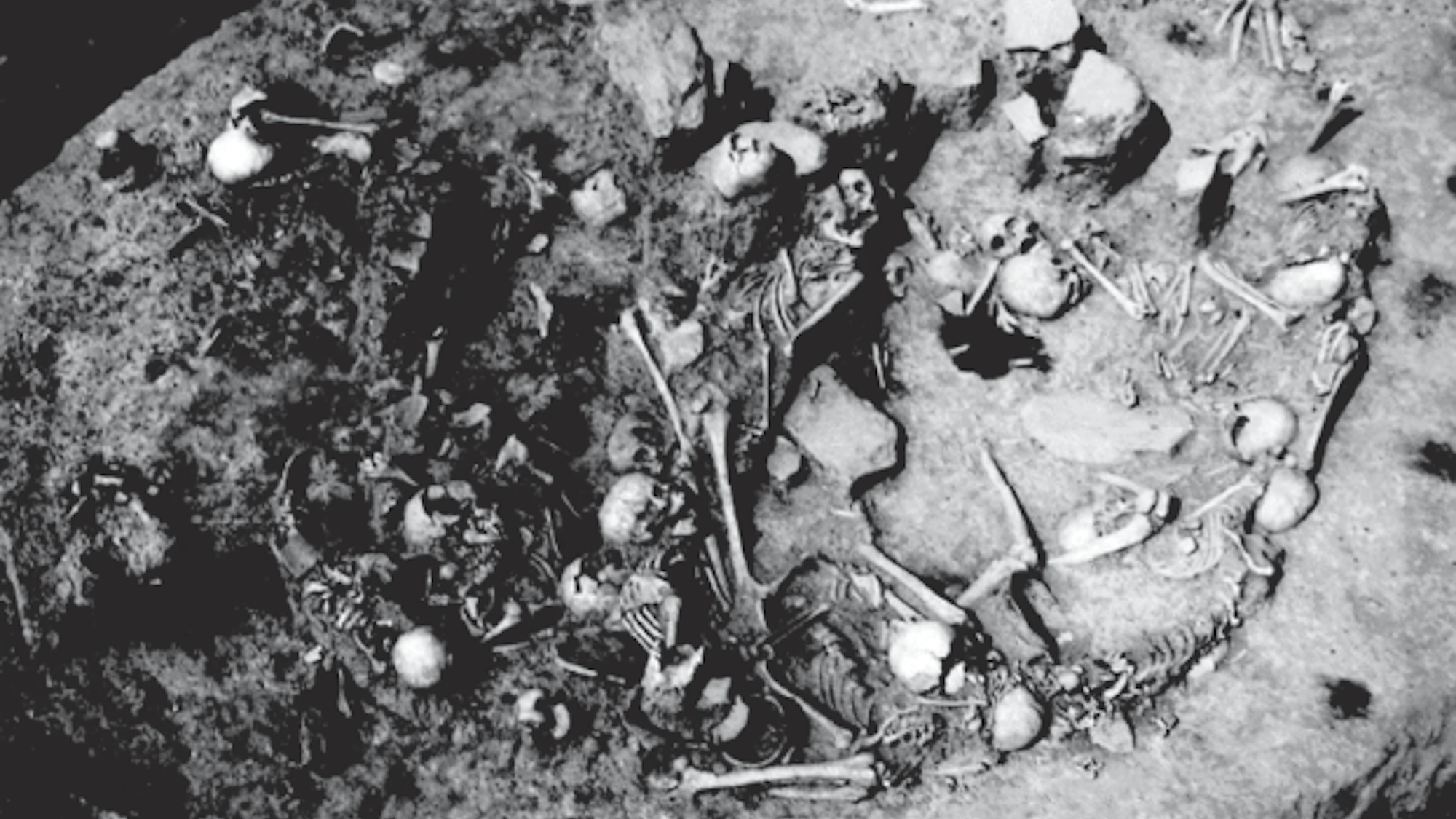
Archaeologists have uncovered one of Europe’s largest Iron Age mass graves near Belgrade, Serbia, containing the remains of over 77 individuals, predominantly women and children. This discovery at the Gomolava site challenges typical assumptions about prehistoric mass graves, as genetic analysis revealed that most victims were unrelated, suggesting a more complex social or symbolic context for their deaths. Unlike other ancient burial sites where victims are often closely related, Gomolava’s demographics indicate a unique and unexpected scenario.
The excavation uncovered signs of brutal violence, with remains showing evidence of bludgeoning and stabbing. Despite the horrific nature of the killings, the burial site was prepared with care, featuring offerings like bronze jewelry, ceramic vessels, and the remains of a butchered calf. This suggests that the mass murder may have been part of a ritualistic or symbolic ceremony, rather than a haphazard act of violence.
Researchers believe the victims were not warriors or family members from a nearby village but instead chosen for their gender and age. The majority of the deceased were women and children, with 40 individuals being adolescents or young adults. This targeting of specific groups hints at broader social dynamics, such as assertions of power or attempts to disrupt rival communities by severing family lineages.
The study, published in *Nature Human Behaviour*, highlights how this mass grave reflects a period of significant upheaval in early Iron Age Europe. The killings may have served as a symbolic display of dominance over land and resources, rather than being a direct result of warfare. This discovery provides rare insights into the complexities of prehistoric societies and their responses to conflict and social change.
This find underscores the importance of understanding how ancient communities navigated power struggles and resource competition. By examining such events, researchers can shed light on broader patterns of human behavior during times of crisis, offering valuable lessons for those interested in archaeology, history, and the study of early European societies.
Verticals
sciencetech
Originally published on Popular Science on 2/25/2026