
OpenAI CEO Sam Altman may have just told Google CEO Sundar Pichai, Jeff Bezos and Elon Musk that their 'Space Plans' are wrong: Do the very rough math of...
Times of India
by TOI TECH DESKFebruary 22, 2026
AI-Generated Deep Dive Summary
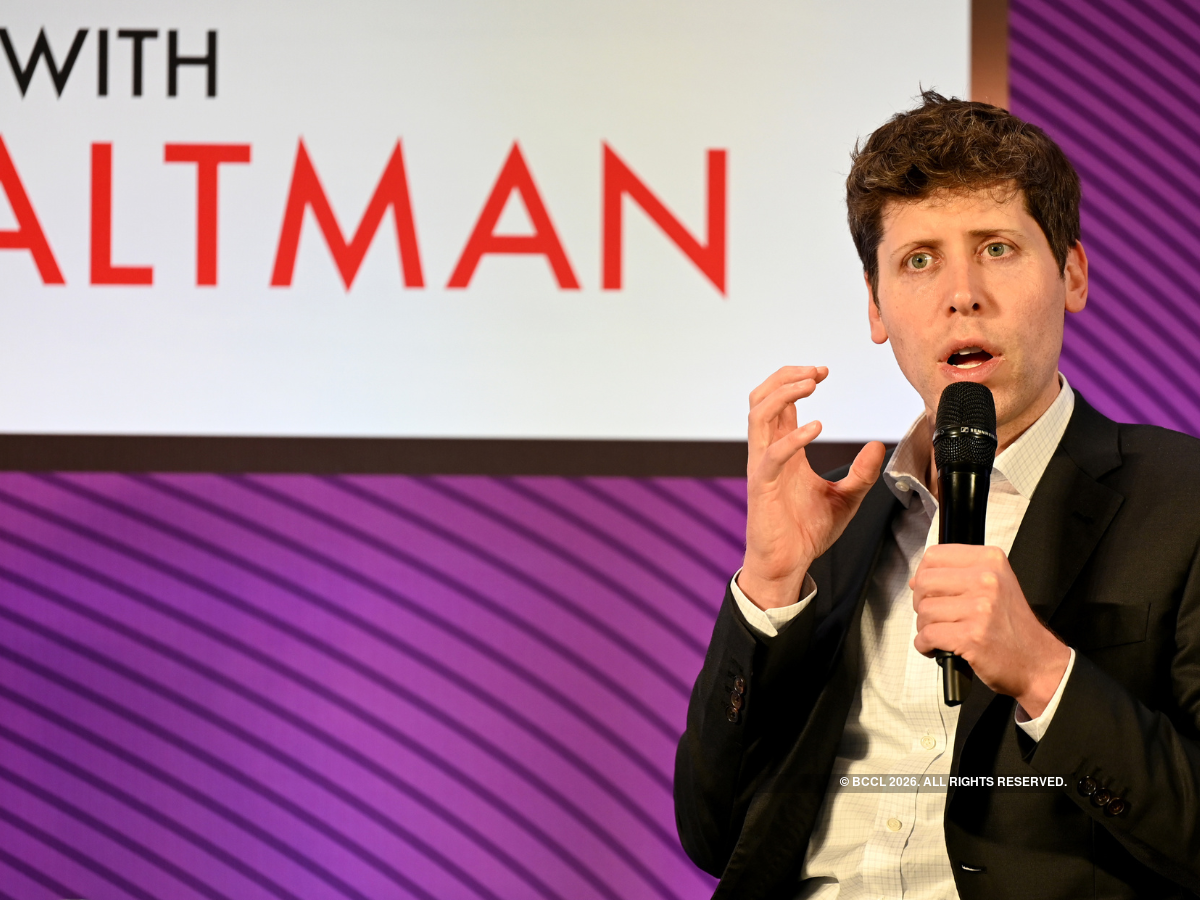
Sam Altman, CEO of OpenAI, has criticized the idea of placing data centers in space as "ridiculous," directly challenging ambitious plans by Elon Musk, Jeff Bezos, Google, and other tech giants and startups. During a live interview in New Delhi, Altman questioned the economics and feasibility of such ventures, pointing out that the cost of launching equipment into orbit—currently around $1,000 per kilogram—is prohibitively high compared to Earth-based operations. He also highlighted the significant technical challenges, such as the difficulty of cooling servers in space and repairing them if they fail.
Altman's remarks come as several major companies are actively pursuing space data centers. Elon Musk's SpaceX has filed plans to launch up to one million satellites to function as orbital data hubs, while Jeff Bezos' secretive Project Prometheus aims to build gigawatt-scale space data centers. Google's Project Suncatcher is also exploring the concept, with plans to launch AI-powered satellites by 2027. Startups like Starcloud and Aetherflux are joining the race, along with China, which has already deployed the first 12 satellites of a 2,800-unit constellation.
The challenges Altman cited are substantial. For instance, the International Space Station requires a massive cooling system to handle even modest power outputs, and scaling this to full-sized data centers would demand radiator panels covering an entire square kilometer. Additionally, launch costs remain too high for space compute to be economically viable in the near term. While Altman acknowledges that orbital data centers "could make sense someday," he emphasizes that we're far from that reality.
Despite these obstacles, the global race to establish space-based infrastructure continues to accelerate. The implications of such projects extend beyond technology, potentially reshaping international competition, regulatory frameworks, and the future of computing. As companies like SpaceX, Amazon, Google, and others push forward with their ambitious plans, the debate over feasibility, cost, and practicality will likely intensify, making this a critical issue for readers interested in global tech innovation and its far-reaching impacts.
Verticals
worldasia
Originally published on Times of India on 2/22/2026