
Quote of the Day by Aristotle: "It is not the handsomest or strongest men who are..."
Times of India
by TOI LIFESTYLE DESKFebruary 21, 2026
AI-Generated Deep Dive Summary
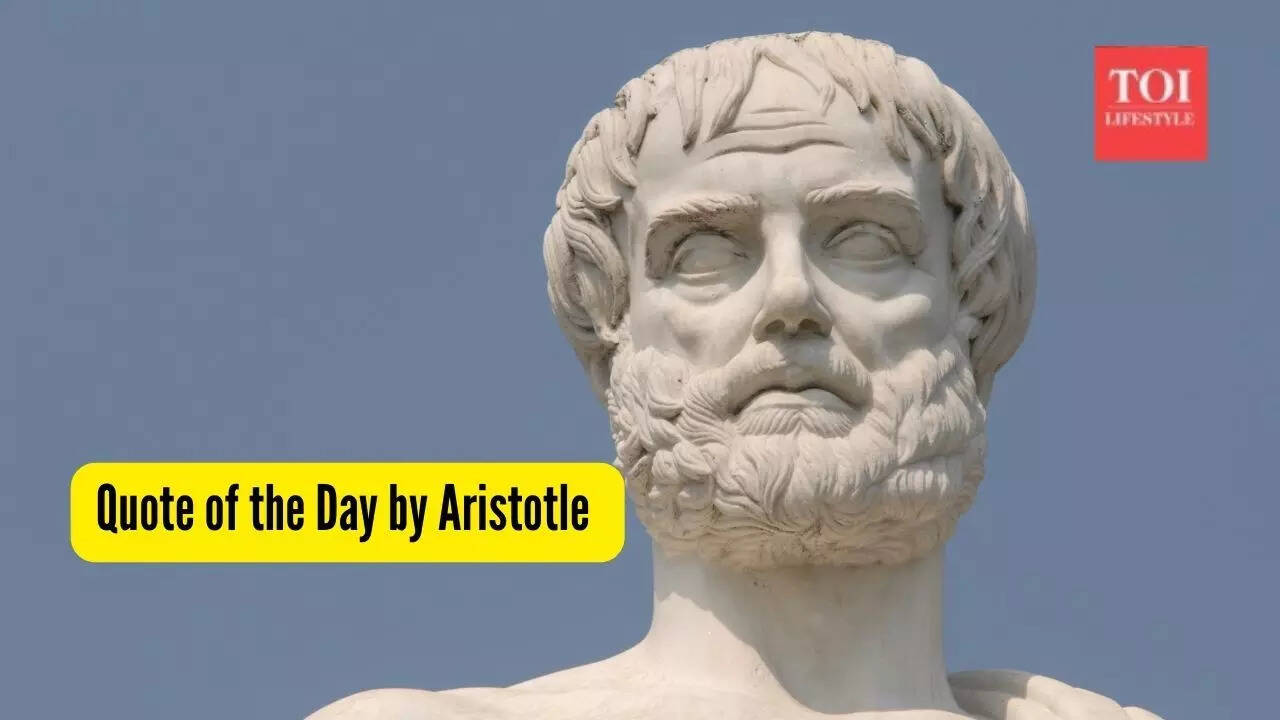
Aristotle, often hailed as the father of Western philosophy, was a profound thinker whose influence spans logic, metaphysics, biology, and ethics. Born in 384 BCE in Stagira, Greece, he grew up in a family deeply interested in medicine, which shaped his analytical approach to understanding the world. After studying under Plato at Athens' Academy, Aristotle diverged from his mentor's idealistic views, emphasizing empirical observation over abstract forms. His journey from student to teacher included shaping the mind of Alexander the Great and founding his own school, the Lyceum, where he developed a systematic framework for knowledge that modern universities still draw inspiration from.
Aristotle's philosophy centered on four causes: material, formal, efficient, and final, with teleology— purpose-driven existence—pervading his work. He argued that nature has inherent goals, like an acorn striving to become an oak. This perspective influenced later theologians and scientists, including Aquinas and Einstein, who saw order in the universe. His ethics, outlined in *Nicomachean Ethics*, emphasize achieving eudaimonia—true happiness—through virtue, divided into moral and intellectual categories. Rejecting Plato's Forms, Aristotle proposed that substance, combining form and matter, was reality's foundation.
Aristotle’s contributions to logic, known as syllogisms, laid the groundwork for scientific reasoning and legal thought. His empirical approach to biology, including his study of marine life and embryology, highlighted nature's purposefulness. Works like *Politics* and *Rhetoric* further cemented his legacy as a polymath whose ideas bridged theory and practice. His rejection of Plato’s abstract world in favor of real-world observation set
Verticals
worldasia
Originally published on Times of India on 2/21/2026