
Scared of Racist Label, Police Sacrificed UK's Daughters
RealClearPolitics
by Tommy Robinson, TimCastFebruary 26, 2026
AI-Generated Deep Dive Summary
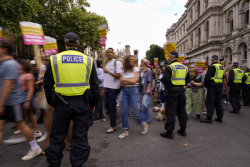
Independent British journalist Tommy Robinson has argued that the UK police force failed to adequately address Islamic criminal gang activity due to fears of being labeled racist. In a recent interview on Tim Pool's podcast "Timcast IRL," Robinson suggested that political correctness and sensitivity to accusations of Islamophobia have hindered law enforcement's ability to confront these groups effectively. He emphasized that this inaction has allowed such gangs to grow unchecked, leading to increased crime rates and public safety concerns.
Robinson pointed to specific high-profile cases, such as the grooming scandals in Rotherham and Birmingham, where police were reluctant to act against suspected Islamic criminals due to fears of being accused of racism or religious bias. He argued that this mindset has created a culture of fear among law enforcement, preventing them from taking decisive action against criminal activities tied to certain communities. This reluctance, he contended, has not only failed to protect vulnerable communities but has also eroded public trust in the police.
The issue, as Robinson highlighted, goes beyond individual cases and reflects broader tensions between political correctness and effective law enforcement. He argued that the fear of being labeled racist has created a situation where officers are hesitant to enforce the law against individuals or groups tied to specific religious or cultural identities. This dynamic raises questions about how counter-terrorism and gang prevention efforts can be balanced with concerns over diversity and inclusion.
For readers interested in politics, this discussion touches on critical issues surrounding public safety, the role of law enforcement, and the challenges of balancing political correctness with effective governance. Robinson's argument underscores the complexities of addressing crime while navigating sensitive cultural and religious dynamics, a dilemma that continues to divide opinions across the UK and other Western societies.
Ultimately, Robinson's critique highlights the need for a more nuanced approach to counter-terrorism and gang prevention that doesn't shy away from confronting criminal activity while respecting diversity and human rights. His comments serve as a reminder of the ongoing tensions between these priorities and their implications for public safety and trust in institutions.
Verticals
politicsnews
Originally published on RealClearPolitics on 2/26/2026