
See a razor-thin crescent moon shine with Saturn after sunset on Feb. 19
Space.com
by Anthony Wood February 19, 2026
AI-Generated Deep Dive Summary
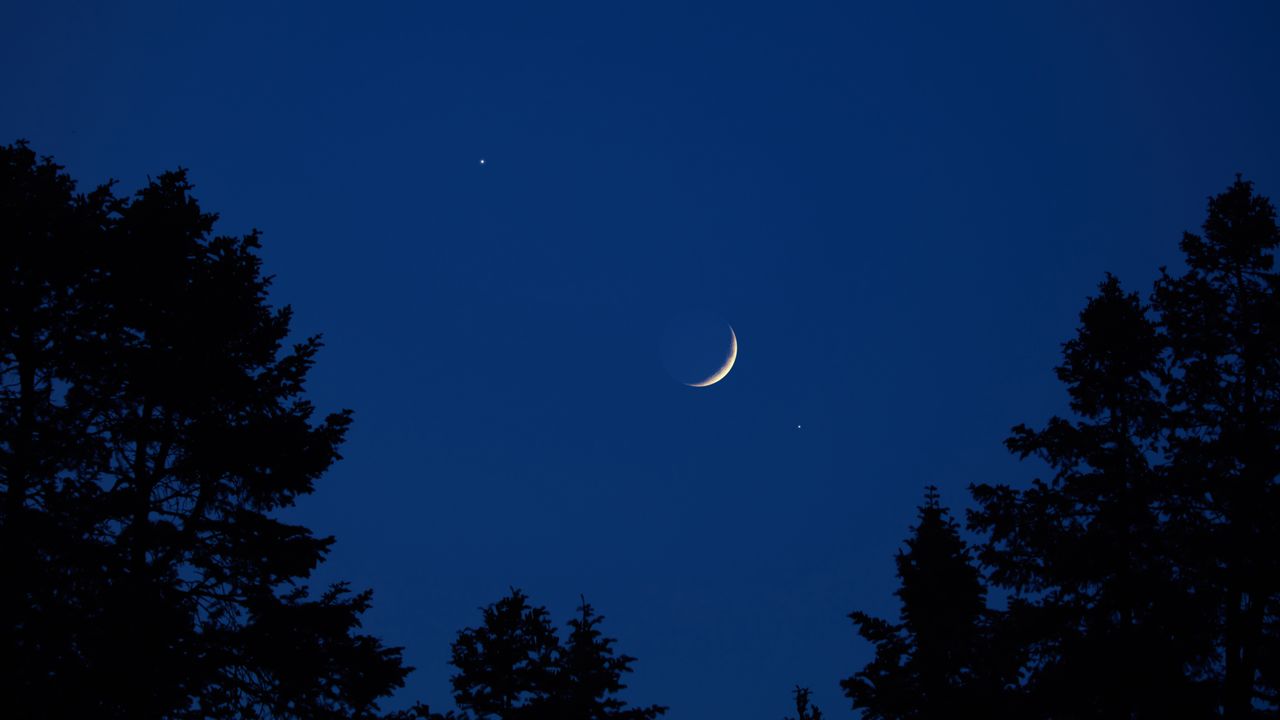
On February 19th, stargazers are in for a treat as a razor-thin waxing crescent moon, just two days old and only 10% illuminated, will grace the western sky shortly after sunset. This delicate celestial sight will appear incredibly close to Saturn, the gas giant shining brightly as an "evening star" less than five degrees away from the moon—about the width of three middle fingers held at arm's length. The crescent moon and Saturn will be low on the horizon, making them easier to spot with a clear view of the western horizon.
In addition to Saturn, skywatchers should look for Mercury near the horizon, appearing as a steady light to the lower right of Saturn. For those with sharp eyes and good timing, Venus may also be visible just below Mercury before it quickly fades into the setting sun's glare. Meanwhile, Neptune will be positioned between the moon and Saturn, though its faint blue disk will require at least an 8-inch telescope for visibility.
This event is a rare opportunity to see two of the solar system's most prominent objects—Saturn and the crescent moon—in close proximity. The pairing offers a stunning visual contrast between the gas giant's bright, steady light and the ethereal glow of the thin lunar crescent. For those in the U.S., both celestial bodies will set within three hours after sunset, so timing is crucial for capturing this fleeting sight.
This astronomical occurrence is not only visually captivating
Verticals
spacescience
Originally published on Space.com on 2/19/2026