
See the half-lit first quarter moon tonight: Look for the shadows of mountains on the lunar surface
Space.com
by Anthony Wood February 24, 2026
AI-Generated Deep Dive Summary
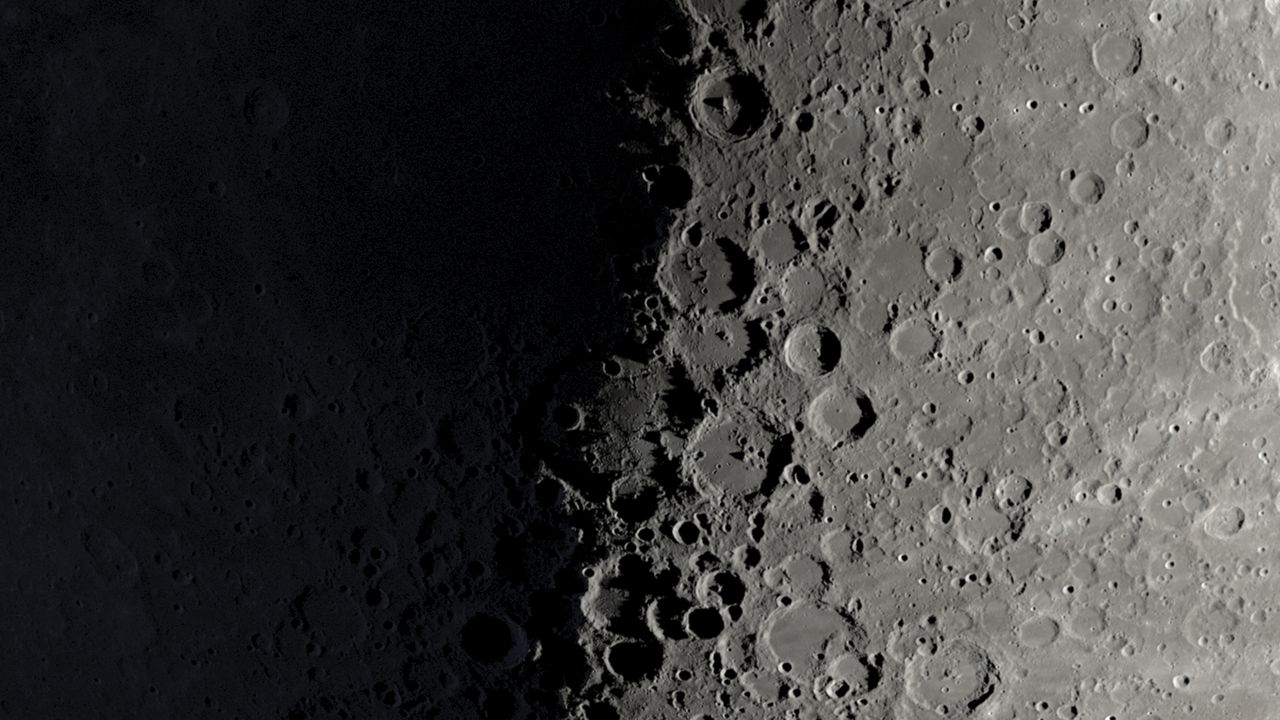
Tonight, stargazers can enjoy a stunning celestial spectacle as the moon rises in the southern sky, appearing half-lit with its right side bathed in sunlight and its left cloaked in shadow. This phase occurs just hours after reaching its first quarter stage, creating dramatic contrasts on the lunar surface. The moon will be visible near the constellation Taurus, with the bright Pleiades star cluster nearby and the Hyades cluster forming a "V" shape to its lower left. Additionally, Jupiter and Sirius will also be prominent in the sky, making this a perfect night for astronomical observations.
The half-lit moon offers a striking view of the lunar surface, showcasing the dark basaltic plains known as maria, which stand out against the bright sunlit areas. These vast features, formed billions of years ago by ancient lava flows following asteroid impacts, add to the moon's dramatic appearance. For those with binoculars or telescopes, the terminator line—the boundary between day and night on the moon—will reveal a series of prominent craters, including Ptolemaeus, Alphonsus, and Arzachel. These craters, along with others like Purbach, Regiomontanus, and Walther, cast long shadows that create a visually stunning effect.
This celestial event is particularly special for amateur astronomers and space enthusiasts, offering a chance to explore the moon's violent history and its intricate geological features. The visibility of these craters and maria provides insight into the moon's formation and evolution. For those looking to capture this moment, whether through photography or simple observation, it’s an opportunity to connect with the beauty and science of our nearest neighbor in space. Whether you’re a seasoned astronomer or just beginning your journey into stargazing, tonight’s half-lit moon promises a memorable and educational experience.
Verticals
spacescience
Originally published on Space.com on 2/24/2026