
See the moon dance with the stunning 'Seven Sisters' of the Pleiades tonight — here's where to look
Space.com
by Anthony Wood February 23, 2026
AI-Generated Deep Dive Summary
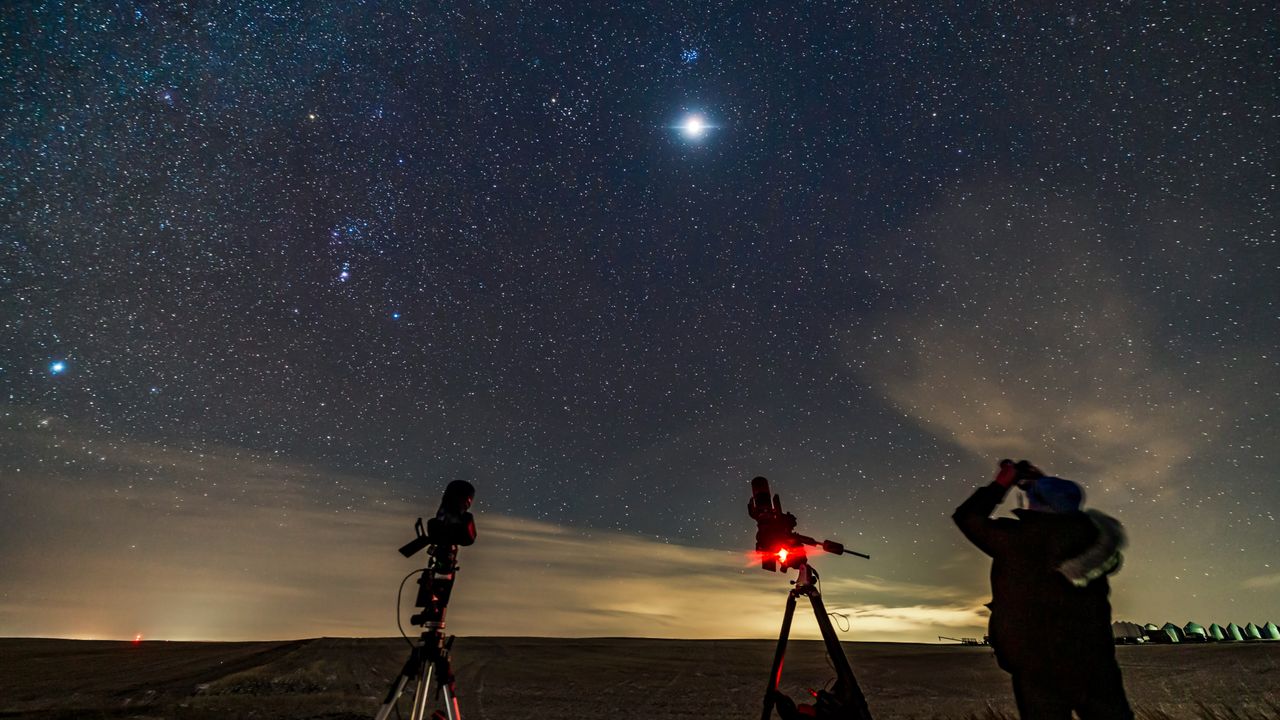
Tonight, February 23rd, stargazers are in for a treat as the moon and the stunning Pleiades star cluster dance together in the sky. Known as the Seven Sisters, this beautiful open cluster will appear less than 5 degrees away from the waxing gibbous moon, creating a visually striking display high above the southwestern horizon. This celestial event offers a perfect opportunity for both casual observers and astronomy enthusiasts to explore the night sky with binoculars or a telescope.
The Pleiades, located in the constellation Taurus, is one of the most recognizable star clusters in the sky. Comprising seven bright stars named after mythological figures, it has captivated cultures for centuries. Through binoculars, the cluster resembles the Big Dipper asterism in Ursa Major, surrounded by fainter stars and a glowing reflection nebula. For those with a telescope, an even more detailed view of the Pleiades' thousand-member stellar population becomes possible.
As viewers admire the moon and Pleiades together, they can also turn their attention to the lunar surface for a closer look at impact craters and dark basaltic regions like Mare Serenitatis (the Sea of Serenity) and Mare Tranquilitatis (the Sea of Tranquility). These features are reminders of ancient volcanic activity and historical human achievements, such as the Apollo 11 landing site in the latter. The terminator line, marking the transition between day and night on the moon, casts dramatic shadows over craters, adding to the visual appeal.
This celestial conjunction is particularly special because it offers a chance to see two distinct objects—one ancient and
Verticals
spacescience
Originally published on Space.com on 2/23/2026