
Seoul’s protest over stand-off seen as reluctance to let US Forces Korea confront China
South China Morning Post
by Dewey SimFebruary 24, 2026
AI-Generated Deep Dive Summary
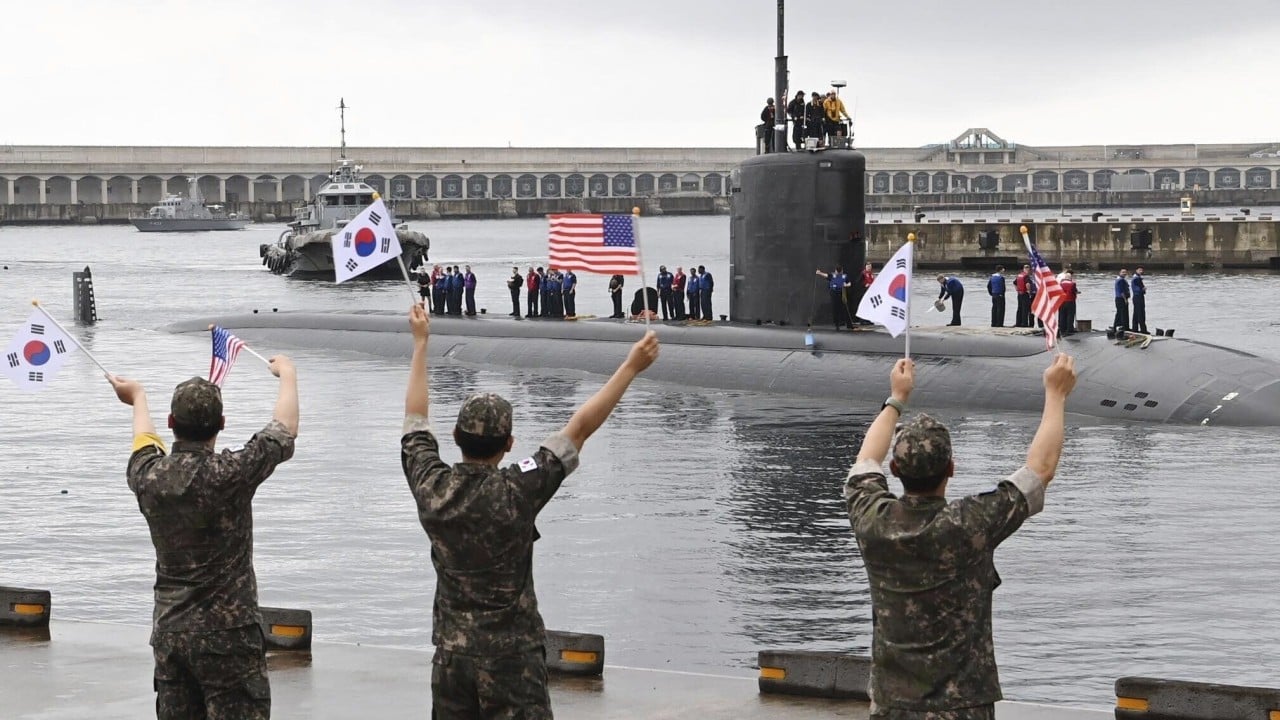
South Korea’s Defense Minister Ahn Gyu-back has raised concerns with the commander of US Forces Korea (USFK) over a recent stand-off involving American and Chinese fighter jets in the Yellow Sea. This move highlights Seoul’s apparent reluctance to support increased confrontational actions by US forces stationed in South Korea toward China. The incident, which occurred last week, underscores the delicate balance South Korea seeks to maintain between its alliance with the United States and its desire to avoid escalating tensions with neighboring China.
The stand-off between the two countries’ jets was a rare and significant event, prompting immediate action from South Korean military sources. Yonhap News Agency reported that Ahn expressed his concerns directly to General Xavier Brunson, emphasizing the need for caution in handling such situations. This decision reflects South Korea’s strategic approach to regional security, where it walks a fine line between supporting US military presence and avoiding direct confrontation with China.
Analysts suggest that Seoul’s stance is driven by its geographic location and historical context. As a nation sandwiched between two global powers, South Korea has long prioritized maintaining stable relations with both the United States and China. The country’s economic ties with China are substantial, making any escalation in military tensions particularly concerning for South Korean officials.
From a broader geopolitical perspective, this incident highlights the complex security dynamics of the Asia-Pacific region. The US-China rivalry is increasingly shaping regional stability, with South Korea caught in the crossfire. By protesting the stand-off, Seoul appears to be signaling its preference for diplomacy over confrontation, aligning with its long-standing foreign policy principles.
This situation also raises questions about the future of US-South Korea military cooperation. While the alliance remains a cornerstone of South Korea’s defense strategy, events like the Yellow Sea stand-off test the limits of how actively South Korea is willing to engage in confrontational actions against China. The outcome could have far-reaching implications for regional security and the broader strategic balance between the United States, China, and South Korea.
Ultimately, Seoul’s decision to protest
Verticals
worldasia
Originally published on South China Morning Post on 2/24/2026