
'Short-video binges hit focus, impulse control': Between swipe and scroll, shorter focus & higher stress, finds study
Times of India
by ANUJA JAISWALFebruary 25, 2026
AI-Generated Deep Dive Summary
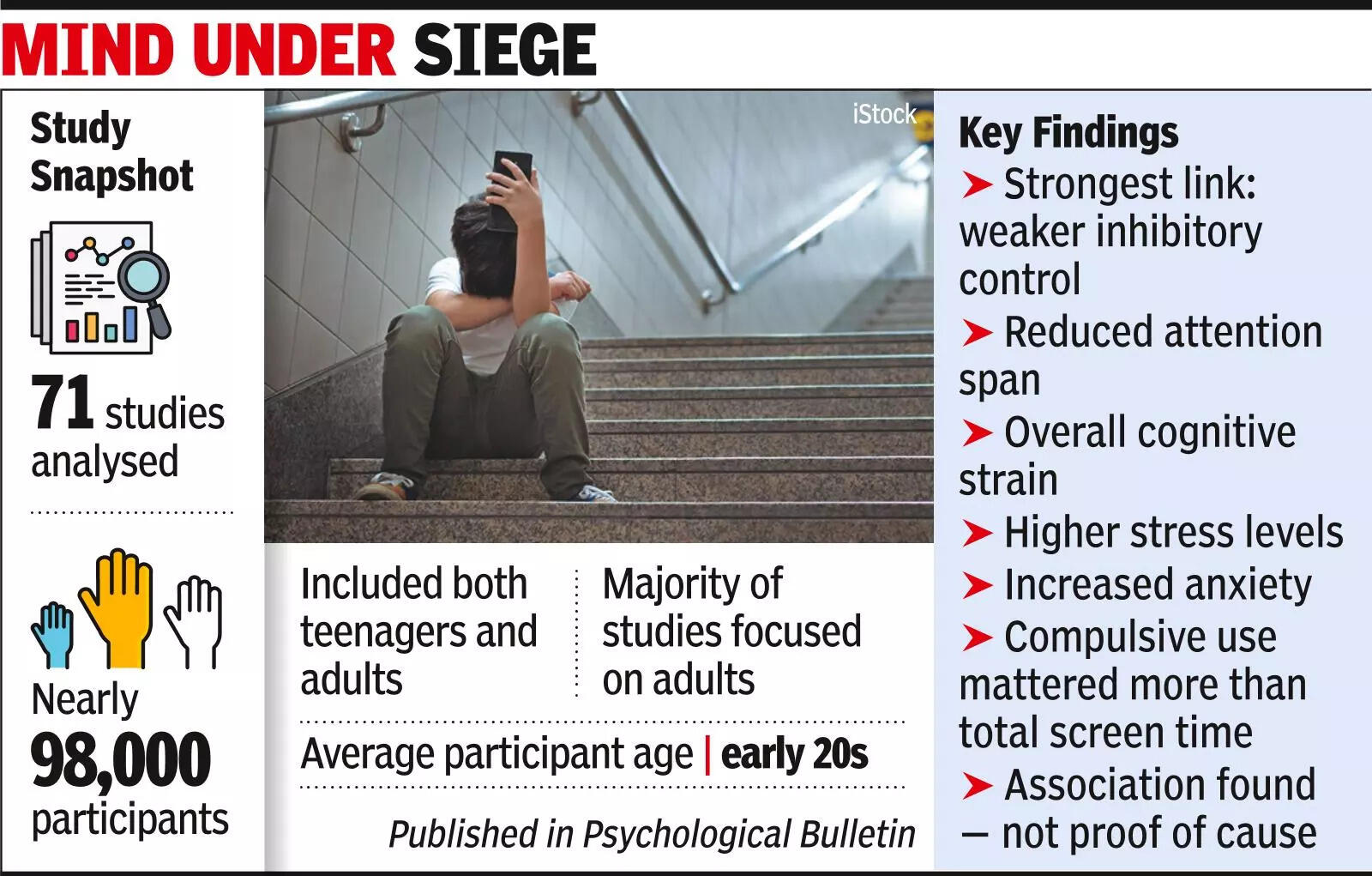
Short-video consumption has become a growing concern as new research highlights its potential impact on mental focus, impulse control, and stress levels. A global study analyzing nearly 98,000 people across various age groups found that heavy use of short-form video platforms like Instagram Reels and YouTube Shorts is linked to weakened attention spans, poorer impulse control, higher stress, and increased anxiety. The research emphasizes that while the content may not cause permanent harm, excessive scrolling can lead to significant shifts in how individuals process information and manage their emotions.
The study, published in *Psychological Bulletin*, combined data from 71 studies across countries and age groups, with participants averaging in their early twenties. It reveals that short bursts of novelty and instant rewards activate the brain's reward pathway, making it harder for users to disengage once they start scrolling. Clinicians note that while most people can consciously step away from screens, those predisposed to addictive behaviors or obsessive traits may struggle more to disconnect. This compulsive behavior is further fueled by platform design, which constantly delivers fresh content to keep users engaged.
Experts warn that prolonged exposure to fast-paced, emotionally charged content can overstimulate the brain, leading to restlessness and poor concentration. However, the good news is that digital hygiene practices—such as limiting screen time, taking regular breaks, and prioritizing sleep—can help reverse these effects. The study underscores that the issue
Verticals
worldasia
Originally published on Times of India on 2/25/2026