
Stunning bat cave footage captures disease spread risk for first time
Sydney Morning Herald
by Arthur Scott-GeddesFebruary 26, 2026
AI-Generated Deep Dive Summary
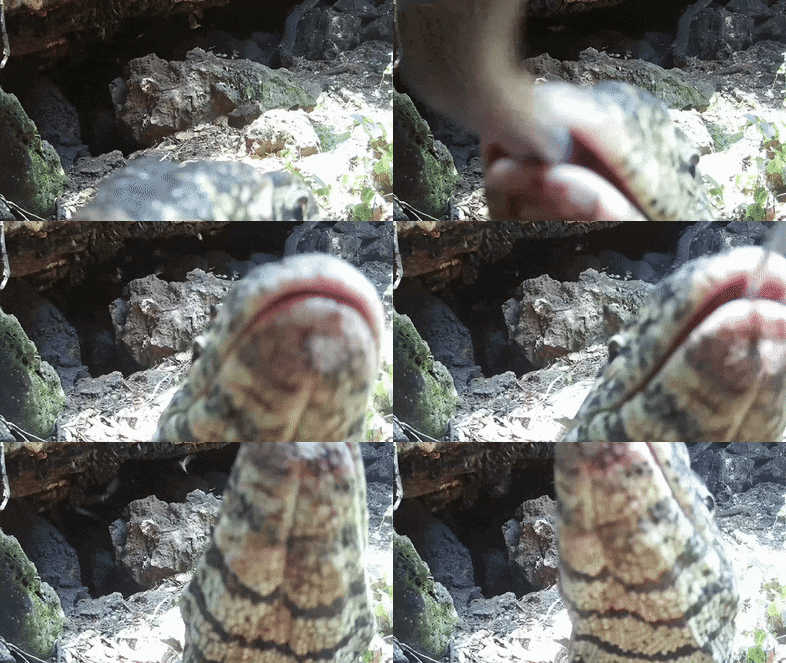
Researchers in Uganda have made a groundbreaking discovery by capturing footage of at least 14 different animal species, including leopards, monkeys, birds of prey, and monitor lizards, feeding on bats infected with Marburg virus in Queen Elizabeth National Park. This is the first time such a diverse network of animals interacting at a known disease hotspots has been observed, raising concerns about potential zoonotic spillover risks.
The study, conducted over five months in 2025, focused on "Python Cave," home to tens of thousands of Egyptian fruit bats. While only about 7% of these bats carry Marburg virus, the presence of multiple species preying on them creates a unique opportunity to study real-time disease transmission dynamics. The researchers noted that this could represent a "Rosetta Stone" for understanding how viruses like Marburg jump from animals to humans.
Among the most notable observations were an adult leopard nicknamed Akahaya, seen repeatedly feasting on bats, and troops of monkeys feeding on infected bats alongside other predators like civet cats and genets. These interactions involve direct contact with bat body fluids, increasing the potential for viral spillover. While no actual spillover events were recorded during the study, the researchers emphasize that such interactions have likely occurred for millennia in the Rift Valley and Albertine Rift regions.
The findings are particularly significant given Marburg's high fatality rate (up to 90%) and its cousin relationship with Ebola. The virus has already caused human cases at Python Cave, including a fatal infection in a Dutch tourist in 2008 and another near-lethal case involving an American visitor. This study highlights the importance of understanding how viruses like Marburg can spread through complex animal networks.
The researchers hope their work will pave the way for further investigation into spillover risks and inform global efforts to prevent zoonotic disease outbreaks. By mapping these interactions, scientists may better understand
Verticals
worldaustralia
Originally published on Sydney Morning Herald on 2/26/2026