
The birth of New Delhi: From a durbar bombshell to Seva Teerth, 95 years later
Times of India
by VIJAYA SRIVASTAVAFebruary 13, 2026
AI-Generated Deep Dive Summary
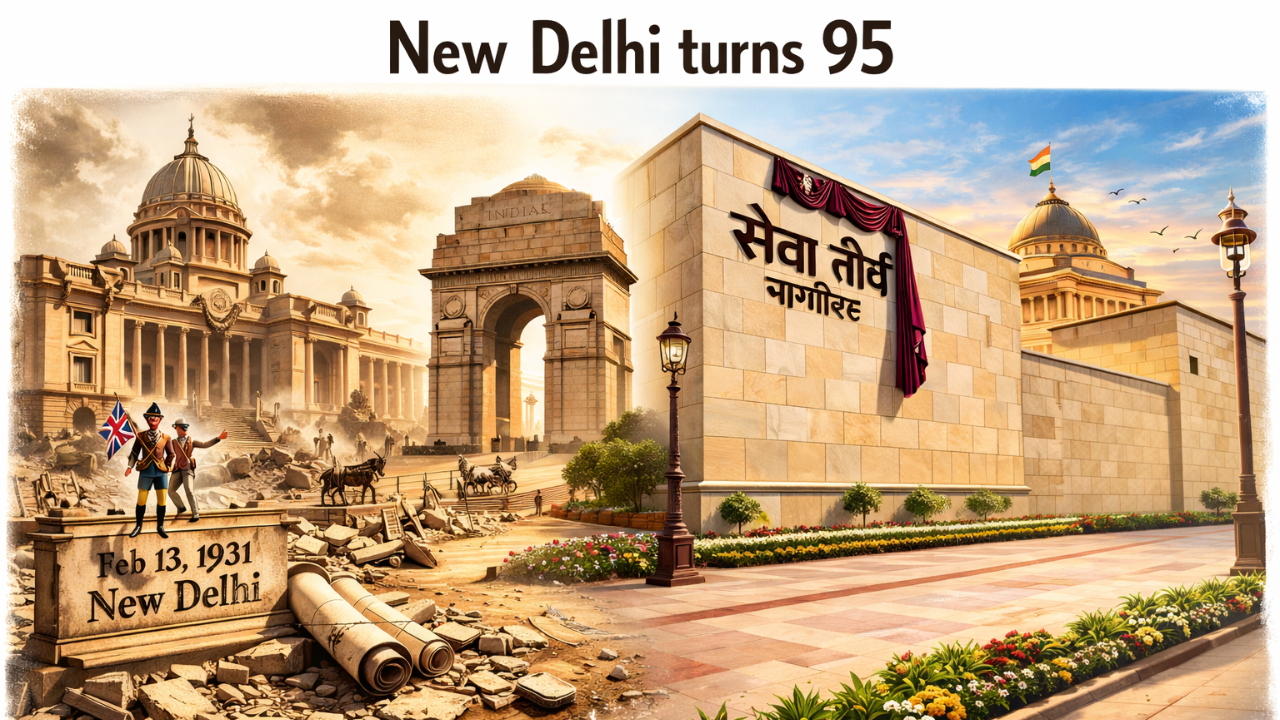
New Delhi celebrated its 95th anniversary as the imperial capital, marking a symbolic shift from its colonial past. On this milestone, Prime Minister Narendra Modi moved the Prime Minister’s Office (PMO) from South Block to Seva Teerth, signaling a departure from British-era administrative ties. This move underscores the city's layered history, blending imperial legacy with modern governance.
The origins of New Delhi date back to 1911 when King George V announced its establishment during the Delhi Durbar, ending Calcutta's role as the capital due to rising unrest in Bengal. The construction took over two decades, culminating in 1931 with the inauguration of key landmarks like India Gate. These developments were not just about urban design but also political strategy, reinforcing British control amid growing nationalism.
The city’s creation reflects its historical significance as an imperial seat, built on the ruins of earlier capitals and civilizations. This strategic shift to Delhi was driven by both administrative needs—its central location for defense and rail networks—and symbolic assertions of power, drawing from its rich history of empires, from Pandavas to Mughals.
New Delhi’s journey is a testament to its enduring role in India's governance, blending historical grandeur with contemporary politics. Its anniversary offers insight into the nation's identity, where modernity coexists with centuries of imperial legacy, shaping its trajectory as a global capital. Understanding this history helps illuminate the forces that have shaped India’s development and its ongoing transformation.
The significance lies in tracing how New Delhi evolved from a colonial hub to a symbol of independent India’s progress. Its anniversary invites reflection on the interplay between historical memory and modern governance, highlighting the city's enduring relevance in shaping India's future.
Verticals
worldasia
Originally published on Times of India on 2/13/2026