
The future of China-US ties rests on Washington’s will, Wang Yi says in Munich
South China Morning Post
by Fan Chen,Seong Hyeon ChoiFebruary 14, 2026
AI-Generated Deep Dive Summary
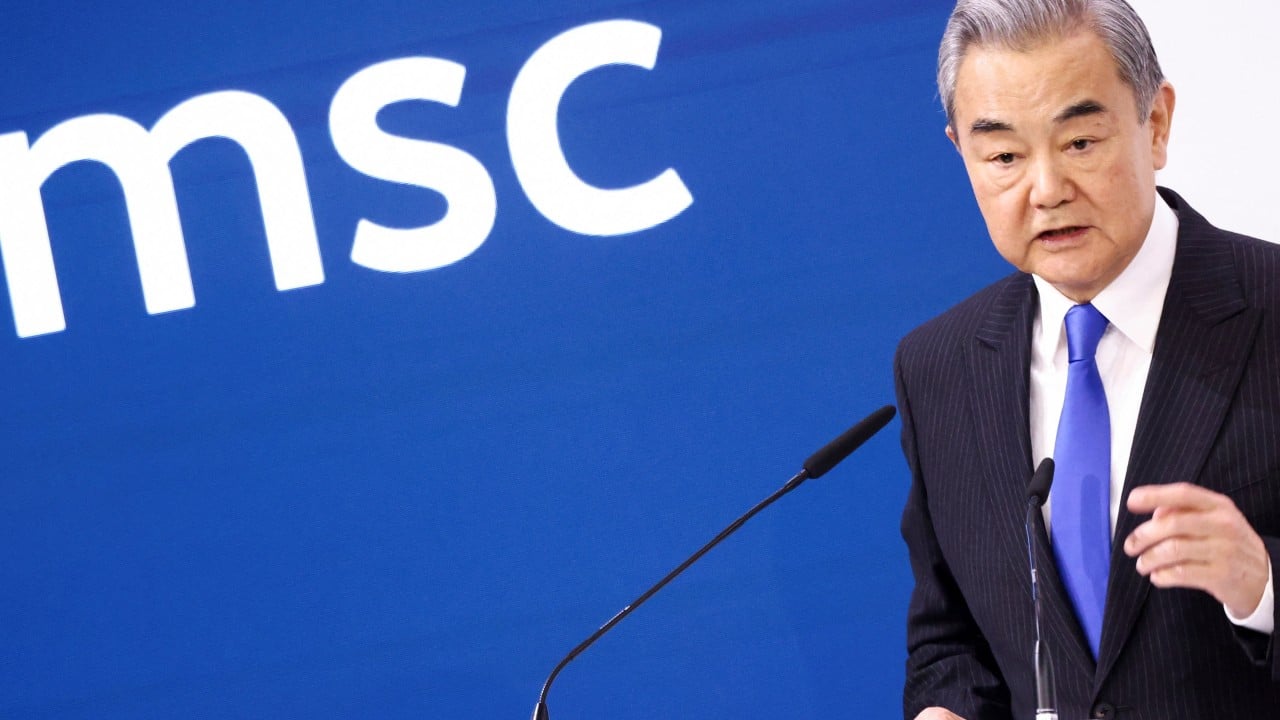
Chinese Foreign Minister Wang Yi delivered a significant address at the Munich Security Conference, emphasizing that while China seeks to maintain constructive relations with the United States, the success of this endeavor hinges largely on U.S. actions. Wang highlighted China's commitment to dialogue and cooperation with the U.S., aiming to establish a stable relationship between the two major powers for the benefit of their peoples and in line with international expectations. However, he cautioned that achieving this goal depends on whether Washington respects China's core interests, particularly regarding Taiwan.
Wang noted that Chinese leaders are encouraged by President Trump's stated respect for President Xi Jinping and the Chinese people, as well as his acknowledgment of the potential for collaboration between the two nations. He expressed hope that the U.S. would avoid actions that interfere with China's sovereignty and territorial integrity, such as attempting to split Taiwan from China—a move Wang described as crossing a "red line" that could escalate tensions.
In his speech, Wang also accused Japan of harboring expansionist ambitions toward Taiwan, calling its actions reminiscent of past colonial practices and expressing concern about their implications for regional stability. He stressed the importance of respecting China's sovereignty over the island, which remains a critical flashpoint in Sino-American relations.
The outcome of U.S.-China relations is not just a bilateral issue but has far-reaching consequences for global stability and economic growth. Wang's remarks underscored the delicate balance both nations must maintain to avoid conflict while pursuing mutual interests. His warning serves as a reminder of the high stakes involved in managing this complex relationship, particularly over issues like Taiwan, which could potentially ignite broader geopolitical tensions.
Ultimately, Wang's speech reflects China's desire for peaceful coexistence with the U.S., but it also signals Beijing's determination to defend its national sovereignty and territorial integrity. As global leaders continue to navigate an increasingly uncertain world order, the dynamics between these two superpowers will remain a critical focus of international attention.
Verticals
worldasia
Originally published on South China Morning Post on 2/14/2026