
The James Webb Space Telescope just mapped auroras on Uranus in 3D for the 1st time, and scientists are thrilled
Space.com
by Julian Dossett February 19, 2026
AI-Generated Deep Dive Summary
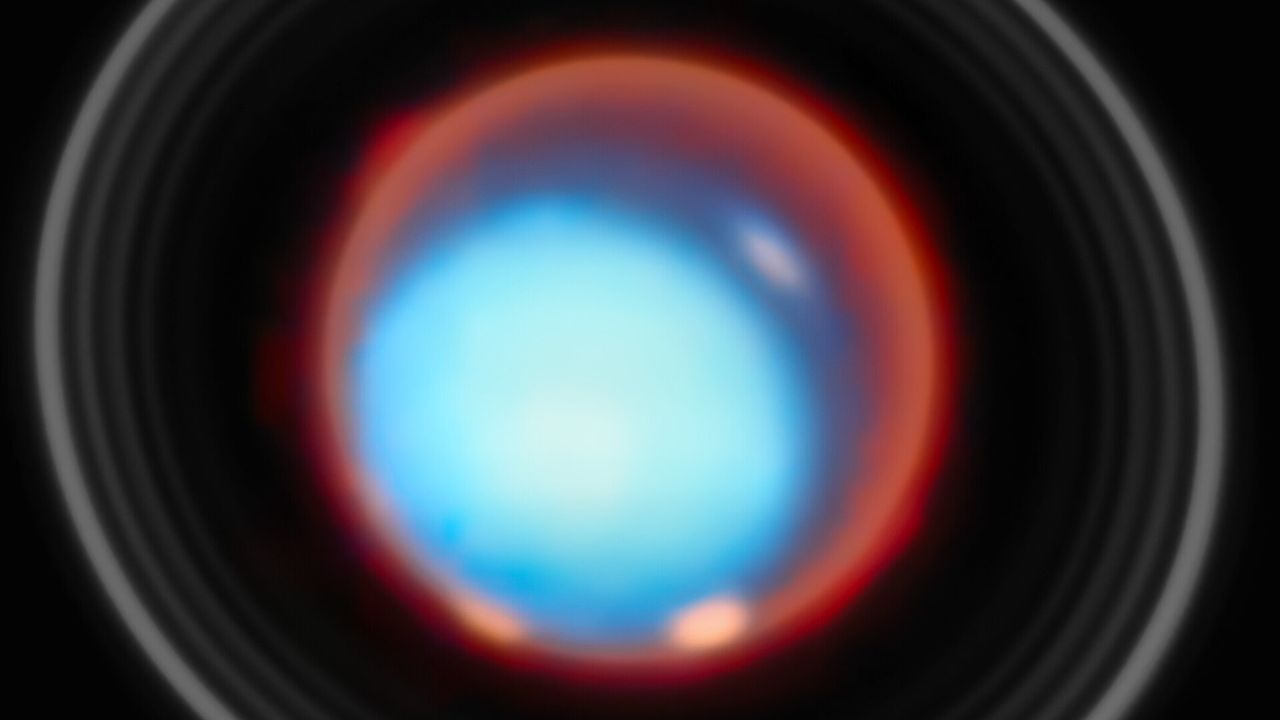
The James Webb Space Telescope has made a groundbreaking discovery by capturing the first-ever 3D map of Uranus's auroras, offering unprecedented insights into the ice giant's upper atmosphere and magnetosphere. This achievement is particularly significant for scientists studying the dynamics of planetary atmospheres and magnetic fields. By observing Uranus's vertical structure in such detail, Webb has revealed how energy moves through its atmosphere and interacts with its lopsided magnetic field, which is tilted and offset from the planet's rotation axis. This unique configuration causes auroras to sweep across the surface in complex patterns, a phenomenon not seen on any other planet in our solar system.
The telescope detected two bright auroral bands near Uranus's magnetic poles, along with an area of reduced emission and ion density between them. This feature is likely linked to transitions in magnetic field lines, providing new clues about how energy flows within the magnetosphere. Additionally, Webb's data shows that Uranus's upper atmosphere continues to cool, extending a trend observed since the early 1990s. The average temperature measured by the telescope is around 426 K (about -150°C), lower than previous recordings made by ground-based telescopes and spacecraft like Voyager 2.
This research marks a crucial step in understanding ice giants like Uranus and their counterparts beyond our solar system. By providing detailed, three-dimensional views of planetary atmospheres, Webb is helping scientists unravel the energy balance that drives these phenomena. The findings also highlight the importance of studying magnetospheres, which play a key role in shaping a planet's auroras and atmospheric behavior. This work not only deepens our understanding of Uranus but also sets the stage for future discoveries about giant planets in distant star systems, making it a vital contribution to astrobiology and planetary science.
For readers interested in space exploration, this breakthrough underscores the power of modern telescopes like JWST to uncover hidden details about even the most enigmatic planets in our solar system. The ability to observe Uranus's auroras in 3D is not just a scientific milestone—it also opens new avenues for studying similar phenomena on other ice giants and exoplanets. As Webb continues to reveal new layers of detail in space, it keeps pushing the boundaries of what we know about the universe, making it an indispensable tool for scientists and astronomy enthusiasts alike.
Verticals
spacescience
Originally published on Space.com on 2/19/2026