
The next interface race: how AI is bringing smart glasses into focus
South China Morning Post
by Wency ChenFebruary 20, 2026
AI-Generated Deep Dive Summary
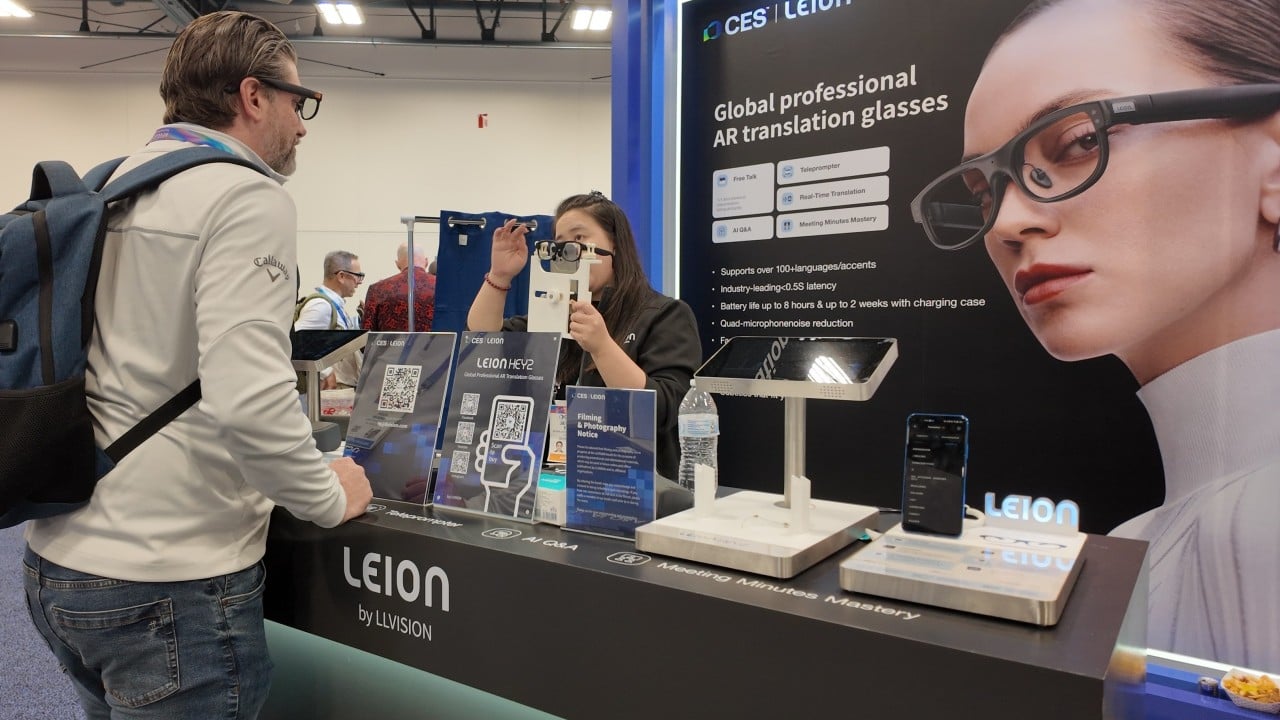
The rise of artificial intelligence is transforming consumer electronics, with smart glasses emerging as the next frontier in human-computer interaction. The shift from traditional screen-based interfaces to face-mounted technology represents a significant leap forward, driven by advancements in AI and hardware miniaturization. According to Wu Fei, CEO of Beijing-based augmented reality (AR) company LLVision, this evolution is reshaping how we interact with devices, aligning more closely with human cognitive instincts.
Wu Fei’s journey into AR began after the 2010 release of the iPhone, which revolutionized touch and swipe interactions. Inspired by this paradigm shift, he founded LLVision in 2014 to explore next-generation interfaces. His vision centers on creating devices that extend beyond touchscreens, using AI agents and lightweight hardware to deliver seamless, intuitive experiences. This approach is particularly relevant as AR glasses move closer to mainstream adoption, blending practicality with cutting-edge technology.
The integration of AI into smart glasses allows for real-time processing of visual data, enabling features like enhanced vision, translation, and navigation. These advancements are not just about convenience but also about redefining how humans interact with digital information in their environment. As hardware becomes smaller and more powerful, the potential for AR glasses to become an essential part of daily life grows exponentially.
For readers interested in global innovation trends, particularly in Asia, the development of smart glasses highlights China’s growing influence in cutting-edge technology. Companies like LLVision are at the forefront of this revolution, pushing boundaries in both AI and hardware engineering. The implications extend beyond niche markets, offering transformative potential for industries ranging from healthcare to education.
In an era where tech innovation is rapidly redefining everyday life, the evolution of smart glasses represents a pivotal moment. As these devices transition from experimental prototypes to practical tools, they promise to alter how we perceive and interact with the world around us. The convergence of AI and AR in this space not only reflects technological progress but also underscores the broader societal impact of innovation in consumer electronics.
Verticals
worldasia
Originally published on South China Morning Post on 2/20/2026