
The sun hasn't looked like this since 2022, what's going on?
Space.com
by Tereza Pultarova February 24, 2026
AI-Generated Deep Dive Summary
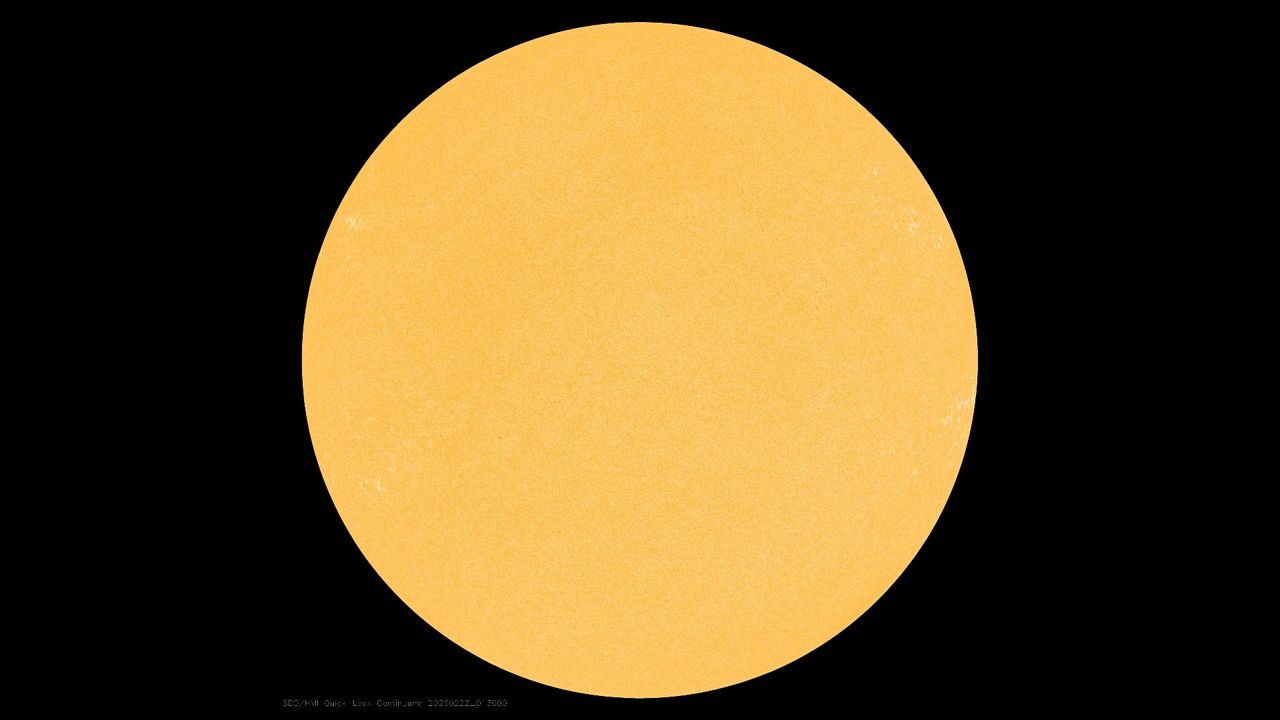
The sun has gone spotless for the first time since June 8, 2022—a period of over 1,355 days. This rare occurrence, captured by NASA's Solar Dynamics Observatory on February 22, 2026, suggests that the current solar cycle might be entering its quieter phase. Sunspots, cooler regions on the sun's surface caused by intense magnetic fields, are typically indicators of heightened solar activity. Their absence could signal a slowdown in solar storms and geomagnetic events.
The 25th solar cycle peaked in 2024, and while this spotless state may only last for two days, it marks a significant shift. Sunspots are not just curiosities; they play a crucial role in regulating the sun's magnetic activity. When these magnetic field lines become tangled, they can trigger solar flares and coronal mass ejections, which impact Earth's geomagnetic systems. The spotless period in 2022 lasted for an impressive 700 days, according to spaceweather.com, but the current event is still notable.
Experts predict that the next solar minimum, when sunspot activity reaches its lowest point, may not occur until after 2030. This prolonged quiet phase could bring a lull in auroras and less disruptive space weather events. While this might seem like good news for satellite operations and power grids on Earth, it also highlights the dynamic nature of our Sun's cycles. For space enthusiasts, this event offers insight into the
Verticals
spacescience
Originally published on Space.com on 2/24/2026