
The true cost of Panama’s port seizure lies in lost predictability
South China Morning Post
by Ken IpFebruary 26, 2026
AI-Generated Deep Dive Summary
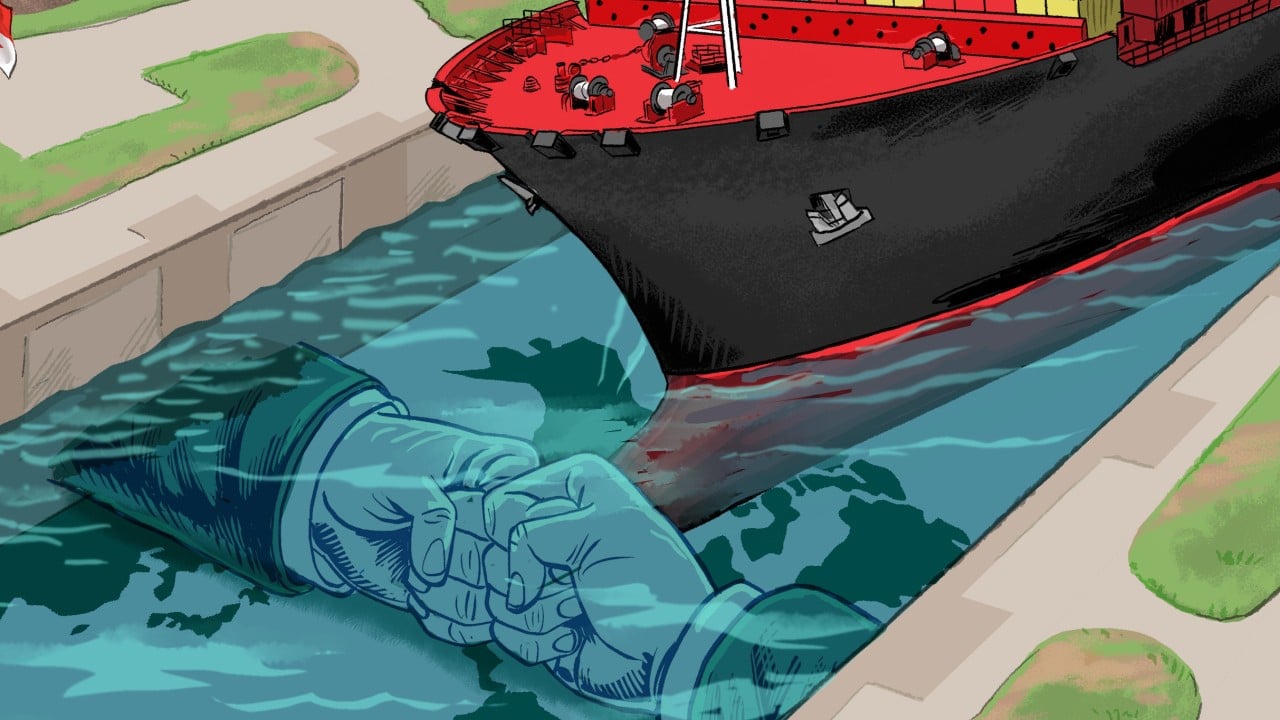
Panama’s decision to seize two major port terminals operated by CK Hutchison, a Hong Kong-based conglomerate controlled by Li Ka-shing, highlights a significant shift in the nation’s approach to managing strategic assets. The move is not merely a contractual dispute but rather a stress test of geopolitical stability and economic predictability in one of the world’s most critical trade hubs. The ports near the Panama Canal are pivotal to global trade, serving as a咽喉 for container ships navigating between oceans. This action raises concerns about the reliability of investment environments in developing nations and underscores the delicate balance between government sovereignty and foreign business interests.
The seizure comes amid tensions over CK Hutchison’s long-term leases for the ports, which were renegotiated in 2017. Critics argue that Panama’s government is using constitutional arguments to justify what many see as a nationalization effort. This marks a broader trend of Latin American countries reasserting control over foreign-owned infrastructure, reflecting a growing skepticism toward multinational corporations and their influence.
The incident has sparked investor anxiety, particularly in emerging markets where similar disputes could arise. It also raises questions about property rights and the enforceability of international business agreements. For Panama, the move may strengthen short-term political gains but risks undermining investor confidence in its economic stability. The ports’ operational efficiency has already been impacted, with delays reported and potential long-term consequences for global trade routes.
Ultimately, this story matters because it challenges the notion of predictability in global commerce. While Panama’s government frames the seizure as a matter of national sovereignty, the broader implications could ripple through international business relationships. For readers interested in world affairs, this highlights the complex interplay between geopolitics and economic interests in shaping global trade dynamics.
Verticals
worldasia
Originally published on South China Morning Post on 2/26/2026