
Unsafe, Dysfunctional Cities Are the Opposite of Compassion
RealClearPolitics
by Emma Camp, WSJFebruary 26, 2026
AI-Generated Deep Dive Summary
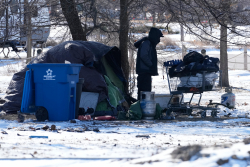
Progressives and leftists often dismiss concerns about public safety in urban areas as signs of weakness or fascism, according to recent online discussions. This attitude is exemplified by the mocking response to a woman who shared her discomfort after seeing a woman urinating on the subway. Critics argue that wanting to eliminate open drug use, indecent exposure, and violent threats from public transportation systems reflects poorly on one's character rather than addressing legitimate safety concerns.
This controversy highlights a broader cultural divide between progressives and those advocating for stricter measures to ensure public safety. Progressives often frame such discussions as attacks on compassion, claiming that prioritizing safety over comfort is an indication of moral failure. However, critics counter that this perspective overlooks the very real struggles faced by individuals navigating unsafe urban environments.
The debate also touches on broader political and social issues, such as the role of government in regulating public spaces and balancing empathy for marginalized communities with the need to protect citizens from harm. Opponents argue that dismissing safety concerns as "fascist" or "pathetic" ignores systemic problems like poverty and inequality, which contribute to unsafe conditions in cities.
Ultimately, this discussion matters because it shapes how we approach urban policy, social justice, and public safety. Striking a balance between compassion and practicality is essential for creating inclusive yet safe communities. As cities grow more densely populated, addressing these issues will become increasingly important to ensure the well-being of all residents.
Verticals
politicsnews
Originally published on RealClearPolitics on 2/26/2026