
US drone presence worries China, neuroscientist moves to Shenzhen: 7 highlights
South China Morning Post
by SCMPFebruary 20, 2026
AI-Generated Deep Dive Summary
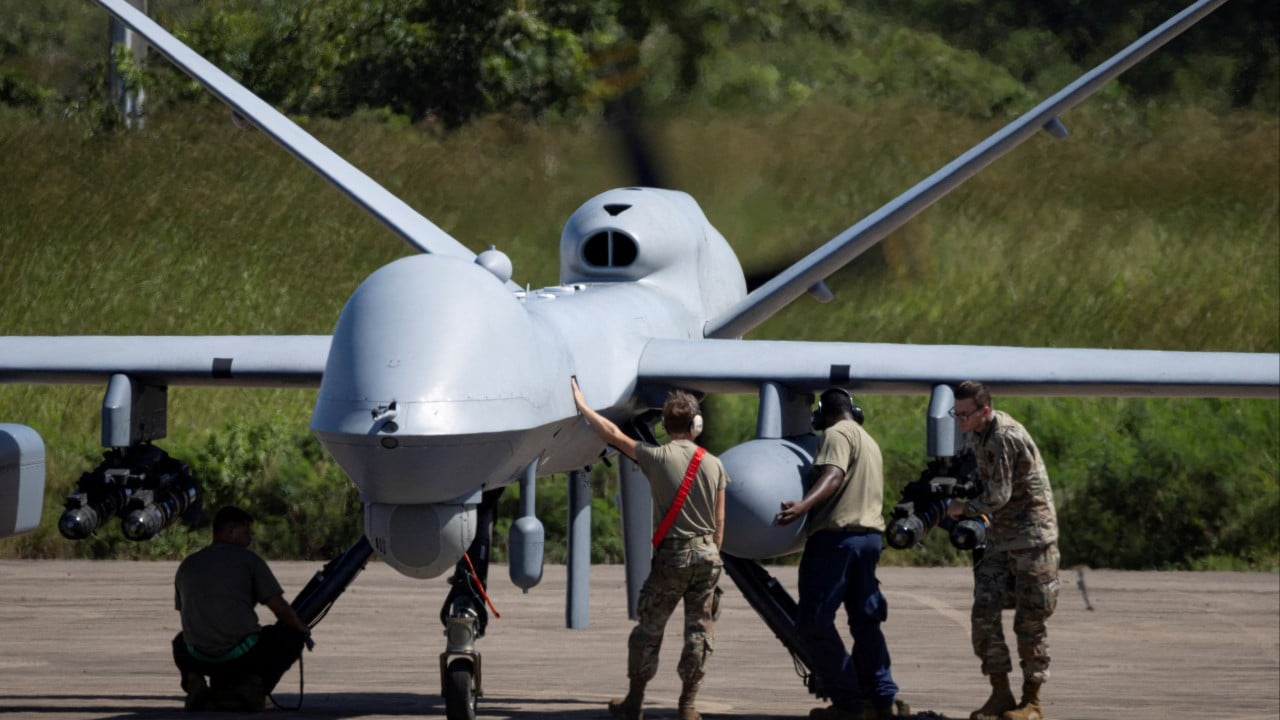
The growing presence of U.S. MQ-9 drones near China has raised concerns among military experts, as it challenges Beijing’s surveillance capabilities and increases pressure on the People’s Liberation Army to enhance its counter-reconnaissance measures. Meanwhile, renowned neuroscientist Arthur Konnerth, a recipient of the prestigious Brain Prize, has moved to Shenzhen to join the Shenzhen Bay Laboratory, marking a significant boost to China’s neuroscience research. Additionally, South Korea’s former president Yoon Suk-yeol was sentenced to life imprisonment for his role in an insurrection attempt during his tenure, highlighting political instability and accountability in the country.
The deployment of American MQ-9 drones in the Asia-Pacific region has been escalating, with particular concern over their proximity to Chinese airspace. This development is seen as a strategic move by the U.S. to strengthen its surveillance capabilities in the region, potentially complicating China’s military operations and diplomatic relations. Experts suggest that this could lead to increased tensions between the two superpowers, particularly as China seeks to assert its influence in the area.
Arthur Konnerth’s decision to join Shenzhen Bay Laboratory represents a major coup for Chinese scientific research. Known for his groundbreaking work in neuroscience, Konnerth has agreed to take on a full-time role at the lab, focusing on understanding how the brain processes information. This move underscores China’s growing emphasis on innovation and its
Verticals
worldasia
Originally published on South China Morning Post on 2/20/2026