
US Supreme Court ruling: Top court's decision impacts some, but not all of Trump's tariffs
Times of India
by TOI BUSINESS DESKFebruary 20, 2026
AI-Generated Deep Dive Summary
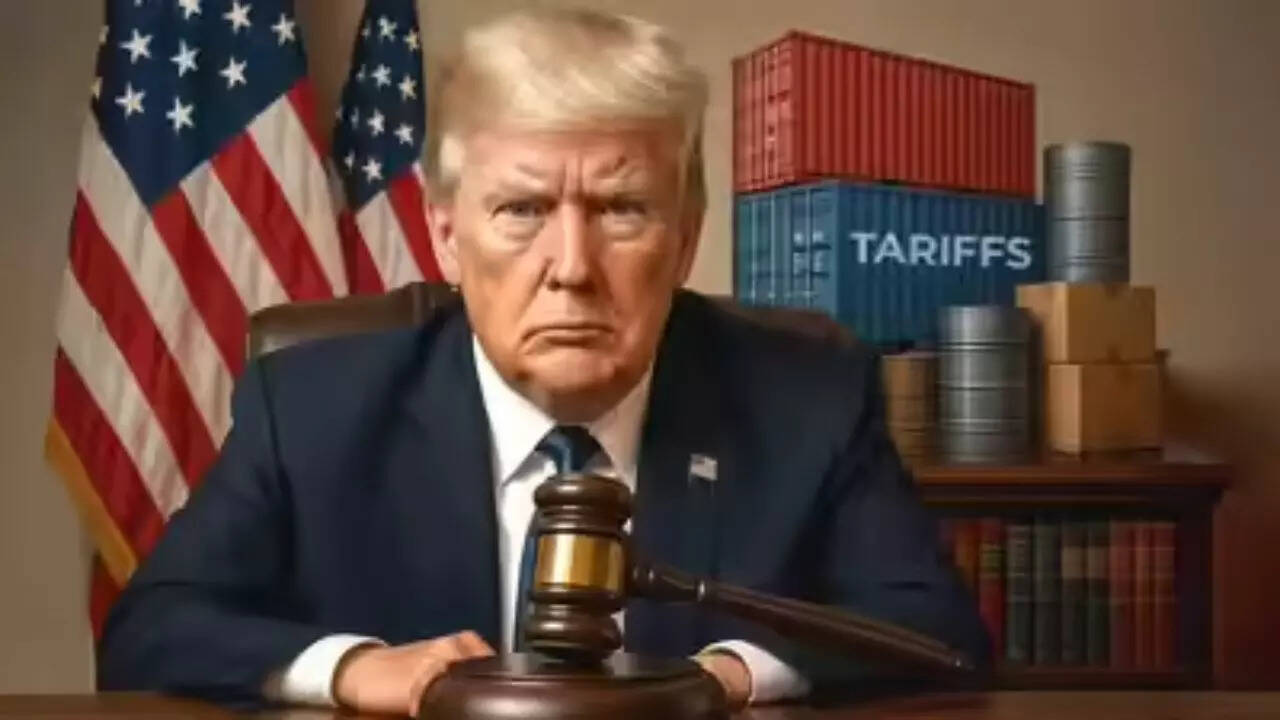
The U.S. Supreme Court has ruled that President Donald Trump exceeded his authority under emergency economic powers when imposing sweeping tariffs on goods from China, Mexico, Canada, and other countries. In a 6-3 decision, the court found that the International Emergency Economic Powers Act (IEEPA) does not grant the president the power to impose tariffs. This ruling invalidates broad, country-wide tariffs imposed under IEEPA, which Trump had justified as responses to national security threats and trade deficits.
The decision specifically impacts tariffs imposed in 2018 on steel, aluminum, lumber, and automotive imports, among others. These were part of Trump’s broader strategy to reduce the U.S. trade deficit and protect domestic industries. However, the court ruled that IEEPA does not authorize such sweeping tariff powers, as it lacks explicit language delegating Congress’s authority to set tariff policy to the executive branch.
The ruling leaves intact sector-specific tariffs imposed under Section 232 of the Trade Expansion Act of 1962, which are justified on national security grounds. These include duties on steel, aluminum, lumber, and automotive imports, as well as other industry-targeted tariffs that were not part of the broader IEEPA-based levies.
Economists predict that the Supreme Court’s decision will significantly reduce the overall U.S. tariff burden. Prior to the ruling, these tariffs had raised average U.S. import duties from 16.8% to nearly 9.5%, according to estimates. However, the administration may seek alternative legal avenues to reimpose similar broad tariffs, which could limit the long-term impact of the court’s decision.
The ruling is seen as a win for businesses and markets, with financial indices like the Dow Jones Industrial Average and S&P 500 rising shortly after the announcement. The decision also has implications for international trade relations, particularly in the context of ongoing U.S.-China trade tensions
Verticals
worldasia
Originally published on Times of India on 2/20/2026