
Venezuela approves amnesty law that could free hundreds of political prisoners
France 24
by FRANCE 24February 20, 2026
AI-Generated Deep Dive Summary
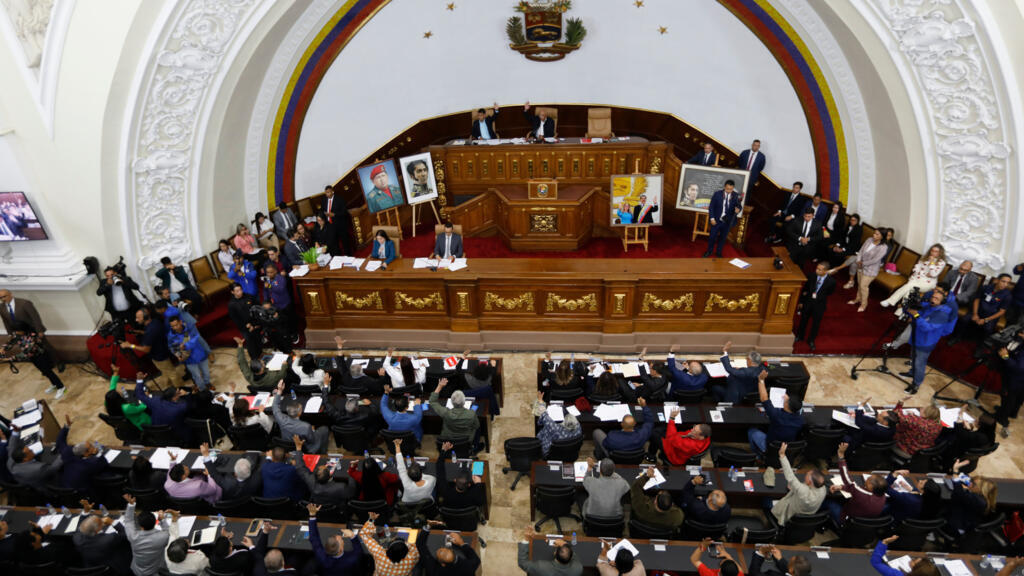
Venezuela's National Assembly has approved an amnesty law that could free hundreds of political prisoners jailed for opposing the government. The bill, which excludes those accused or convicted of promoting military actions against the country, is now with interim President Delcy Rodríguez, who pushed for its passage under pressure from Washington following the Jan. 3 US military raid that removed Nicolás Maduro from power.
The law retroactively applies to offenses dating back to 1999, including incidents like the coup against former leader Hugo Chavez and the 2024 riots over Maduro's disputed reelection. While it offers hope for families of prisoners, concerns remain about its potential misuse to pardon government loyalists while denying freedom to genuine prisoners of conscience. UN human rights experts have called for restrictions on the law to exclude those accused of serious violations.
Opposition leaders like Nobel Peace Prize winner Maria Corina Machado, who has been accused of calling for international intervention, are among those potentially excluded from amnesty. Meanwhile, families of prisoners have long demanded releases, with some staging hunger strikes and vigils outside prisons. The National Assembly's vote is seen as a test of the government's commitment to reconciliation after years of socialist rule.
The bill reflects broader shifts in Venezuela's political landscape, with Rodríguez's interim government aligning closely with US interests, particularly over access to oil resources. Despite her ties to Maduro's regime, Rodríguez has moved to implement policies favored by Washington, signaling a shift away from the "anti-imperialist" rhetoric of past administrations.
The law's approval marks a significant step in addressing Venezuela's ongoing political crisis, but its implementation will be closely watched for signs of genuine reform or continued repression. While it could bring relief to many families, its selective application raises questions about whether the government truly intends to promote national reconciliation or maintain control through legal loopholes.
Verticals
worldpolitics
Originally published on France 24 on 2/20/2026