
Wassenaar Arrangement: will China join or kill this ageing weapon control club?
South China Morning Post
by Victoria BelaFebruary 23, 2026
AI-Generated Deep Dive Summary
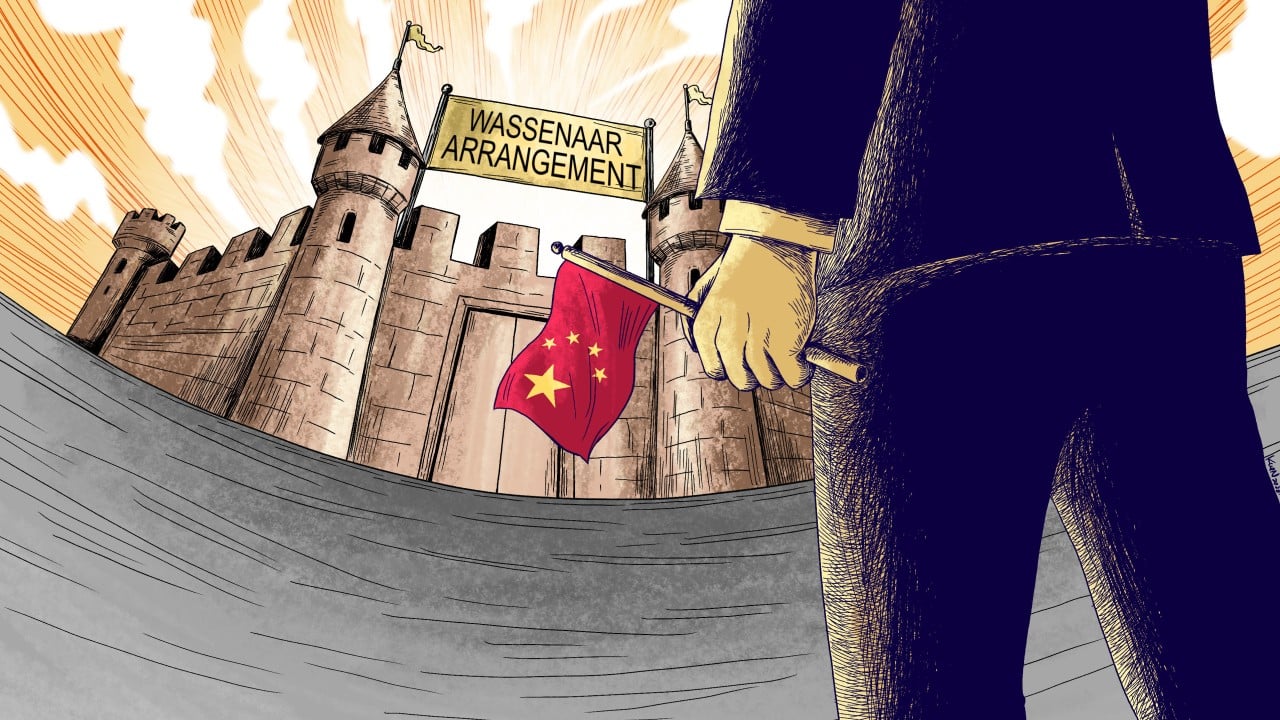
The Wassenaar Arrangement, a key international regime controlling the export of weapons and advanced technologies, is at a crossroads with China's growing military prowess challenging its relevance. Established 30 years ago, the arrangement was initially seen as a symbol of China's isolation from the global community, with member states including nearly all developed Western nations, Russia, India, and other key players. However, the narrative has shifted dramatically as China's defense technology has not only caught up but surpassed that of Western nations in certain areas.
China's advancements in hypersonic missiles, high-power laser weapons, and cutting-edge military hardware such as its drone carrier with electromagnetic catapults, sixth-generation stealth fighter jets, and humanoid robots highlight its rise as a global leader in defense innovation. This progress has been fueled by Beijing's push for self-reliance, driven in part by the exclusionary nature of the Wassenaar Arrangement, which has long restricted non-members' access to advanced defense technologies.
The arrangement's future hangs in the balance as China considers whether to join or reject it. Joining could allow China greater influence over global arms control, but Beijing may see little benefit in participating in a regime it views as outdated and hostile. Meanwhile, other member states are grappling with the implications of China's growing military capabilities on international security dynamics.
This development matters because it signals a potential shift in the global balance of power. If China continues to develop at its current pace, it could challenge the dominance of Western nations in defense technology and spark new tensions over arms control and non-proliferation. The outcome will have significant implications for future international cooperation on military exports and global security.
Verticals
worldasia
Originally published on South China Morning Post on 2/23/2026